21/8/26
Treasury Yields, Explained
Treasury Yields, Explained Treasury Yields, Explained

You've probably seen the phrase 'Treasury yields' in a headline and moved on. But they can move markets before most people have had their morning coffee, influencing mortgage rates, stock valuations, and borrowing costs for governments around the world.
Here's what you need to know, even if you've never bought a government bond in your life.
What Is a Bond?
Let’s start with the basics.
Governments need money to function: to build infrastructure, fund public services, pay salaries. They raise some of it through taxes, but often they need more. So, they borrow it.
They do this by issuing bonds. A bond is simply a loan, but packaged as a tradeable financial instrument. When you buy a government bond, you're lending money to that government.
In return, it promises to repay your original sum at the end of an agreed period. Many bonds also pay interest at regular intervals.

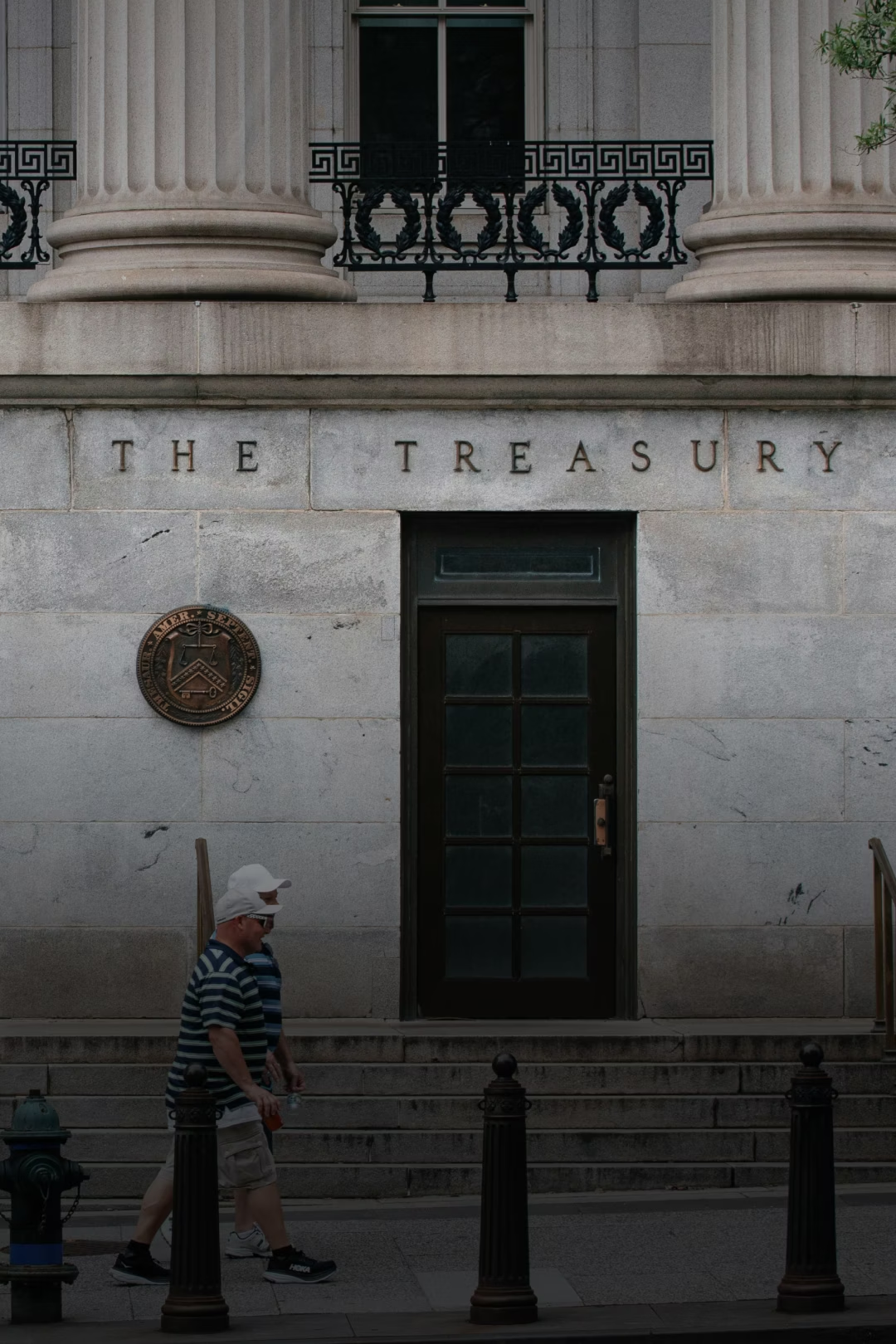
In the United States, government bonds are called Treasuries, because they're issued by the US Treasury Department.
In the UK they're called gilts.
In Germany, Bunds.
In Japan, JGBs.
Different names, same concept: a loan to a government, with interest.
So What's the Yield?
The yield is your annual return for holding the bond.
If you lend the government $1,000 for ten years and receive $40 in interest each year, your yield is 4%. Simple enough.
But here's where it gets interesting. Bonds are bought and sold on open markets after they're issued, and their prices fluctuate. And the yield always moves in the opposite direction to the price.
If a bond's price falls, its yield rises. If its price rises, its yield falls.

Here's why.
The interest payment on a bond is fixed - it doesn't change. But if you buy that bond at a lower price than the original buyer paid, you're receiving the same fixed payment on a smaller investment. Your return, as a percentage, is higher. That's a higher yield.
Think of it like buying a discounted gift card. If you pay £80 for a £100 gift card, you've effectively earned a 25% return the moment you use it. The face value didn't change, but what you paid for it did.
If one thing sticks, let it be this: yields are the price of money over time.
The yield always moves in the opposite direction to the price.
Why Do Yields Move?
Lots of things push yields around.
Inflation expectations matter most. If investors think prices are going to keep rising, they demand higher yields to make sure their returns actually mean something in real terms a decade from now. When inflation expectations cool, yields tend to follow.
The Federal Reserve plays a role too. The Fed directly sets a short-term policy rate, but its decisions also shape expectations about future interest rates, inflation and economic growth, all of which can affect Treasury yields. So when market interest rates rise, new bonds offer higher returns, making existing bonds less attractive. Prices on existing bonds fall, and yields rise to compensate.
Economic confidence shifts yields as well. When things look strong, investors tend to move money out of the relative safety of bonds and into stocks. That selling pressure on bonds pushes yields higher. When uncertainty spikes, the reverse happens: investors pile into the safety of Treasuries, driving prices up and yields down.
And sometimes it comes down to trust. If investors start to question whether the US government is a reliable, predictable borrower, they demand a higher yield as compensation for that uncertainty. It doesn't happen often, but markets take notice when it does.
Why Does This Matter If You Don't Live in the US?
Treasury yields aren't just an American story.
The US dollar is the world's reserve currency, and US Treasuries are the global benchmark for "safe" investment. When Treasury yields move, they shift the baseline that investors everywhere use to compare returns.
A higher yield on a US government bond makes it more attractive relative to bonds in Europe, Japan, or emerging markets, which can pull capital away from those places and put pressure on their currencies and borrowing costs.
And if you invest in global equity funds or international ETFs, you're already exposed to this dynamic. Rising yields tend to strengthen the dollar, which affects the returns you see when investments are converted back into your home currency.
What This Means for Your Portfolio
The most direct way yields affect most people is through borrowing costs. When Treasury yields stay elevated, mortgage rates tend to follow, since lenders use them as a reference point when setting fixed rates.
Stock valuations are affected too. Part of how investors value companies is by comparing expected returns against what they could earn from a safe government bond. When that safe return rises, stocks need to work harder to justify their price tags. That's why equities often dip when yields spike, even when nothing has changed about the companies themselves.
And if you hold bond funds, you'll feel yield moves directly. Rising yields mean the existing bonds in your fund are worth less, since new bonds are offering better terms. Longer-duration bond funds tend to move more than short-term ones.
.avif)
The Bigger Picture
Yields rising isn't automatically bad, and yields falling isn't automatically good. What matters is the story behind the move.
Yields rising because the economy is strong is very different from yields rising because investors are nervous about inflation or losing confidence in government finances. The number matters less than what it's telling you.
Next time you see "yields up, prices down" in a headline, you'll know it's not a contradiction. It's the bond market repricing the cost of money, and that matters whether you own a single bond or not.
Have any questions? Drop them below.