21/5/26
What Berkshire's First Post-Buffett Meeting Is Telling Us
What Berkshire's First Post-Buffett Meeting Is Telling Us

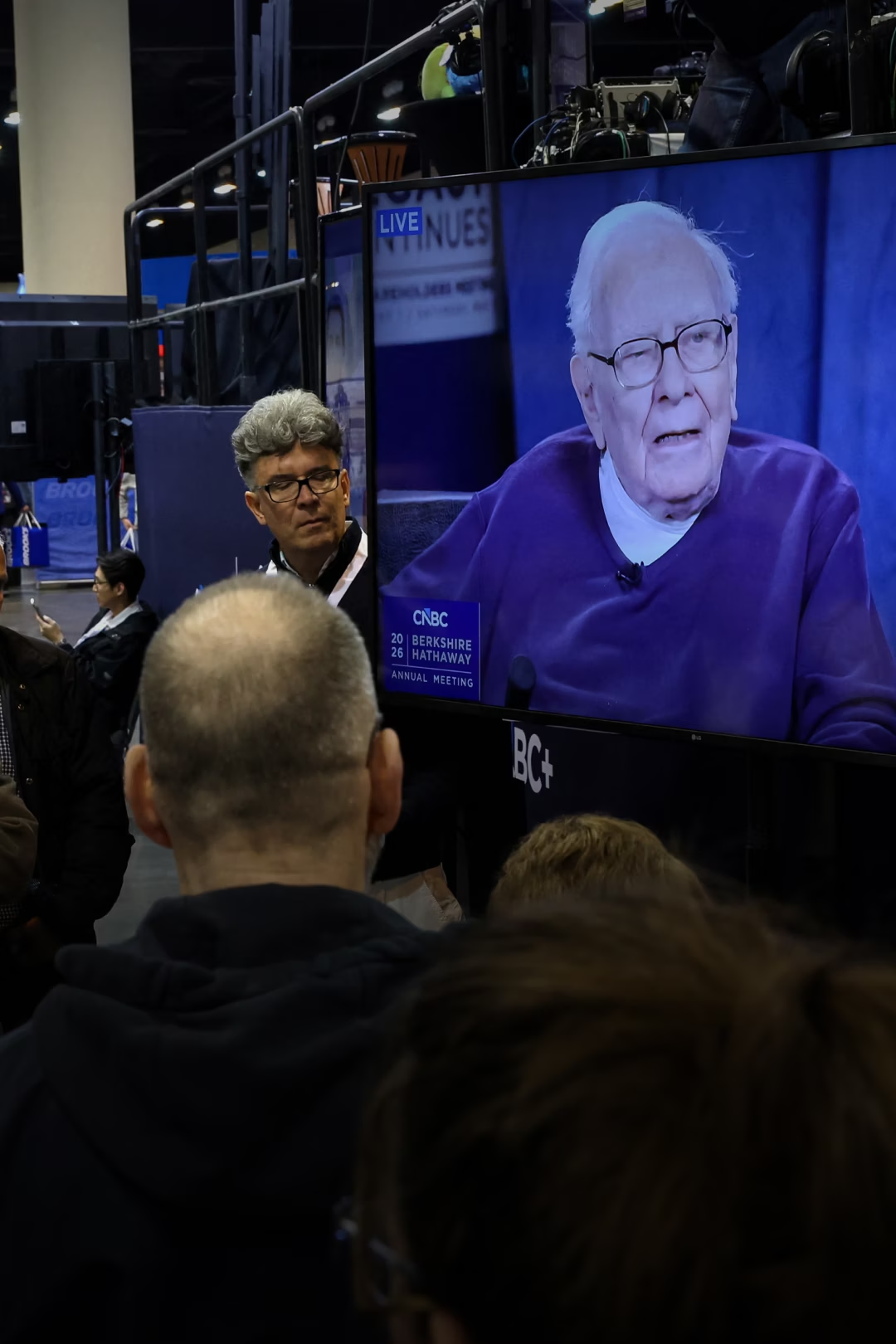
On Saturday, tens of thousands of investors made their way to Omaha, Nebraska for a milestone annual meeting in Berkshire Hathaway's history.
For the first time in six decades, Warren Buffett sat in the audience while someone else ran the show.
That someone is Greg Abel, 63, who took over as CEO earlier this year. Buffett remains chairman, but the baton has passed. And the message Abel delivered to shareholders, sitting on a record cash pile of nearly $400 billion, was essentially one word: patience.
Here's why that message matters well beyond Omaha.
Patience as a Strategy
Berkshire is currently sitting on nearly $400 billion in cash and short-term government bonds called Treasuries, which are essentially loans to the US government that pay a fixed return.
That number keeps growing because Berkshire's leadership doesn't love what they're seeing in markets right now.
Abel was direct about this. He told shareholders Berkshire is "not anxious to deploy capital into subpar opportunities," but that when markets do dislocate - meaning when prices fall sharply and good assets become available at lower prices - the company will act decisively and at significant scale.
Buffett, speaking from the sidelines, put it another way.
Over his 60 years running Berkshire, he counted maybe five truly "juicy" years, moments of real dislocation where bargains were everywhere. Those moments came during crises, when most people were scared and nobody wanted to buy anything.
For a regular investor, you don't need $400 billion to borrow this mindset. Sticking to your investment plan, keeping a modest cash buffer, and resisting the urge to chase whatever is performing this month is the individual investor's version of the same thing.

The Casino Problem
Buffett used the lunch break to describe where he thinks markets are right now. He described markets today as resembling a church with a casino attached, and said the casino has never been more crowded.
He was talking about the surge in one-day options, which are short-term bets on whether a stock will go up or down within a single trading day, and prediction markets, which let people bet on real-world events like elections or military operations.
Buffett's point was that this kind of activity isn't investing - it's gambling. And right now, more people are doing it than at any point he can remember.
The distinction matters. Investing means buying productive assets, businesses, funds, or property, and holding them long enough for their underlying value to grow. Gambling means making short-term bets based on tips, momentum, or the thrill of a quick win.
A few signs you might be drifting toward the casino side: buying things you can't explain to someone else in plain language, using borrowed money to chase quick gains, or finding yourself checking prices multiple times a day and making decisions based on what you see.

What Berkshire's Caution Means For You
The fact that one of the world's most sophisticated investment operations is choosing to sit on enormous amounts of cash rather than buy stocks at today's prices is a signal.
Valuations, meaning how expensive stocks are relative to their earnings and growth prospects, aren’t currently offering the kind of margin of safety Berkshire looks for - so it’s in no hurry to make new long‑term commitments at today’s prices.
For a regular long-term investor, this translates into something practical.
It means continuing to invest consistently through your regular contributions, not trying to time the market, but also not stretching for returns by taking on more risk than you understand or need. It means accepting that some years your portfolio will grow modestly, and that's fine - not every year has to be exceptional.
AI, Discipline, and the Boring Edge
AI came up several times in Omaha, as it does in almost every major business conversation right now. Abel said Berkshire is exploring how AI can improve operations at its railway and insurance businesses, but made clear the company is "not going to do AI for the sake of AI.”
His view: AI is a useful productivity tool, good for cutting costs and handling repetitive tasks, but nowhere near ready to make complex judgments about pricing, claims, or stock selection.
In a world full of noise about AI revolutions, meme stocks, and the next big thing, there's something quietly reassuring about a company doubling down on boring edges: patience, reputation, sound underwriting, and a balance sheet that doesn't need rescuing.
The Simple Takeaway
Berkshire's first post-Buffett meeting sent a clear message: the fundamentals that built one of the world's great companies over 60 years haven't changed, and they don't need to.
Buy good assets you understand, be patient, and don't confuse excitement for opportunity.
And when the market starts to feel more like a betting app than a place to build long-term wealth, that's usually a sign to slow down, not speed up.
Buffett handed the keys to Abel this year, but the philosophy he's leaving behind is one any investor can keep.
Brendan Mcdermid/Reuters/Ritzau Scanpix