14/5/26
Why Investors Are Pulling Money Out of India - and What It Tells Us About Emerging Markets
Why Investors Are Pulling Money Out of India - and What It Tells Us About Emerging Markets

India was supposed to be one of the great investment stories of this decade. The world's fastest-growing major economy, a young population, a booming middle class, and a government keen to attract foreign capital.
That story hasn't gone away, but right now it's being overshadowed by a much more immediate problem: oil.
Since the US and Israel began military operations against Iran in late February, foreign investors have pulled almost $21 billion out of Indian stocks.
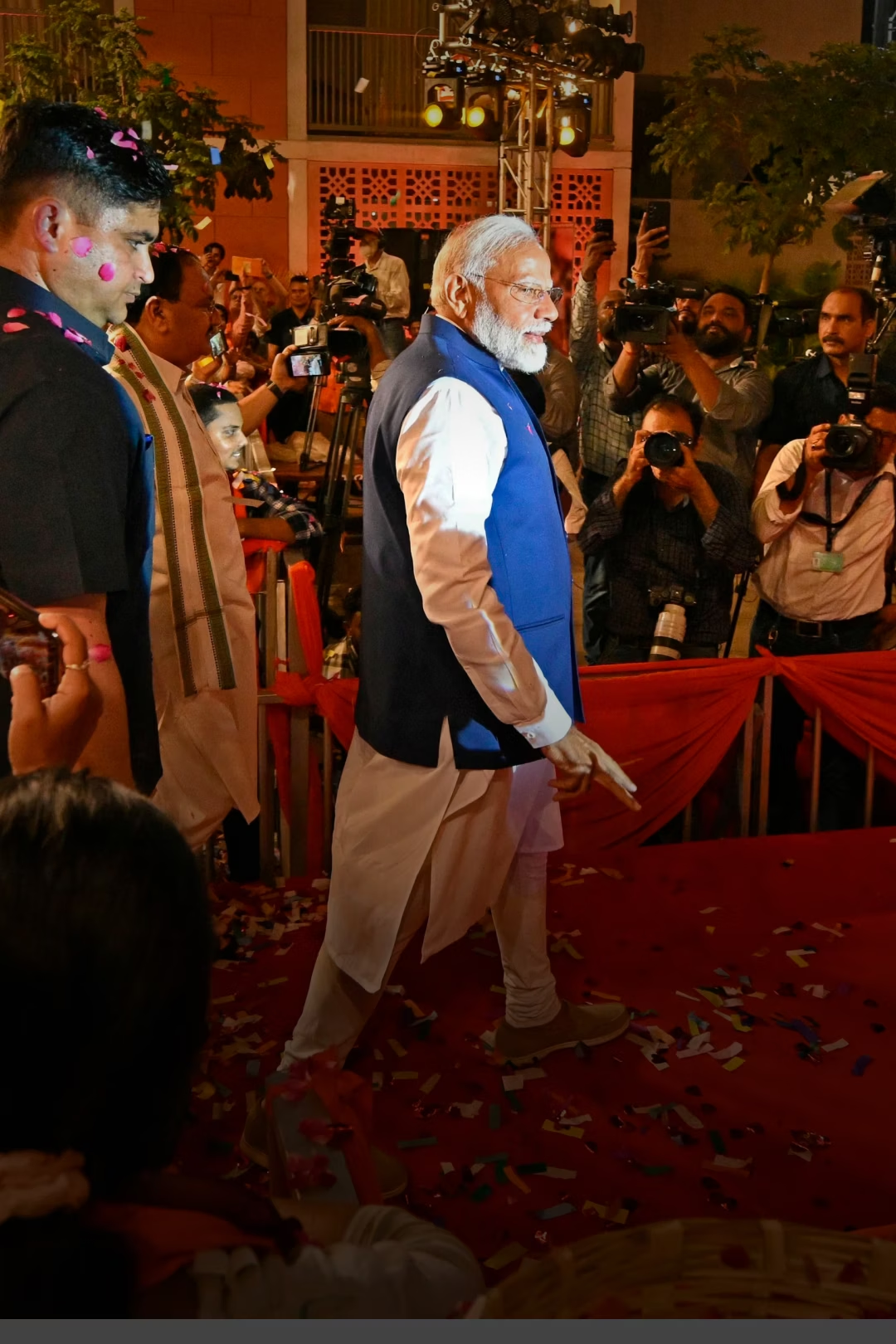
March alone saw $13 billion leave, the biggest monthly outflow on record. The rupee has fallen to historic lows, bond yields have hit all-time highs, and Prime Minister Modi is now publicly asking citizens to use public transport, cut overseas travel, and pause gold purchases.
Here's what's happening, and what it means for anyone invested in global markets.
Why India Is So Exposed
India is the world's third-largest energy importer. It relies on other countries for about 90% of its oil and gas, and roughly half of its crude imports normally flow through the Strait of Hormuz, the same waterway that has been largely closed since the conflict began.
That dependence is now a serious vulnerability. With Gulf supplies disrupted, it's been forced to source oil elsewhere, including from Russia under a US sanctions waiver. The volume of imports hasn't changed much, but the cost has surged. Oil was around $70 a barrel before the war - it peaked above $126, and is currently hovering just below $100.
Expensive energy does two damaging things at once. It pushes up inflation while it widens the current account deficit, which is the gap between what a country earns from the rest of the world and what it spends.
India's trade deficit has already swelled to nearly $120 billion in the year to March, up from $95 billion a year earlier. That combination of rising costs and a widening deficit is exactly what makes foreign investors nervous.

The Rupee and Why Currency Risk Matters
The rupee has fallen to a historic low of more than 95 to the dollar, down from around 91 when the war started. For context, it was already Asia's worst-performing currency this year before the conflict began.
So why does that matter for investors? Because currency moves can completely change your returns.
The rupee was already Asia's worst-performing currency this year before the war began, down around 10% against the dollar, and now it's fallen a further 4% since. For a dollar-based investor, that adds up fast.
This is one of the most underappreciated risks in emerging market investing. You're not just betting on the companies, you're also betting on the currency they're priced in - I’ll link an article below with more information about currency investing.
Why Capital Is Going Elsewhere
Not every emerging market is suffering equally from the same environment.
South Korea and Taiwan are actually attracting inflows right now, because they're major exporters of semiconductors, the chips that power AI infrastructure. As global demand for AI-related computing surges, the money flowing into US tech is also flowing toward the Asian economies supplying the hardware behind it.
India, by contrast, is not a major player in that supply chain. As one strategist at Société Générale put it: "For now, all the money is going toward the AI trade, where India is not present.”
This is the "risk-off" dynamic that emerging markets face during global shocks. When uncertainty rises, investors tend to move toward assets they perceive as safer or more liquid, often US assets, and away from markets seen as more vulnerable.
India, with its energy dependence and currency pressure, fits that vulnerable profile right now.

What Investors Are Watching
For anyone tracking India or emerging markets more broadly, a few signals matter most right now.
The rupee is the most immediate indicator. The central bank has already spent more than $40 billion in foreign exchange reserves trying to slow the currency's decline. That buys time, but it's not a solution.
Bond yields also tell you something about market confidence. India's ten-year government borrowing cost has risen to above 7.1%, an all-time high, reflecting the combination of inflation risk and capital outflows.
Oil prices remain the underlying driver of all of it. The government has kept fuel prices stable at the pump to protect consumer demand and growth, but that means the cost is being absorbed elsewhere, through lower tax revenues and pressure on oil companies.
What This Means for Your Portfolio
If you hold a broad emerging markets ETF, India is likely one of your largest exposures.
But it’s not all grim: India's long-term growth story, driven by demographics, domestic consumption, and a growing middle class, hasn't changed because of a short-term energy shock. The economy is still expected to grow at around 6 to 7% this year, even after forecasts have been trimmed.
Emerging markets are inherently more volatile during global shocks, and countries that import most of their energy are extra vulnerable to oil price shocks.
But as always, the investors who tend to do best are those who stay diversified and resist the urge to react to short-term outflows.
Cover image: Money Sharma/AFP/Ritzau Scanpix
Source:
- https://www.ft.com/content/a448dcf4-a4eb-4752-8633-63d497a6a9a2?syn-25a6b1a6=1