22/1/26
Banks Are Busy Again - What It Reveals About Market Mood
Banks Are Busy Again - What It Reveals About Market Mood

After two quiet years, Wall Street’s deal desks are busy again. In 2025, U.S. investment banks delivered their strongest year since 2021 - and that rebound says less about bankers, and more about how confident investors and companies appear to be feeling.
This earnings season isn’t just about who beat expectations. It’s a snapshot of a market that’s moved from caution to cautious optimism, and that matters for anyone investing for the long term.
What just changed for the big banks?
The short version: more deals happened, so banks collected more fee income.
Investment banking fees - the money banks earn for advising on mergers and acquisitions (M&A), helping companies issue new shares, or arranging bond deals - jumped sharply in late 2025 after a long slump in 2022 and 2023.
In the fourth quarter:
- Morgan Stanley reported the biggest jump, with investment banking fees up by roughly 50% year on year.
- Citigroup followed with an increase of around 35%.
- Goldman Sachs, Bank of America and Citi all posted solid gains in investment banking activity across 2025.
- JPMorgan stood out as the exception: its investment banking fees dipped in Q4, even though its overall business and full-year results still grew.
That pickup flowed straight into profits. Goldman’s quarterly profits rose by about the low-teens percentage range, helped by stronger trading and a recovery in dealmaking. Morgan Stanley’s profits climbed in the high-teens, boosted by investment banking and equities trading.
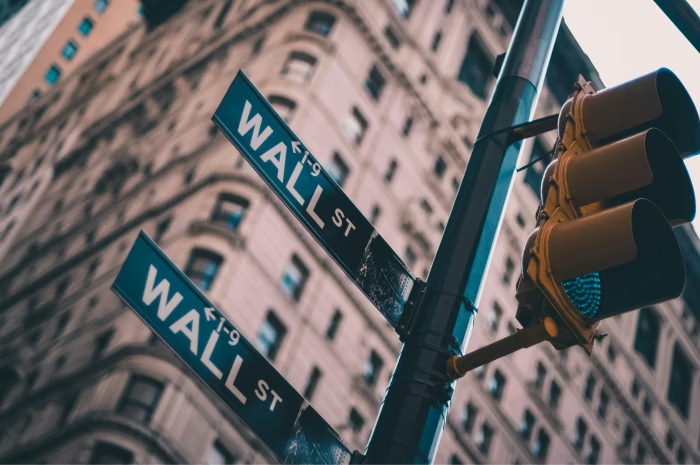
In plain English: when markets feel steadier, companies are more willing to buy other companies, raise money, or go public. When uncertainty dominates, those deals get postponed. The past two years were about waiting, but 2025 was about moving again.
Why this matters beyond the banks
Because deals and fundraising are a confidence signal for the whole market.
A rebound in M&A, equity issuance and bond sales usually happens when three things line up:
- Companies feel more confident about future growth,
- Investors are willing to take on measured risk again,
- Markets are active enough that prices feel “fair,” not panicked.
That shift showed up beyond the banks. BlackRock, the world’s largest asset manager, reported record net inflows and pushed its assets under management (the total value of money it manages for clients) above roughly 14 trillion dollars for the first time.
That’s a powerful signal. It suggests investors aren’t just parking money in cash and waiting anymore. They’re starting to invest again at scale, even if they’re doing it carefully.
Together, rising deal activity and strong inflows point to a market that’s noticeably more active than it was in 2022–23.
What this means for you (even if you never buy a bank stock)
Financial companies are a meaningful part of broad stock market indices, so when big banks are healthier, that can quietly support index performance.
- A busier market usually brings more IPOs and new bond deals. That can mean more choice - and more hype. You don’t have to chase new listings to be a successful investor.
- More deal activity often signals improving confidence, but it’s not a guarantee that markets will go up in a straight line.
The lesson here isn’t “buy banks.” It’s that the market backdrop is more active and more confident than it was a year or two ago.
.avif)
What to watch next
If you’re investing for the long term, keep it simple. Watch the direction of the signal, not the day-to-day noise.
- Do we keep seeing lots of deals and fundraising in early 2026, or does activity cool off again?
- Do money flows stay strong - like BlackRock’s record inflows - or do investors pull back if markets get jumpy?
- Does JPMorgan’s Q4 fee dip stay a one-off, or does it spread to other banks?
The big takeaway: Wall Street’s “deal machine” is a thermometer. When deal fees and inflows rise, it usually means confidence is returning and money is moving again.
That’s useful context for your portfolio - not because you need to act on it today, but because it helps explain the kind of market we’re likely investing in as 2026 begins.