
28/5/26
Can a Hermès Bag Really Be an Investment? Inside the Hedge Fund Turning Birkins Into Assets
Hedge funds can invest in almost anything - stocks, currencies, real estate, or, in this case, handbags.

In the old days, hedge funds traded in oil, real estate, and stocks.
Today, one of them trades in handbags.
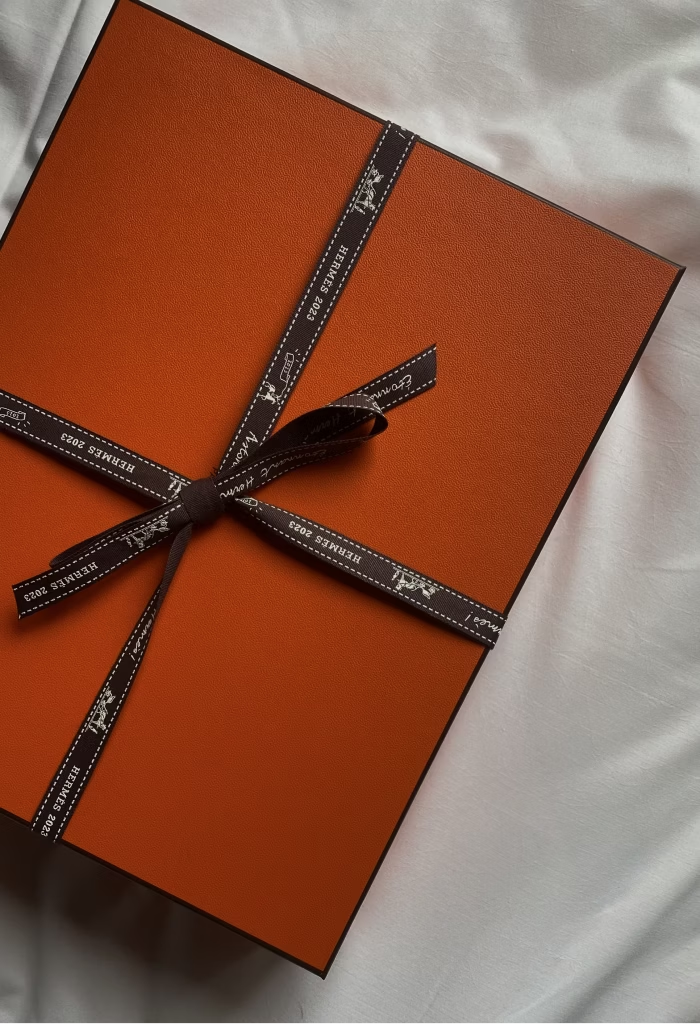
Not just any handbags, but Hermès Birkins and Kellys — the ultimate symbols of scarcity and status.
In a world where wealth is increasingly intangible, the idea of investing in something as tactile as leather and stitching feels both absurd and inevitable.
That is the promise of LUXUS, a luxury investment company founded by Dana Auslander, a former Wall Street executive who left behind the world of hedge funds and private equity to build something different: a fund made entirely of Hermès bags.
“The investor and the collector are the same person,” Auslander told Forbes. “They want to invest in the assets they collect, whether that is art, jewels, or Hermès.”
The company’s first fund raised one million dollars and reported a 34 percent return on investment (ROI) — meaning it earned 34 percent more than it started with — in just over a month. A second fund soon followed, double in size.

It sounds almost poetic: wealth expressed through craftsmanship.
But as with all investments, beauty alone does not guarantee safety.
What a Hedge Fund Actually Is
A hedge fund is a private investment pool that brings together money from wealthy individuals or institutions and uses advanced, often riskier, strategies to try to outperform the market.
Hedge funds can invest in almost anything — stocks, currencies, real estate, or, in this case, handbags.
Because they are complex and volatile, they are typically open only to “accredited investors,” meaning those with significant income or assets.
LUXUS aims to make this world more accessible by allowing smaller investors to buy fractional ownership — a small share of a portfolio of bags instead of an entire one.
Why the Birkin Became an “Asset”
Hermès has perfected the art of controlled scarcity.
You cannot simply walk into a store and buy a Birkin.
You must be invited, waitlisted, and approved.
This deliberate exclusivity has created a mythos — and a thriving resale market that rewards patience with profit.
According to Forbes, Rachel Koffsky, International Head of Handbags at Christie’s, notes that “over the past decade, prices have increased by about 5 percent a year.”
Over the past decade, prices have increased by about 5% a year
Even after the pandemic’s market correction, values remain higher than before 2020.
To collectors and investors alike, that makes the Birkin a rare creature: a luxury item that appears to defy the rules of depreciation.
It is beauty that pays interest.
But Turning Bags Into Investments Comes With Real Risks
LUXUS employs a rigorous authentication process, led by Graham Wetzbarger, its Chief Authentication Officer, to combat the growing flood of high-quality counterfeits.
Authenticity is essential; without it, the entire concept of a “bag fund” collapses.
Still, not all risks are visible.
1. Cultural relevance can shift.
Although Hermès has maintained its prestige for decades, no brand is immune to changing tastes.
Fashion is cyclical, and what feels timeless today might one day feel out of step with cultural values.
If younger generations decide that quiet wealth or minimalism matter more than legacy logos, the appetite for Birkins could wane.
That risk is small but not nonexistent.
Even blue-chip collectibles - from baseball cards to rare watches - have gone through periods of decline when enthusiasm cooled.
2. The economy matters.
The market for luxury resale depends on people having disposable income - the extra money left after covering essentials.
In times of economic downturn, when inflation rises or interest rates cut into household budgets, fewer people can or want to spend tens of thousands on a handbag.
When that happens, resale prices can soften, and funds like LUXUS may find it harder to deliver strong short-term returns.
3. Liquidity is limited.
Unlike stocks, handbag investments cannot be sold instantly.
Finding a buyer takes time, and pricing depends on timing and sentiment.
Investors may have to wait months to cash out, which makes this type of fund less flexible than traditional assets.
4. The market is unregulated.
Luxury collectibles are not subject to the same oversight as financial markets.
Returns depend on expertise and trust — both of which can be fallible.
The Gender Paradox
Here lies the irony.
The Hermès bag is one of the most iconic symbols of female aspiration, yet most investors in LUXUS’s fund are men.
“I think women are afraid; they do not like to take risks,” Auslander told Forbes.
“Men do not care. Delivering the returns is the most important thing, and men get that.”
It is a provocative statement, but it reflects a long-standing imbalance.
For generations, women have been taught to consume luxury, not to profit from it. In that sense, the Birkin fund is a microcosm of global finance — men trading in the value women create.
If handbags are the new gold, the challenge is ensuring women do not remain merely the buyers, but also become the beneficiaries.
Should You Invest in a Birkin Fund?
If you are new to investing, probably not yet.
Funds like LUXUS belong to a category called alternative assets, which means investments outside traditional markets.
They can help diversify a portfolio, but only once you have a solid foundation in the basics.
Start with:
- Low-cost index funds, which track the overall stock market
- Bonds, which add stability
- An emergency fund, to protect against uncertainty
Once your financial base is secure, experimenting with alternative assets can be an intriguing side venture - less about necessity and more about curiosity.
The Bigger Picture
Turning handbags into hedge fund assets may sound eccentric, but it reflects a larger truth about modern finance: eventually, everything of perceived value becomes financialized.
Art, sneakers, even Taylor Swift vinyls - all are now investment classes.
The question is not whether that is good or bad, but what it reveals.
When beauty becomes capital, who gets to define its worth?
For women, understanding that question is the first step toward power.
Because the real value lies not in owning the bag, but in understanding the system that makes it valuable.