14/5/26
Active vs Passive Funds: What's the Difference and Which Is Right for You?
Active vs Passive Funds: What's the Difference and Which Is Right for You?

Not all funds work the same way.
Some have a manager behind them making decisions every day, while others quietly follow the market with no one at the wheel.
Active and passive funds both aim to grow your money, but they go about it in very different ways.
Here's what that means in practice.
Active Funds: Pros & Cons
An active fund is run by a fund manager, a professional whose job is to handpick investments and make decisions on your behalf.
They analyse companies, follow market trends, and make calls about what to buy and sell, all in an attempt to beat the market and deliver returns higher than average.

A common example of an active fund is a mutual fund.
The appeal of active funds is the possibility of doing better than the market. A skilled manager who spots the right opportunities at the right time could, in theory, deliver stronger returns than a fund that just tracks an index.
The catch is that it usually comes with higher fees, because you're paying for all that research and decision-making.
And there's no guarantee the manager will actually beat the market - sometimes consistently outperform, but many don't, especially over longer time horizons once fees are taken into account.
With an active fund, someone is always making calls on your behalf. That can feel reassuring, or it can feel like an unpredictable variable, depending on how you think about it.
Passive Funds: Pros & Cons
A passive fund is the more hands-off option. Instead of trying to beat the market, it simply follows it.
It tracks a market index, which is essentially a basket of investments that tracks a specific part of the market. The MSCI World Index, for example, tracks large and mid-sized companies across 23 developed countries (find a guide to the MSCI World linked below).

A passive fund that follows it will hold the same companies in roughly the same proportions, rising and falling with them.
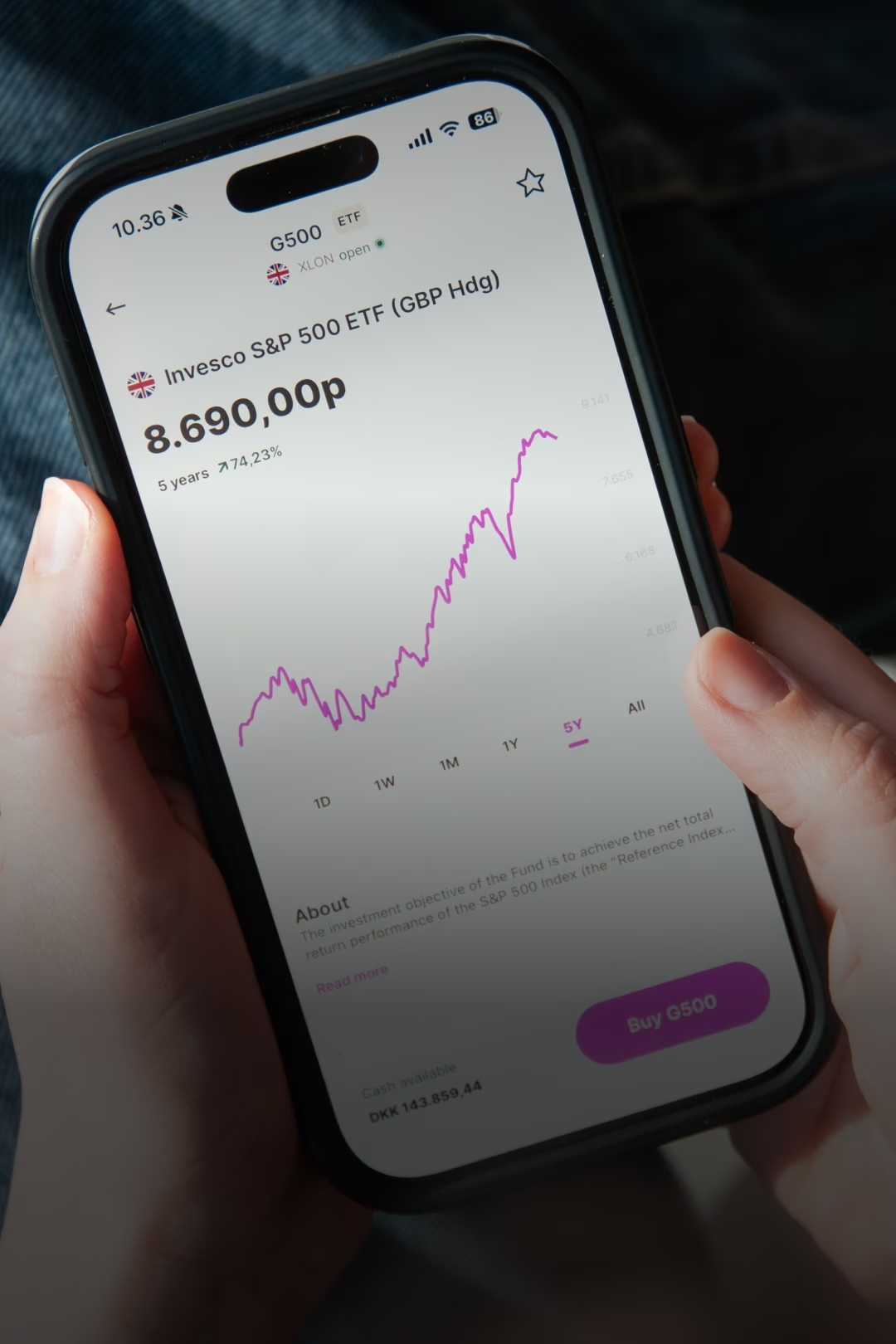
Index funds and ETFs are common examples of passive funds.
Because no one is constantly trying to pick winners, passive funds tend to have lower fees. The strategy is set by the index they track, not by individual judgment calls.
This simplicity is part of their appeal. A passive fund invested in a broad global index will rise and fall with the market, nothing more and nothing less. For many long-term investors, that predictability and lower cost is exactly what they want.
Why Fees Matter More Than They Look
A difference of less than 1% in annual fees might not sound significant. But compounded over decades, it can be.

Here's an example:
Imagine you invest $10,000.
A passive fund earns 5.8% a year after costs.
An active fund earns 5.0% a year after its higher fees.
After 30 years, the passive fund grows to around $54,300.
The active fund reaches around $43,200.
That's a gap of more than $11,000, driven not by dramatic market swings, but by the quiet, compounding effect of fees over time.
You can usually find a fund's fee listed on its factsheet, website, or investing platform. Look for something called the Total Expense Ratio, or TER, or Ongoing Charges. It tells you what percentage of your investment goes toward covering the fund's costs each year.
Which One Is Right for You?
It’s up to you! There's no universal answer, and it depends on your personality, your budget, and what you want from your investments.
If you like the idea of a professional making investment decisions on your behalf and you're comfortable paying a higher fee for that, active funds might suit you.
If you prefer a simpler, lower-cost approach and you're happy to match the market rather than try to beat it, passive funds may be for you. Many long-term investors lean toward passive funds for their simplicity and lower costs, while others use a mix of both.
What matters most is that you understand what you own, what it costs, and whether the strategy fits where you're headed.
If you're ready to start exploring specific funds, I've linked a guide below by Female Invest co-founder Camilla Falkenberg called How to Research an Investment (and Actually Feel Confident About It).