27/8/26
Meta's Child Safety Settlement: A Historic Fine That Barely Registers
Meta's Child Safety Settlement: A Historic Fine That Barely Registers

Five days into a landmark trial, Meta’s already settled.
The case, brought by a coalition of attorneys general, accused Meta of hiding how addictive its apps were to children and misleading the public about the mental health damage.
On Wednesday, with the trial barely underway in an Oakland courtroom, Meta agreed to pay up to $18 billion to make the whole thing go away.
Investors barely blinked. Meta's stock actually rose about 1% the same day the settlement broke - not the reaction you'd expect if the market thought this was going to hurt.
Some headlines called it historic.
Others called it a slap on the wrist.
Here's what happened, and why the headline number tells you less than it appears.
What Meta Agreed To
The case centred on allegations that Meta knowingly built Facebook and Instagram to be addictive to young users, exposing children to harmful content while misleading the public about the risks.
Twenty-nine states sued jointly in 2023, with California leading the charge; by the time the case settled, that coalition had grown to 47 states, Washington DC, and three US territories, who will split $16.7 billion. Texas settled separately for $1 billion, bringing the total to roughly $18 billion. The court approved the settlement the same day it was announced.
Beyond the money, Meta agreed to build default daily time limits and nighttime blocks for teenage users, stronger age-checking tools to keep out underage users, and new controls for parents. Those changes won't apply to WhatsApp, and Florida and New Mexico didn't sign the deal, so their residents get neither the payout nor the new safety features.
And critically, Meta admitted no wrongdoing. The settlement explicitly contains no admission of liability.

But It's Not the Win It Looks Like
Set against Meta's size, $18 billion sounds painful. The company made $60 billion in net income last year, meaning income after all costs and taxes are paid. A fine that size, paid all at once, would wipe out close to a third of a year's profit.
It’s also the largest settlement any single US company has ever paid; it’s more than double the $7.4 billion Purdue Pharma and the Sackler family agreed to pay over OxyContin.
But before the trial, Meta estimated its potential exposure at up to $1.4 trillion. The states themselves had floated a "fair" figure closer to $200 billion. Meta ended up settling for less than 10% of that, and less than 2% of what it once feared paying.
About $5.3 billion of the settlement is also conditional. Meta only has to pay that portion if YouTube and TikTok agree to implement similar changes and match the payment. If they don't, Meta keeps it.
The payments will be distributed in annual instalments over ten years. That detail matters more than it sounds - money paid over a decade is worth significantly less than money paid today, once you account for inflation and what Meta could do with that capital in the meantime.
One analyst at the Center for Digital Democracy put it this way: the annual payments amount to roughly ten days of Meta's annual profit. Meta generated $201 billion in revenue in 2025, underlining how large the company is relative to even a multibillion-dollar settlement.
The annual payments amount to roughly ten days of Meta's annual profit.
The Stock Went Up Anyways
The market noticed the difference between headline and reality. Meta's stock rose about 1% the day the settlement broke, which is not how investors react to news that actually hurts a company's bottom line.
It’s the clearest signal in the whole story: investors had already priced in a far worse outcome, and a settlement this size, spread out this long, counted as good news by comparison.
What It Means for the Broader Industry
Meta isn't alone. TikTok, Snap, YouTube, and others face similar cases. Snap's stock fell more than 8% on Wednesday, a sign that investors read the Meta settlement as a warning for what might be coming for other platforms.
And the wave of litigation isn't slowing down. Lawyers representing thousands of individual plaintiffs and school districts said Wednesday they are "ready to continue that fight" against Meta, TikTok, Snap, and YouTube. The Meta settlement covers state attorneys general, not private injury claims.
Governments in Australia, the EU, and the UK are also moving toward stricter age restrictions on social media, independent of US litigation. The regulatory pressure is building from multiple directions simultaneously.
The Bottom Line
A $18 billion fine looks enormous as a standalone number, but the fact that it was shrugged off by the market in a single trading day tells a very different story than the headline does.
Social media's legal risk is becoming a cost of doing business, one that regulators and courts are now pricing into every platform, not just Meta. Watch how Snap, TikTok and YouTube handle their own versions of this fight - that will tell you more about the sector's real risk than any single settlement number.
This also isn't the end of Meta's legal exposure. Other cases, including a nationwide school district lawsuit and personal injury claims tied to the same platforms, are still working their way through the courts.
The scrutiny is growing, and the question of how much responsibility these platforms bear for their effects on young people isn't going away.
What do you think? Share your thoughts in the comments.
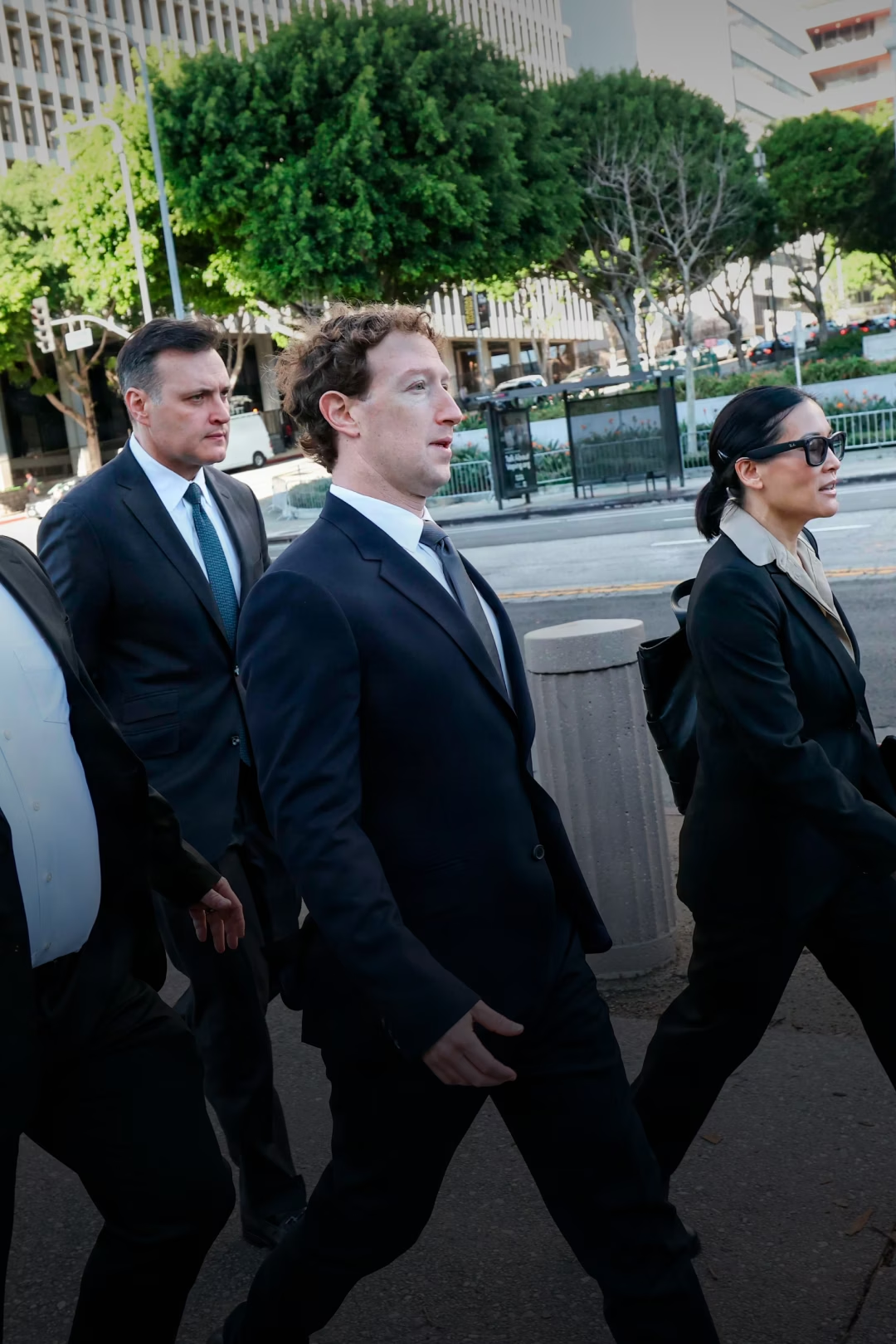
Cover image: Patrick T. Fallon/AFP/Ritzau Scanpix.
Sources: