27/4/26
Politics vs the Fed: What the Powell Probe Tells Us
Politics vs the Fed: What the Powell Probe Tells Us

On Friday, a criminal investigation that had been hanging over financial markets for months was dropped.
On the surface, it looked like a quiet legal update.
But the implications go further: this is about who gets to control one of the most powerful economic levers in the world.
Here's why that matters for anyone with money in markets.
First, What Happened
The short version: the Department of Justice closed a probe into the Fed chair, and in doing so, cleared the way for a new one.
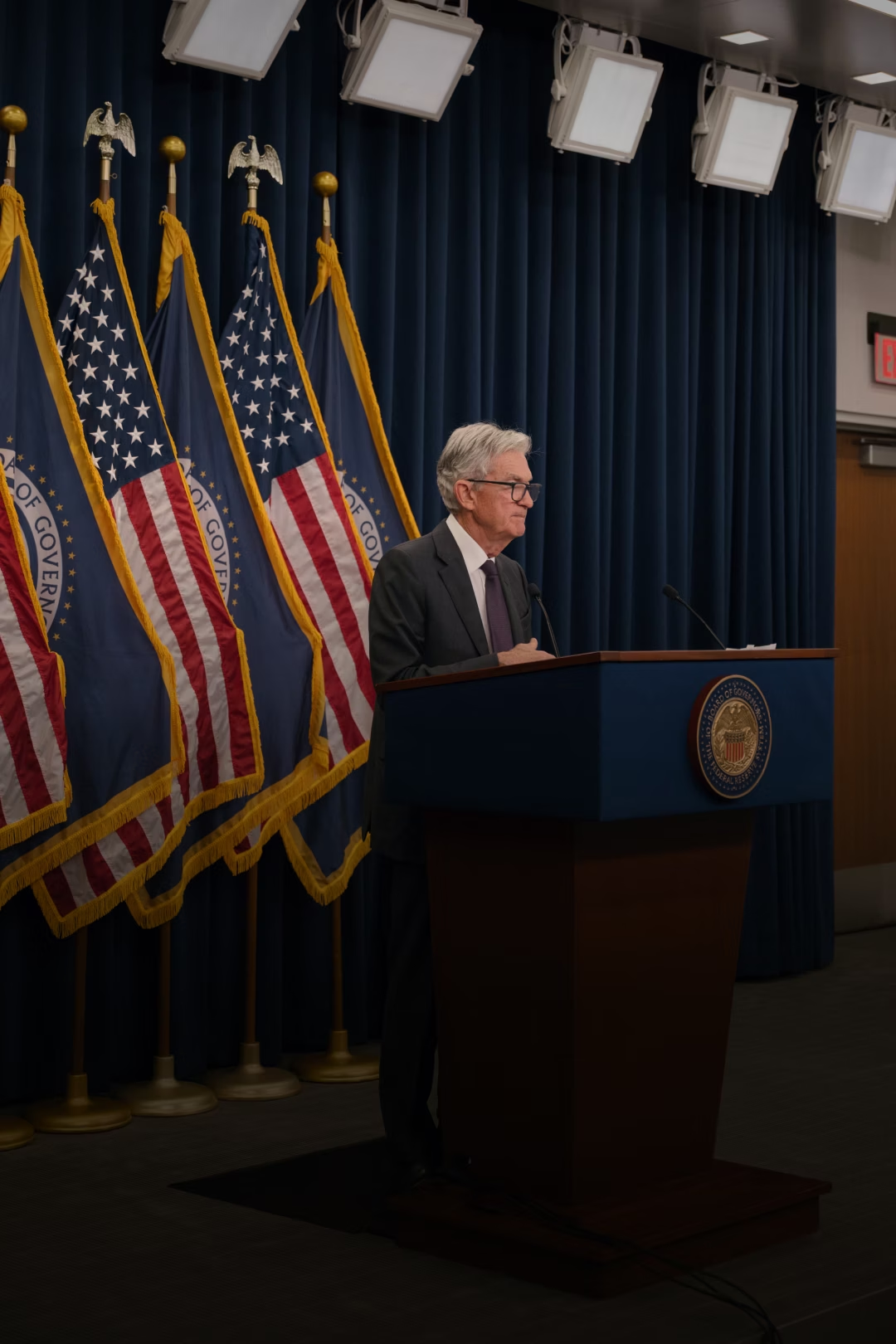
The probe into Federal Reserve Chair Jay Powell was over alleged misstatements to Congress about a $2.5 billion renovation of the Fed's Washington headquarters, a project that ran hundreds of millions over budget. The matter has been passed to the Fed's internal watchdog instead.
Powell had denied wrongdoing from the start and made little secret of what he believed the investigation was really about: political pressure to get the Fed to cut interest rates faster.
With the probe gone, Trump's path to replacing Powell with his chosen nominee, former Fed governor Kevin Warsh, just got significantly easier.
Quick Refresher on the Fed
The Fed, short for the Federal Reserve, is the central bank of the United States.
While it officially sets interest rates for the US, central banks around the world tend to take their cues from it, which means its decisions ripple through the global economy in ways that affect investors everywhere.
Lower rates tend to make borrowing cheaper and can stimulate growth.
Higher rates cool inflation but can slow things down.
It's one of the most powerful economic levers in the world that every investor should understand. But if you’re new to it, don’t stress - we've linked some easy-to-follow explainers on how it works in the Resources below.
Who's Who
A few names worth knowing:
Jay Powell is the current Fed chair, whose term was due to end in mid-May. He’s repeatedly resisted Trump's public demands for faster and deeper rate cuts, making him a frequent target of the president's criticism.
Kevin Warsh is Trump's nominee to replace him, currently in Senate confirmation hearings, and critics question how independent he would be from Trump’s influence.

Jeanine Pirro is the US Attorney who opened the probe in January and closed it this week.
Republican Senator Thom Tillis had effectively blocked Warsh's confirmation until the probe was dropped.
Democrat Senator Elizabeth Warren has argued the whole episode is part of a broader effort by Trump to take control of the Fed, and that dropping the case doesn't end that effort.
This Wasn't a Typical Political Disagreement
Most presidential pressure on central banks plays out through speeches and public criticism.
This went further - the DOJ opened a criminal probe into the Fed chair, and Trump separately sought to remove Fed Governor Lisa Cook over allegations she denies and is fighting in court.
Critics see a pattern: pressure or remove the officials who resist rate cut demands, and replace them with people more aligned with the White House.
A lot of people believe the criminal probe was never really about a building renovation - it was leverage, a way to pressure the Fed into moving faster on rate cuts. Previously, a federal judge previously blocked subpoenas in the case, raising concerns about the investigation's purpose.
Whether or not that's the full story, the perception that legal tools might be used to influence monetary policy is itself a problem for markets.

What Central Bank Independence Means For You
If you're not sure why any of this matters beyond Washington politics, here's the key idea.
The Fed's job is to set interest rates and keep the economy stable. To do that well, it's supposed to operate free from political pressure, meaning rate decisions should be based on economic data, not on what the president wants.
The idea is that monetary policy works better when it's insulated from short-term political pressures. Because a president facing an election might want cheap money and low rates right now, even if that risks inflation later.
An independent central bank is supposed to take the longer view.
It’s what gives markets confidence that interest rate decisions are predictable and evidence-based. When that confidence holds, inflation expectations stay anchored and investors can plan ahead. When it wobbles, things get unpredictable fast.
An independent central bank is supposed to take the longer view.
How Markets Reacted
After the news broke, short-term US Treasury yields fell. Treasury yields are essentially the interest rates on loans to the US government, and they move based on what investors expect the Fed to do with rates in the future. Falling yields suggest traders think there's now a higher chance that Warsh gets confirmed and that rates get cut sooner or more deeply than they would have under Powell.
Futures markets, where traders place bets on what the Fed will do at upcoming meetings, also nudged up the probability of a rate cut this year.
Markets are reacting to who will control interest rate decisions going forward, and how close that person might be to the White House.

What This Means for Your Portfolio
Central bank independence isn't just a principle - it has real effects on your investments.
When investors trust that a central bank is making decisions based on data rather than politics, it helps keep inflation expectations stable.
That stability matters for bonds, currencies, and stock markets. When that trust starts to wobble, you can see more volatility as markets try to price in a less predictable policy environment.
The concern for long-term investors is more about whether the rules of the game are stable over time. A Fed that appears politically influenced is a Fed whose decisions become harder to predict, and uncertainty tends to show up as rougher markets.
That said, institutions like the Fed have real layers of protection: committees, boards, inspectors general, courts, and Congress. The system is designed to be hard to capture. One political episode, even a significant one, doesn't erase those structures overnight.

The Bigger Picture
The end of the Powell probe clears the path for a likely change at the top of the Fed. It also shines a light on how far political pressure can reach into institutions that are supposed to operate independently.
You don't need to become an expert in Washington politics to be a good investor. But it's worth noticing when the line between politics and central banking gets blurry, because that line matters for everyone who has money in markets.
Your best position remains what it's always been: a diversified portfolio, a long time horizon, and enough understanding of how the system works to stay calm.
Cover photo: Caroline Gutman/New York Times/Ritzau Scanpix