4/8/26
What Europe's Heatwaves and Wildfires Are Costing the Economy
What Europe's Heatwaves and Wildfires Are Costing the Economy

This summer, Europe is dealing with multiple climate emergencies simultaneously.
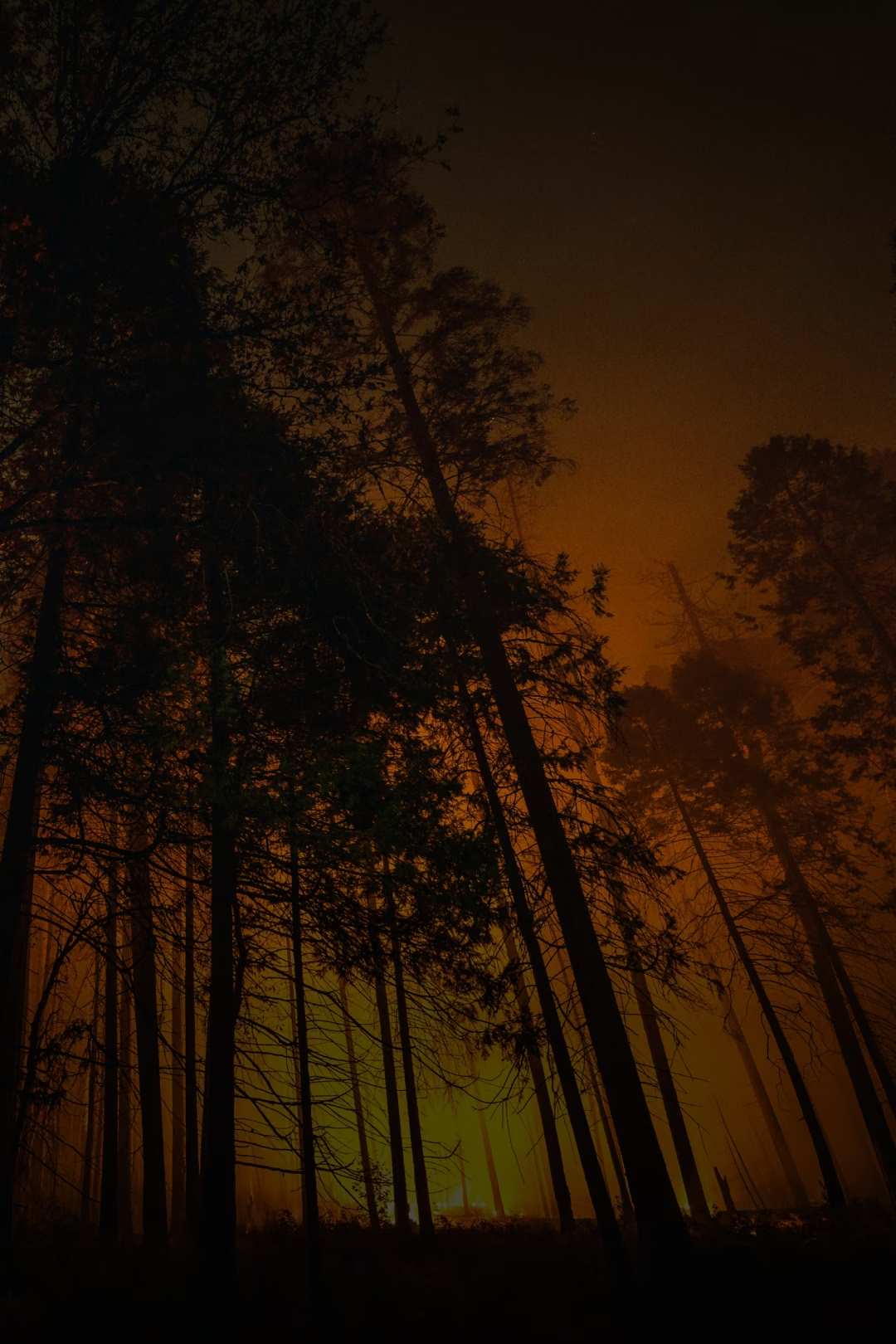
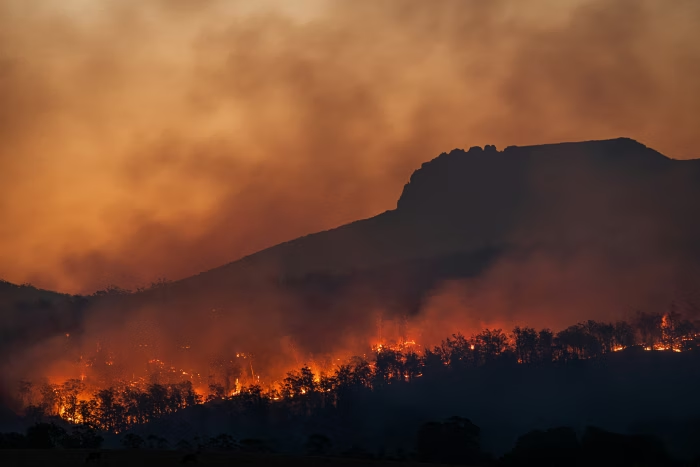
Wildfires have burned through roughly 300,000 acres in France and Spain, forcing the evacuation of 300,000 people.
A heatwave pushing temperatures toward 40°C has hit the continent for the third time in six weeks.
And the Rhine, Germany's most important inland trade river, has fallen to near its lowest level in eight years, stranding cargo ships and forcing manufacturers to cut production.
None of this is happening in isolation from markets. The economic consequences are direct, measurable, and increasingly hard to ignore.
The Rhine and the Supply Chain Problem
Germany's Rhine river is the backbone of industrial supply chains across central Europe, carrying chemicals, coal, grain, and raw materials between ports and factories. When water levels fall too low, ships can carry significantly less cargo. More trips are needed to move the same volume, costs rise, and bottlenecks form.
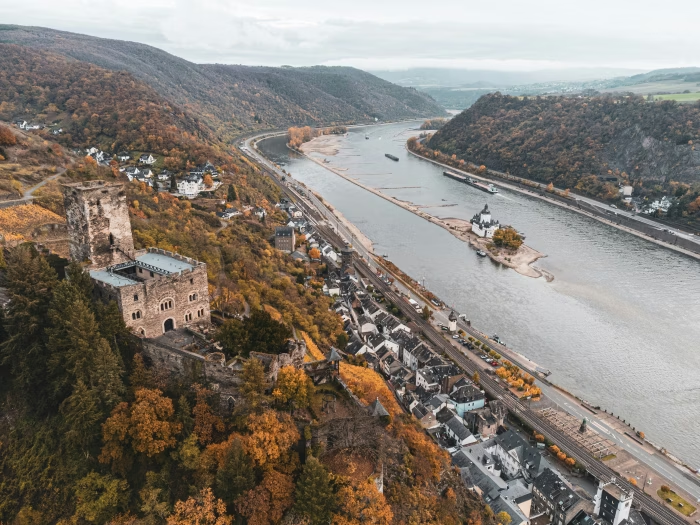
Water levels have nearly fallen to 25 centimetres in recent days, close to a record low recorded in 2018. That year, BASF, the giant chemical company whose plant sits on the Rhine, suffered a €250 million hit to its operating profit.
This time the company says it's better prepared, but its CEO told analysts this week that "force majeure announcements or product shortages in certain cases" cannot be ruled out. Covestro and Evonik face similar pressures. Thyssenkrupp has already been forced to limit hot metal production.
Economists at Deutsche Bank have warned that Rhine disruption could shave up to 0.2 percentage points off German economic growth - a meaningful hit to an economy already under strain.
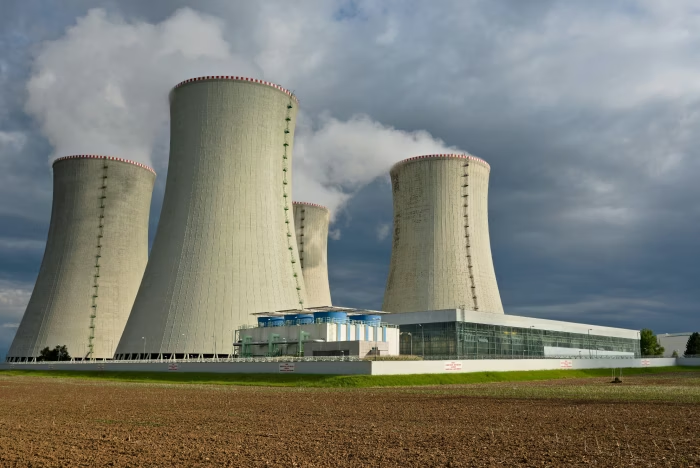
And outside of Germany, Hungary's Danube has dropped so low that a nuclear power plant supplying nearly half the country's electricity is being forced to shut down. Romania has also had to take a reactor offline for the same reason: not enough water for cooling.
Wildfires Costs Are Adding Up Fast
The wildfires in France and Spain are the most visible part of the story, but the economic damage extends well beyond the immediate destruction.
Beyond firefighting and evacuation costs, heatwaves drive up healthcare spending, reduce worker productivity, disrupt tourism, and push up food prices as crop yields fall. France's finance minister described the latest fires as "like a clap of thunder" for the local economy.
A joint paper from the University of Mannheim and the European Central Bank found that extreme weather events in the summer of 2025 cost the European economy around 0.3% of output, with the cumulative damage potentially reaching 0.8% by 2029 if trends continue.
Insurance losses from wildfires have already been escalating sharply. Insurers paid out $56.3 billion for wildfire-related losses in the 2010s, six times more than in the 2000s. The sectors most exposed include utilities, real estate, construction, agriculture, and transportation.
EU emergency officials are now warning of "Europe-wide overload," a scenario where simultaneous fires across multiple countries exhaust shared firefighting resources. The EU has ordered 12 new water bombers, but they won't arrive until 2028.
It's worth noting, as ING's economist pointed out, that wildfires also bring a "bittersweet consequence": reconstruction spending tends to boost economic activity once the immediate crisis passes. Natural disasters often show up as a short-term drag followed by a recovery in economic data.
What It’s Doing to Travel and Airlines
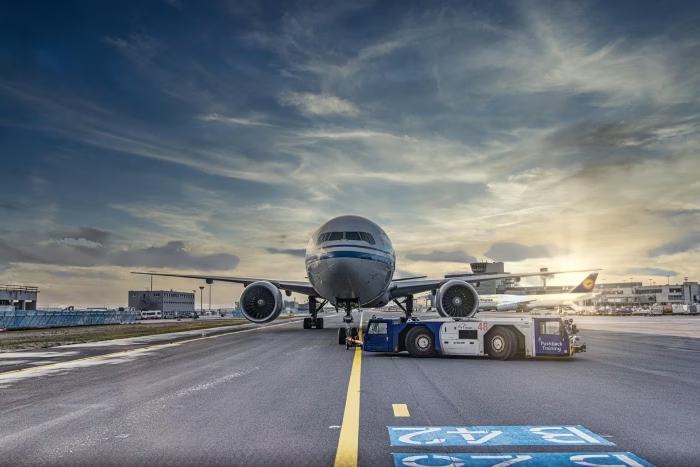
The heatwaves are reshaping where Europeans choose to holiday, with direct consequences for airlines and tourism-dependent economies.
Air France-KLM's CEO told the FT this week that the biggest shift he's seeing is Europeans avoiding southern destinations - parts of France, Spain, and other areas that are "boiling hot or have fires," and heading north instead.
The carrier reported a 70% drop in second-quarter profit, driven largely by the doubling of jet fuel prices since the Iran war began, but it also trimmed capacity forecasts because of reduced demand for certain routes.
Countries like Spain, Portugal, Greece, and southern France generate a significant share of annual GDP from summer tourism. A sustained shift in travel patterns, even a partial one, has real consequences for those economies.
The Bigger Picture for Investors
As one economist put it, heatwaves have "graduated from weather event to macro variable." That's exactly what this week illustrates.
Physical climate risk is showing up in earnings reports, supply chain disruptions, and GDP forecasts. You can trace a direct line from European heatwaves to BASF's production warnings, to German growth forecasts, to Air France-KLM's profit collapse, to tourism revenue across southern Europe.
If you hold European equities or a broad global fund, exposure to industrials, airlines, insurers, and agricultural commodities means this summer's disruption is already inside your portfolio in some form.
Europe has absorbed difficult summers before, and policy responses, from firefighting capacity to infrastructure adaptation, are evolving. But the costs are real, they're growing, and they're increasingly visible in the numbers. The economic case for taking it seriously has never been clearer than it is this summer.
If you or someone you know has been affected by the fires or extreme heat across Europe this summer, we're thinking of you. Stay safe out there.