28/7/26
What Trump's Latest Tariff Blitz Means for Global Trade
What Trump's Latest Tariff Blitz Means for Global Trade

On Friday, the Trump administration launched a fresh round of tariffs on 60 trading partners, replacing a temporary 10% baseline levy that expired on July 24th. The new duties range from 10% to 12.5% and cover 99.4% of American imports. The list includes China, the EU, the UK, Canada, and most of the world's major economies.
Markets were relatively calm. But analysts say this round is more significant than it looks, and potentially more permanent.
What's Different This Time
When Trump announced his "Liberation Day" tariffs in April 2025, markets plunged. This time, the reaction was muted, partly because the move was anticipated, but also because investors are already dealing with a lot: the Iran war, oil above $100 a barrel, inflation running hot, and a Fed signalling possible rate hikes.
The bigger difference is legal. The previous tariffs were struck down by the Supreme Court in February, ruling they had been imposed illegally. The new duties use a different legal mechanism, Section 301 of the Trade Act of 1974, which allows tariffs in response to unfair foreign trade practices.

The administration is citing forced labour practices as the legal basis, with 60 separate directives targeting each trading partner individually. That structure is important: a successful legal challenge against one country's tariff would not automatically unwind the other 59.
A legal challenge was already filed on Friday by the same group that successfully challenged the earlier tariffs, but this time the administration's position looks more defensible.
Who’s Being Hit Hardest
Not everyone is affected equally - European countries have emerged as relative ‘winners’ under the new regime.
Rates for France, the UK, Germany, Spain, and Italy have all fallen slightly compared to the previous stopgap duties. Italy and Spain benefited particularly from lower rates on footwear, clothing, and luxury goods. The EU also secured a key concession: the new 10% rate won't be stacked on top of other existing tariffs, unlike before.
By contrast, China, Vietnam, Indonesia, Chile, and Colombia are all slightly worse off.
Brazil has been hit hardest by far, hit with a separate investigation earlier this month that pushed its effective tariff rate from 11% to nearly 18%.

A Response to the EU Fine on US Tech?
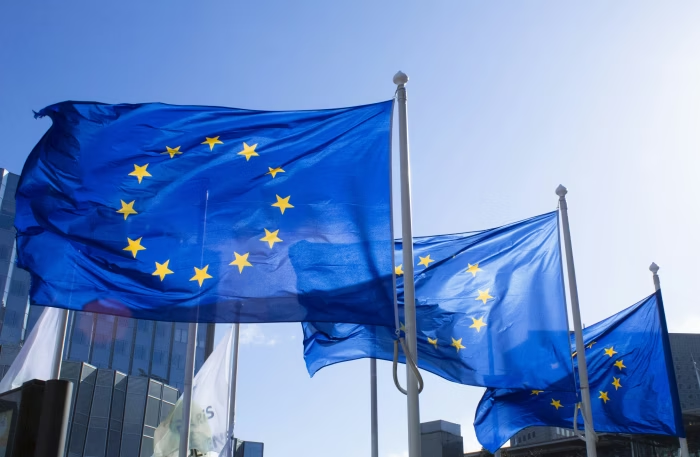
Alongside the tariff rollout, Trump also threatened additional EU-specific tariffs in response to European fines on US tech companies. The European Commission fined Google €890 million last week for breaching digital rules, following previous fines against Apple, Meta, and Amazon.
Trump posted on Truth Social that the EU would "pay a very big price" and that a new tariff probe would be launched. Previously, he threatened 100% tariffs on countries that impose digital services taxes on American companies.
This adds a new front to the trade conflict. The EU has been moving toward a bloc-wide digital services tax, which would require unanimous support from all 27 member states but would significantly escalate tensions with Washington if it proceeds.
But should things escalate, the EU has a retaliatory package ready covering €93 billion of US exports.
What This Means for Investors
The combination of persistent tariffs, an ongoing energy shock from the Iran war, and a Fed signalling possible rate hikes is creating a challenging backdrop. One portfolio manager summed it up: "We have to position for a low growth and high inflation outcome.”
The concern analysts keep raising is whether tariffs are now a permanent feature rather than a negotiating tool. If they are, businesses will need to rethink supply chains and sourcing over years, not months, which takes time and costs money.
For anyone holding global equity funds, the sectors most exposed are those that rely heavily on moving goods across borders: consumer goods, industrials, and parts of technology. Companies that manufacture in the US or in countries facing lower tariff rates are in a better position.
Tariffs used to feel like a storm to wait out, but right now it’s looking increasingly like the background condition that global business and markets are operating in.