10/2/26
Eli Lilly and Novo Nordisk: This Week’s Earnings Flipped the Script - Here’s What Changed
Eli Lilly and Novo Nordisk have boosted revenue in recent years on the back of one standout strength: weight loss drug.

Eli Lilly and Novo Nordisk have boosted revenue in recent years on the back of one standout strength: weight loss drug.
Both are market leaders in a category analysts project could approach $100 billion by 2030. Right now, both companies sell injectable treatments, but Novo has just become the first to win approval for an oral drug in this class.
Lilly could follow soon, with its own oral candidate currently under regulatory review.
This week we got two earnings updates, but two completely different messages.
So let’s break down what they said and what it could signal for the future of these two giants.
Novo Nordisk and Eli Lilly make GLP-1 drugs, which work by targeting hormonal pathways involved in digestion.
These treatments have exploded in popularity globally, with demand at times even outpacing supply.
They are direct competitors and the two giants dominate the GLP-1 market for obesity and diabetes treatments.
How the obesity drug race really started
The “weight loss drug boom” looks sudden, but the race has been building for years.
These drugs started as diabetes treatments (GLP-1s), and then the market exploded when weight loss became the centre of the story.
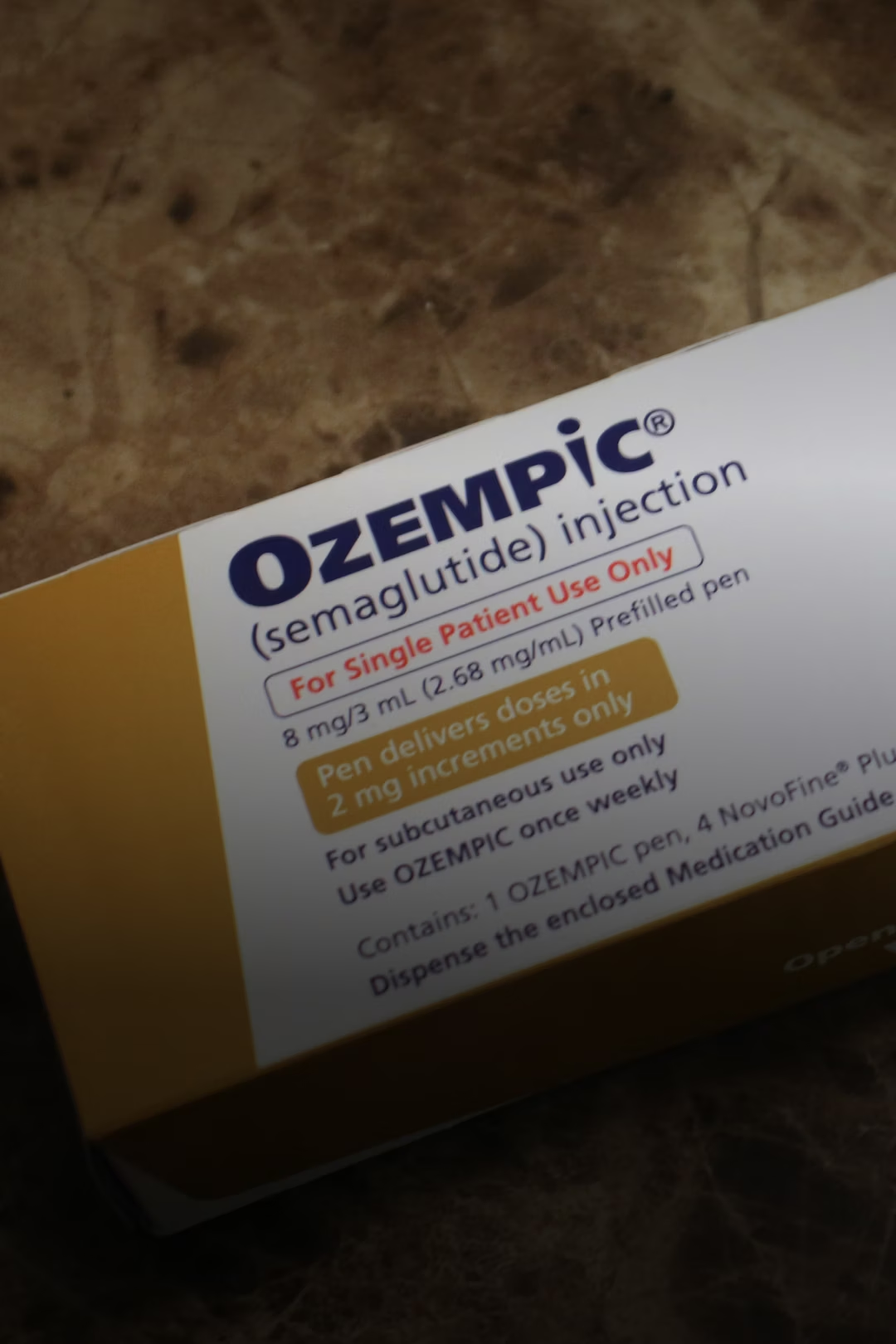
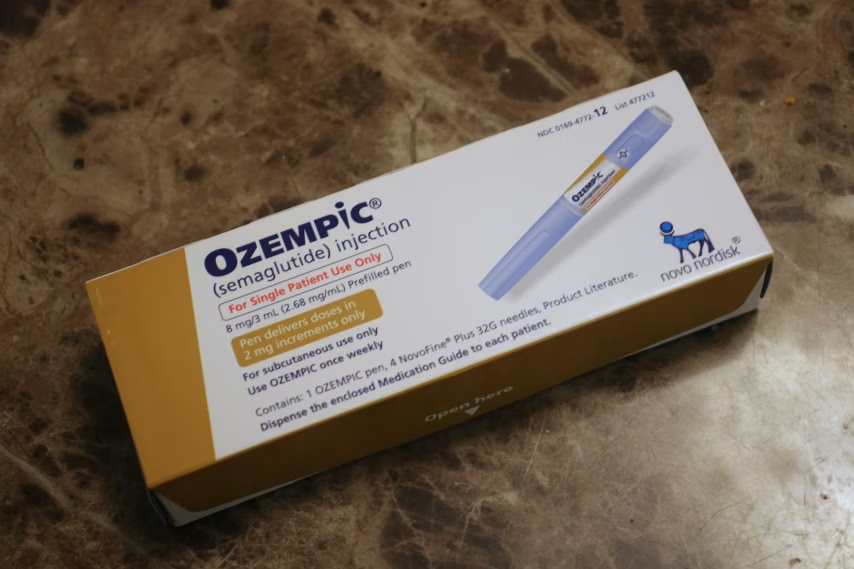
Novo had the early lead with Ozempic and Wegovy.
Then Lilly arrived with Mounjaro and Zepbound and turned it into a true head to head fight for the most profitable market: the US.
And here’s the part investors care about: this has been a scale game, not just a science game.
When demand is massive, the winners are often the companies that can deliver more product, more reliably, to more patients.
Now to the earnings reports that came in this week.
Novo Nordisk: the pioneer suddenly under pressure
On Tuesday, Novo Nordisk warned that 2026 sales could fall 5% to 13%, blaming “unprecedented pricing pressure” in the US and the stock dropped sharply, close to 20%.
Novo is still a giant. In its 2025 results, it reported about about $48.9bn in net sales and continued growth across its obesity and diabetes portfolio.
But this earnings update wasn’t about how big Novo is today.
It was about what might happen next.

Novo’s CEO, Mike Doustdar, described the US pricing pressure as “painful,” and the company told investors that 2026 could see a meaningful sales decline because of increased competition in the US and expiring patents in different countries (China, Brazil, Canada, and India).
That shift in guidance is exactly what triggered the brutal market reaction.
Novo is also trying to unlock a new wave of demand through its daily Wegovy pill, which is part of the industry’s next chapter: making GLP-1s easier to take, and potentially cheaper.
Eli Lilly: the company that looks like it’s pulling ahead on momentum
The day after Novo Nordisk’s earnings report, Eli Lilly came in with the opposite vibe: a strong quarter and a confident 2026 outlook, powered by soaring demand for their products Zepbound and Mounjaro.
Zepbound and Mounjaro sales
Sales jumped to about $19.3bn for the quarter, beating expectations, and Zepbound and Mounjaro were the clear engines of growth.
Lilly reported Zepbound sales of $4.3bn and Mounjaro sales of $7.4bn for the quarter, with both up strongly year on year.
Expectation for future earnings
Then came the part investors really trade on: the future.
Eli Lilly anticipates its 2026 revenue will come in between $80 billion and $83 billion, while analysts had only expected growth to $77.62 billion (from $65.2 billion last year).
What does this mean?
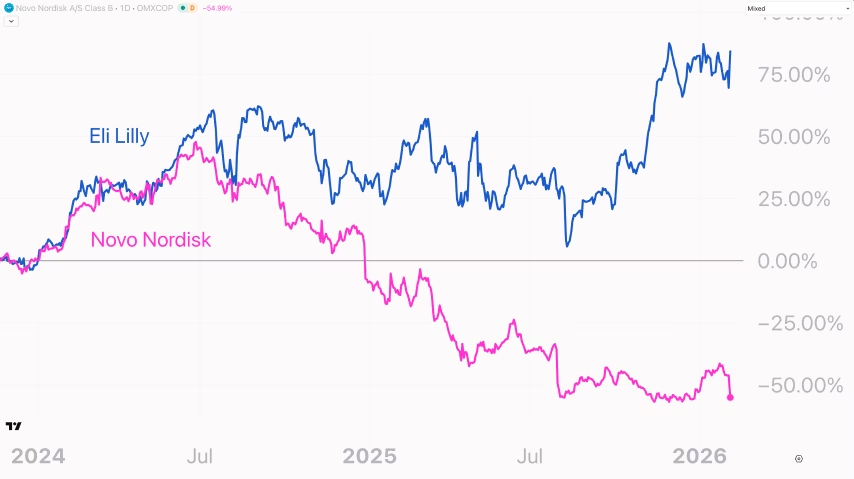
In short, in 2026 Eli Lilly expects sales growth of up to 27%, while Novo Nordisk is guiding for a decline of up to 13%.
Lilly looks like the company scaling fastest right now, while Novo is being forced to defend its business with lower prices.
Lilly’s earnings signal it’s capturing demand faster and scaling into 2026 with more confidence than Novo is right now.
How the next chapter looks: price war now, pill war next
The future of the GLP-1 market is basically two fights happening at the same time:
- Pricing pressure is becoming a real earnings story. Novo is explicitly telling investors that US pricing is biting hard enough to drag down 2026 sales. That’s a big narrative change from the “endless growth” era.
- Pills are the next battleground. Novo’s Wegovy pill is already in the market, with cash pricing designed to pull in people who don’t want injections. Reports around the launch highlight starter pricing around $149 per month for cash paying patients.
Lilly is pushing toward its own oral option (orforglipron), and the market’s watching closely because pills could expand the category dramatically by making treatment feel more “normal” and easier to prescribe at scale.
Eli Lilly is expecting the oral option to be ready in March/April.
What this means for investors
If you’re looking at this as an investor (or learning how to), here’s the clean framework:
Novo guided down. Lilly guided up. That’s why the share price reactions diverged so violently.
The market is shifting from a hype story to a pricing plus volume story. If prices fall, companies need volume growth to compensate. Novo is betting that affordability expands access, but investors want proof it offsets the hit.
Pills can expand the market, but they also invite more competition. Convenience grows the pie, but it can also reshuffle who wins the biggest slice.
And one final reminder (especially when a stock drops 20% in a day): the stock market don’t only react to results.
It reacts to whether a company’s story is getting stronger or weaker.
This week, Lilly’s story strengthened. Novo’s got tougher.