22/1/26
Big Dreams, Bigger Bills: Inside My Second Summer House
My Airbnb adventure continued - with far more bumps, bills, and doubt than I ever imagined.

In 2024, we bought our first summer house - and it was an instant rental success.
So in 2025, we did it again.
This time, we went bigger.
A luxury summer house with a pool, water views, and space for 12 guests.
On paper, it looked like the obvious next investment.
In reality, it marked the beginning of an Airbnb journey filled with far more obstacles, expenses, and second-guessing than I had ever anticipated.
This is part two of my summer house story.
I’m an investment expert at Female Invest, and true to my inner finance nerd I’ve always been deeply interested in growing my money.
For years, that meant investing in the traditional sense, in stocks and funds.
But a few years ago, I stepped into a new adventure: property investment.
And what a journey it’s been.
This article is the second part of my story about investing in summer houses and renting them out.
If you haven’t read part one yet, I’d strongly recommend starting there.
You’ll find it here “How a Kayaking ‘aha’ moment sparked a 2,500 - a month property side hustle”.”
In part one, I share how our first summer house quickly turned into a major success.
It was simple, affordable, and profitable almost right away.
I can already spoil this much: summer house number two was nothing like that.
So what happened?
Get comfortable - this is the full story, with all the highs, lows, and hard lessons that came with investing in summer house number two.
Summer House #1 — the easy one
Let’s quickly rewind.
On March 8th, 2024, we signed the contract for our first summer house for £150,000.
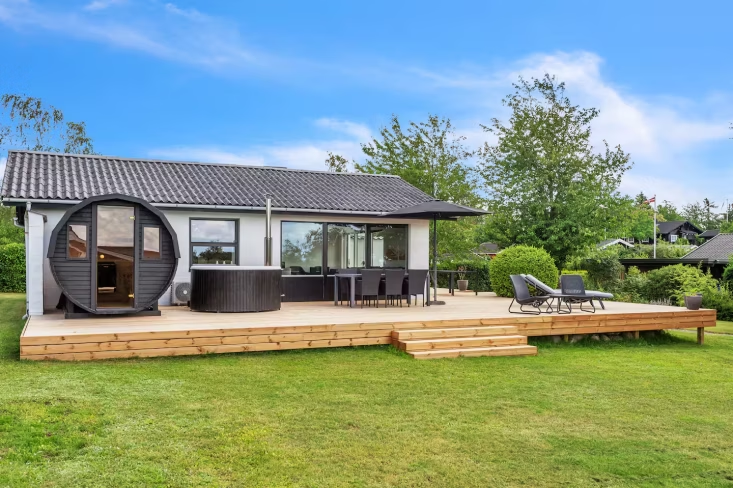
It’s a lovely 74 m² house with space for four people. It was booked almost immediately, and we started earning money quickly.
Of course, there were a few bumps along the way but looking back, everything felt manageable.
One important detail: this first house is close to where my parents live.
And my incredibly helpful (and very handy) parents deserve a good portion of the credit for why the process felt so smooth.
So yes, I was confident. Maybe a little too confident.
That confidence pushed me to take on a much bigger project.
And when I say bigger, I mean much bigger.
Summer House #2 — the dream (and the wake-up call)
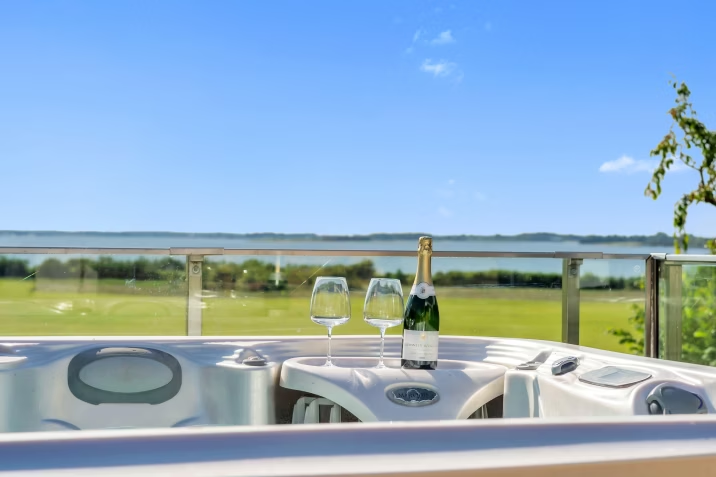
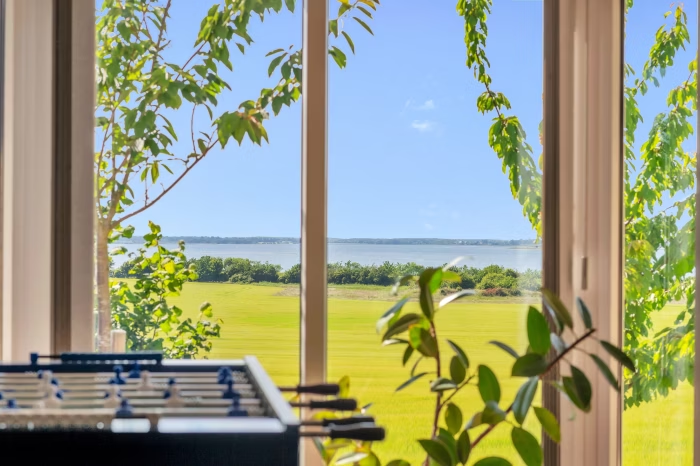
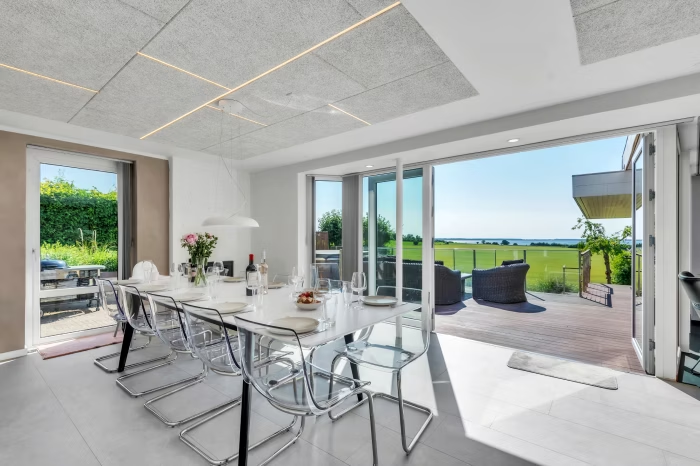
The second summer house - bought by my husband (yes, we also got married in the middle of all this) and me - sits overlooking fields and the water, with the most incredible sunsets.
This house is very different from the first.
In my eyes, it’s a luxury property.
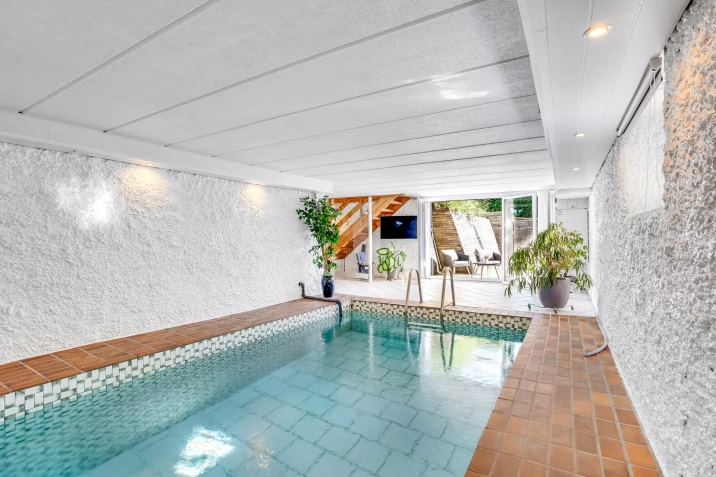
There’s a pool, outdoor spa, a pool table, table tennis, and a large, well-equipped kitchen with a wine fridge - all framed by massive glass windows overlooking the water.
The house is 279 m² and sleeps 12 people.
More than once, I’ve thought: If this all goes wrong, I’ll just move here myself.
It’s that beautiful.
Naturally, the price reflected that.
Approximately £400,000.
That was the absolute maximum we were allowed to borrow — a fact that was honestly terrifying in itself.
It meant that for a long time, we wouldn’t be able to borrow more money to buy a home for ourselves.
Still, we went ahead. Why?
Because the earning potential was huge.
We believed that if we could generate income faster, we could also save faster — and eventually buy our own dream home.
Launching on Airbnb
We took over the house on June 1st, 2025.
Everything felt perfect. The house was stunning. The view was unreal.

We spent the first weeks painting, furnishing, decorating and once everything was ready, we hired a professional photographer.
The photos came back. Everything looked incredible.
By late June, just three weeks after getting the keys, we listed the house on Airbnb, full of excitement.
Our first summer house had done so well. This one was bigger, better, and more impressive.
We priced it strategically low to get bookings rolling.
High season. Great house. Perfect timing.
And then…
Nothing happened.
Silence
Days went by. No bookings.
I started to panic.
In desperation, we dropped the price even further, so low that our “luxury pool house” for 12 people was cheaper than our first summer house.
And then, finally, everything changed.
We received a single booking: 13 nights in a row.
A Polish family visiting Denmark in late July.
Total value: almost £3,500
That evening, my partner and I were actively tweaking our Airbnb listing, hoping something would happen. When the notification came in, we literally jumped around the living room.
That booking saved us.
It covered interest, loan payments, utilities - all of July.
Finally, momentum.
After that, bookings slowly started coming in. Many were last-minute, but it meant guests and soon, reviews.
Yes, the prices were lower than we’d hoped.
But we reminded ourselves: new listing, no reviews.
Was this a mistake?
Our first guests were a group of young men.
From the moment they arrived, it was clear their goal was to complain as much as possible to get a discount.
Ten people. Around £80 per night. Extremely cheap for a house like this.
But when you’re new on Airbnb, you’ll do almost anything for a good review.
I offered discounts. I offered to come by and fix the issue (which turned out to be spider webs on the garden furniture).
They refused photos. Refused help.
They just wanted money back.
And they got it.
Their stay ended up almost free… because of spider webs.
I was furious.
Not because of feedback — feedback is useful. But because of their attitude.
We started wondering:
- Are large groups always like this?
- Is this a pattern?
- Is this investment even a good idea?
A dangerous thought — considering it was the biggest investment we’d ever made.
And then things got worse.
The autumn from hell
The trend continued into autumn.
Large groups left the house in poor condition. Things broke. Guests demanded compensation. Some even threatened bad reviews unless they were refunded.
Among the difficult guests were also genuinely lovely ones — and guests who experienced real issues.
Including that Polish family.
During their stay, the outdoor spa broke. Water leaked into the wiring. Power went out in large parts of the house.
We called an electrician.
That’s when everything escalated.
£7,000 in electrician bills
Soon after, the outdoor spa shut down.
The freezer broke.
Fuses kept blowing.
The dishwasher stopped working. The cooker failed.
There were days I thought: This is all falling apart.
My new “favourite” contact became the local electrician, who spent more time in the house during the first four months than I did.
I’ll never forget when he said:
“I don’t know how to put this nicely… but your house is very well made up.”
In other words: beautiful on the surface — not so great underneath.
Not exactly what you want to hear after buying a property.
So far, we’ve spent around £7,000 on electrician bills alone.
Plus visits from a plumber, a drainage service, and a mechanic.
And we haven’t upgraded anything. We’ve only fixed what keeps breaking.
The first six months were spent fixing. And fixing. And fixing.

It’s been expensive. And exhausting.
Hopefully, we’re nearing the end of that chapter now.
A new dilemma
Investing in these summer houses was a conscious choice. We knew that taking on this debt meant postponing buying a home for ourselves.
But now, something unexpected has happened.
My dream house is for sale.
The house I’ve dreamed of since I was a little girl. The one I’ve walked past countless times, telling myself: One day, I’ll live there.
It’s on the market. And I know the bank won’t lend us more money.
So now I’m facing a new question: Would I sell my summer houses to buy my dream home?
That might just become the next chapter in my property investment story.
Only time will tell.