.avif)
6/1/26
Renewable energy giant, Ørsted, takes the US government to court over frozen wind farm
Renewable energy giant, Ørsted, takes the US government to court over frozen wind farm

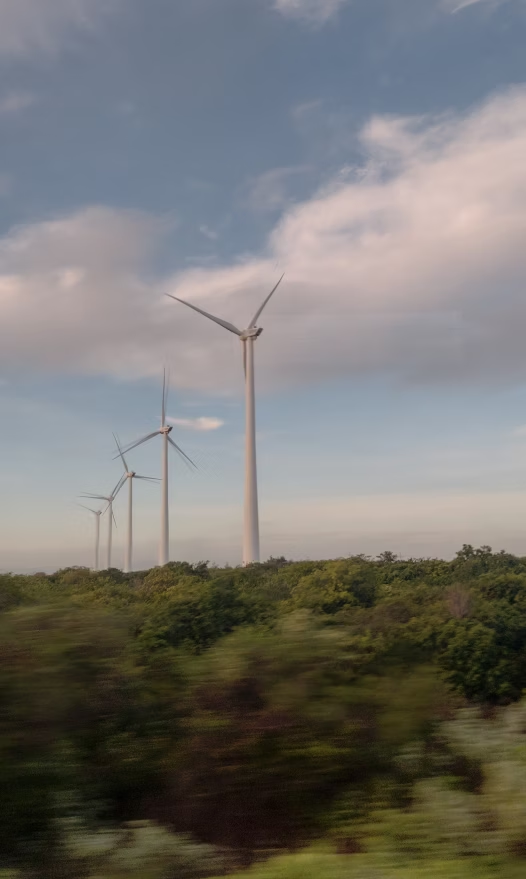
Danish energy company Ørsted has launched legal action against the US government after work was suspended on one of its biggest offshore wind projects. The project, called Revolution Wind, is located off the north east coast of the US and has a total value of around 5 billion dollars.
For Ørsted, this project really matters. It is almost finished, with close to 90 percent of construction already completed. Most of the wind turbines are already installed, and the wind farm was expected to start delivering electricity to US homes in 2026.
What happened?
In late December, the Trump administration ordered a suspension of leases for five offshore wind projects under construction in US waters. The government said the decision was linked to national security concerns, but did not provide detailed explanations.
This was not the first interruption. Earlier in 2025, the same project received a stop work order, which was later overturned by a judge. Now, Ørsted and its partner Skyborn Renewables are asking the courts to block the latest suspension and allow construction to continue.
Ørsted argues that the project followed all required rules and approvals. The company spent nearly a decade securing permits and has already invested billions of dollars. From their perspective, stopping the project at this late stage causes serious financial harm.
What does this mean for new investors?
This story highlights something important for anyone investing in renewable energy.
Political risk can matter just as much as technology or demand.
Even when a project is almost complete, changes in government policy can delay or threaten profits.
At the same time, the fact that Ørsted is willing to challenge the decision in court shows confidence in its legal position and long term strategy. Courts have previously allowed work on this project to resume, which gives investors some reason for cautious optimism.
What happened to the stock?
Ørsted shares dropped sharply when the lease suspension was announced in December, falling by more than 10 percent. When news broke that the company was taking legal action, the stock rose around 4 percent in a single day.
For the stock, the short term outlook remains volatile. The legal process could take time, and uncertainty often weighs on share prices. If Ørsted wins the case and restarts construction quickly, the stock could benefit. If delays drag on, investors may stay nervous.
For long term investors, this is a reminder that clean energy growth can be uneven, especially when politics get involved.
Sources: