
16/1/26
Why My Budget Finally Works (Hint: It’s Sinking Funds)
Sinking funds are the grown-up way to spend money without blowing your budget.

Three years ago, I went to a friend’s wedding and did something I probably should’ve avoided: I added it all up afterwards.
Because weddings are expensive - not just the gift, but the bachelorette parties, the accommodation, the transport… and somehow, always a new outfit.
All in all, it cost me over £200.
And that was just one wedding. One weekend. One couple.
So I made a decision right there:
Future me was going to need help.
Because for me, attending my friend’s weddings is a must.

So three years ago I started saving specifically for weddings.
Not vaguely.
Not “whatever’s left at the end of the month.”
But intentionally.
This is the quiet power of sinking funds.
What are sinking funds?
Sinking funds sound boring. Something your accountant would say…
But they’re one of the most life-changing money systems I’ve ever used.
At their core, sinking funds are savings accounts with a purpose.
Each one exists for a specific, expected expense - the things you know are coming, even if you don’t know exactly when.
They’re not for emergencies - they’re for life.
Think of them as pre-paying for your future without the stress.
Examples of sinking funds (including mine)
I currently use sinking funds for three main categories:
- Weddings
Because apparently everyone I love is getting married at the same time.
- Holidays
So trips feel exciting - not financially irresponsible.
- Big purchases
For a new couch, computer, random adult upgrades that always seem to appear out of nowhere.
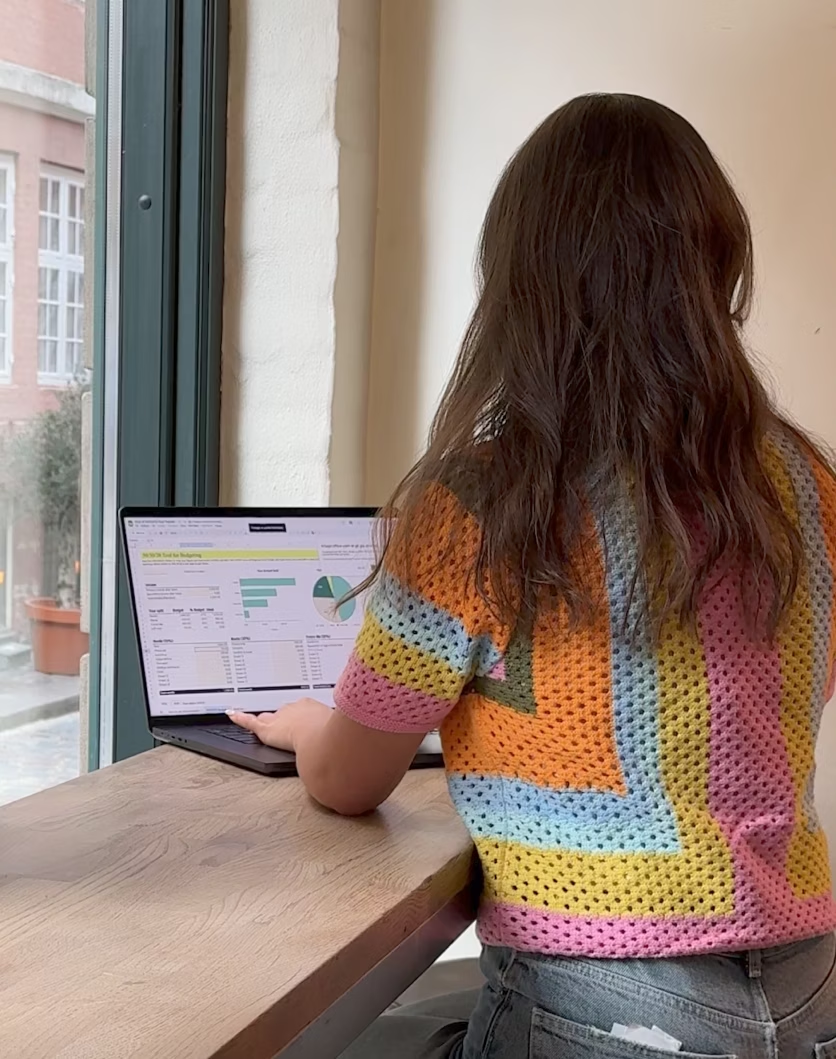
None of these are emergencies. They’re just predictable life moments that hurt financially if you pretend they won’t happen.
Other common sinking funds people use:
- Christmas
- Birthdays
- Car insurance
- Moving costs
- Home repairs
Why sinking funds are so powerful
Sinking funds don’t stop you from spending — they change how you spend.
Here’s what they do really well:
- You stop relying on credit for predictable expenses
- You spend without guilt because the money is already allocated
- Big expenses stop wrecking your monthly budget
- Your finances feel calmer and more intentional
- You stay in control even when life gets expensive
Sinking funds turn financial chaos into a boring system.
And honestly, if you ask me? Boring is underrated.
Step-by-step: how to set up your own sinking funds
Step 1: Look ahead
Think 6–12 months into the future and ask:
- What always seems to “surprise” me financially?
- What big expenses do I know are coming?
Step 2: Name your sinking funds
This part matters more than people think.
“Wedding fund” hits differently than “Savings account 3.” And “Holiday fund” feels very different from “General savings.”
When I was saving for three months off work to travel around Australia, I called the account “Land Down Under” and suddenly saving felt less like discipline and more like a countdown.

Step 3: Do the math
Don’t overthink it.
Total cost ÷ number of months = monthly amount.
Progress beats perfection.
Step 4: Decide where to keep them
- Use bank accounts with separate pots or spaces
- Or keep everything in one savings account and track amounts manually
Step 5: Automate it
Set transfers on payday into your sinking funds. Because life gets busy and trust me, you’re gonna love yourself for doing this.
How sinking funds fit into your monthly budget
Here’s the mindset shift:
Sinking funds aren’t “extra” savings. They’re part of your budget.
Instead of wondering why certain months feel ridiculously expensive, you spread those costs out evenly over time.
Your budget becomes:
- Fixed bills
- Everyday spending
- Sinking funds
No drama. No panic. Just planning.
I’m forever grateful to past me. Because this year, I have two weddings coming up.

And instead of stressing, calculating, or quietly resenting my bank account, I get to go all in.
But my wedding sinking fund is just an example.
I’d love to hear: do you have a sinking fund already and what’s it called?
Or what would your first one be? Let us know in the comments.
FAQ
How many sinking funds should I have?
As many as you need but not so many that it feels overwhelming. I suggest you start with 2–4 and build from there.
Is a sinking fund the same as an emergency fund?
No. Emergency funds are for unexpected expenses.
Sinking funds are for expected ones.
You need both — they do different jobs.
How do I actually set one up?
Open an account with savings pots, or use one savings account and label amounts. Name the fund. Automate contributions. Let it quietly work in the background.