26/11/25
The Federal Reserve, Explained - And Why It Affects Your Money
The Federal Reserve, Explained - And Why It Affects Your Money

Hopes for a December rate cut are fading as the Federal Reserve sends mixed signals.
And once again, the world’s most powerful central bank is back in the spotlight.
Here’s what’s going on: Just a few weeks ago, investors were nearly certain the Federal Reserve would cut rates again in December. But after a series of cautious remarks from Fed officials - that confidence has collapsed.
The odds dropped from 67% a week ago to 44% now (after being +90% a month ago).
That's at least one of the reasons why the stock market, especially tech in the US, was a little shaky again this week.
Behind all that market noise is a small group of economists in Washington.
Welcome to the Federal Reserve, where quiet decisions shake the world economy.
But what exactly is the Federal Reserve?
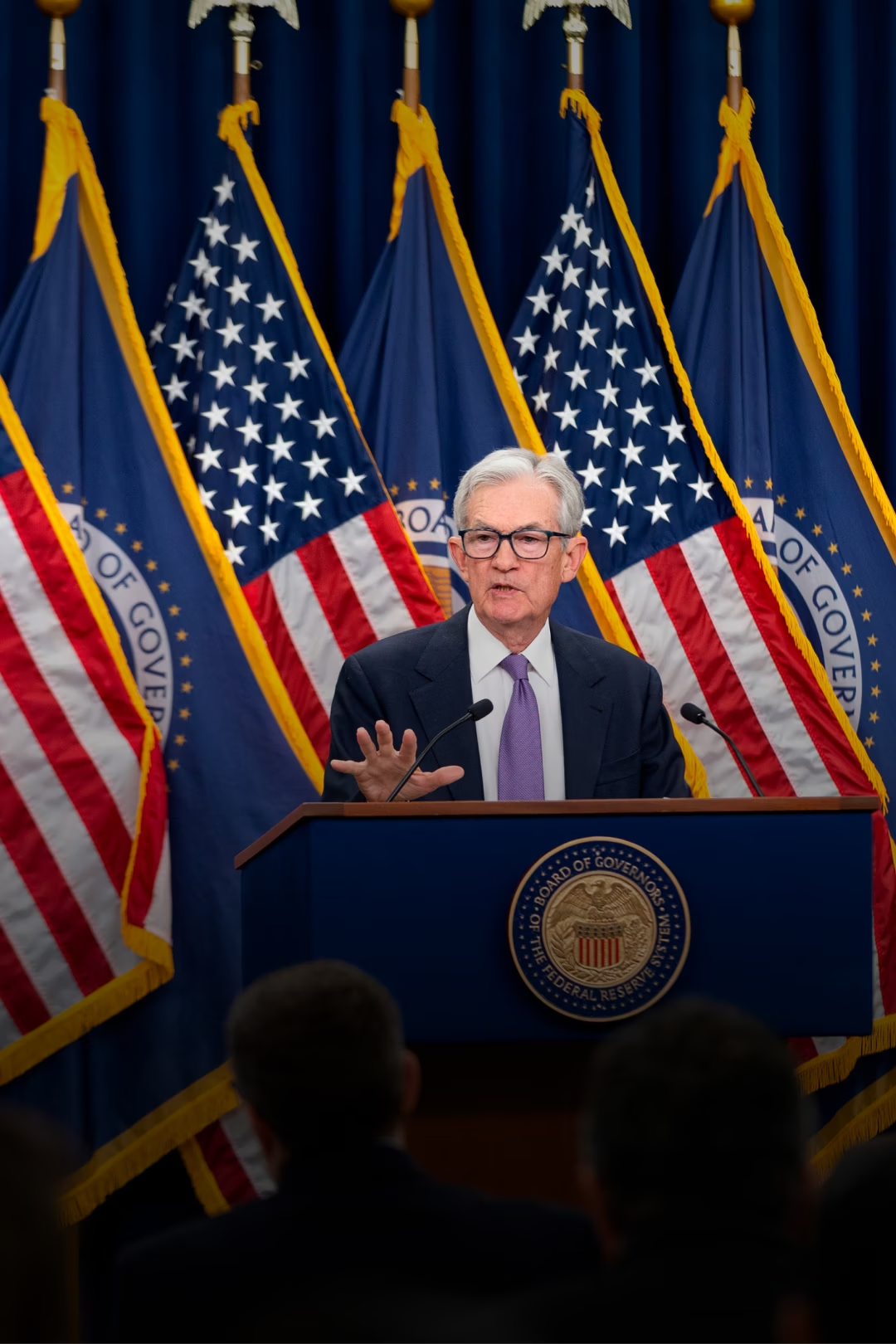
Who is Jerome Powell? And how much power does he really have - especially when Donald Trump is back in the picture?
Let’s break it down.
What are central banks?
Think of a country as a giant apartment building.
Everyone lives there — families, companies, governments — and they all need to keep the lights on.
The central bank is the building’s manager. It doesn’t own the apartments, but it controls the heating (monetary policy), checks the water pressure (financial stability), and makes sure the pipes don’t burst (the banking system).

Most countries have their own version of a central bank — the Bank of England in the UK, Nationalbanken in Denmark (though for EU countries, monetary policy is actually run by the European Central Bank), and in the U.S., the Federal Reserve - or simply, “the Fed.”
So, what do they actually do?
Their jobs look slightly different from country to country, but here’s the gist:
- The Fed works under what’s called a “dual mandate” - it’s responsible for keeping prices stable and making sure as many people as possible have jobs.
- The European Central Bank (ECB) has just one primary goal: price stability. It can support growth and employment, but only if that doesn’t get in the way of keeping inflation under control.
- The Bank of England operates much like the ECB but with a bit more wiggle room when it comes to balancing inflation and economic growth.
One of the ways the Fed can affect price stability is by adjusting interest rates - the cost of borrowing money - to cool things down or heat them up.
When inflation is high, the Fed raises rates to slow spending and bring prices under control.
When growth stalls, it lowers them to boost the economy by encouraging borrowing and investments.
In short, the central bank’s role is to make sure the economy doesn’t catch fire or freeze over.
Why interest rates matter to you
Interest rates might sound abstract, but they shape everyday life.
When the Fed raises rates in the US, mortgages tend to get pricier, car loans cost more, and businesses scale back borrowing which can slow job growth. On the brighter side, savers earn more on their deposits.
When the Fed cuts rates, borrowing becomes cheaper, boosting the economy and fueling growth but it can also push prices up (hello inflation).

So when investors debate “rate cuts,” what they’re really asking is whether money will feel tighter or looser in the coming months - for everyone.
The Fed and its global superpower status
Now, the Federal Reserve isn’t just America’s central bank. It’s the world’s.
Because the U.S. dollar is the dominant global currency used in trade, energy pricing, and finance, the Fed’s decisions send ripples globally.
When it raises rates, the dollar strengthens. Imports become cheaper for Americans but more expensive elsewhere. Countries that borrow in dollars suddenly owe more. Emerging markets wobble, stock markets react, and even housing prices in Europe and Asia can shift.
That’s why investors everywhere hang on the Fed’s every word. It’s not only steering U.S. policy - it’s setting the tempo for global money.
When politics meets monetary power
Central banks are designed to be independent.
Politicians aren’t supposed to dictate monetary policy. The idea is simple: you don’t want a president cutting rates right before an election to boost the economy (….and thereby their popularity)
However, Donald Trump has long criticized the Fed. During his first term, he publicly pressured Jerome Powell — the Fed Chair — to cut rates faster, even calling him “a bigger enemy than China.”
Powell, calm and conservative by nature, refused to bend. His message was clear: the Fed’s duty is to ensure economic stability, not political convenience.
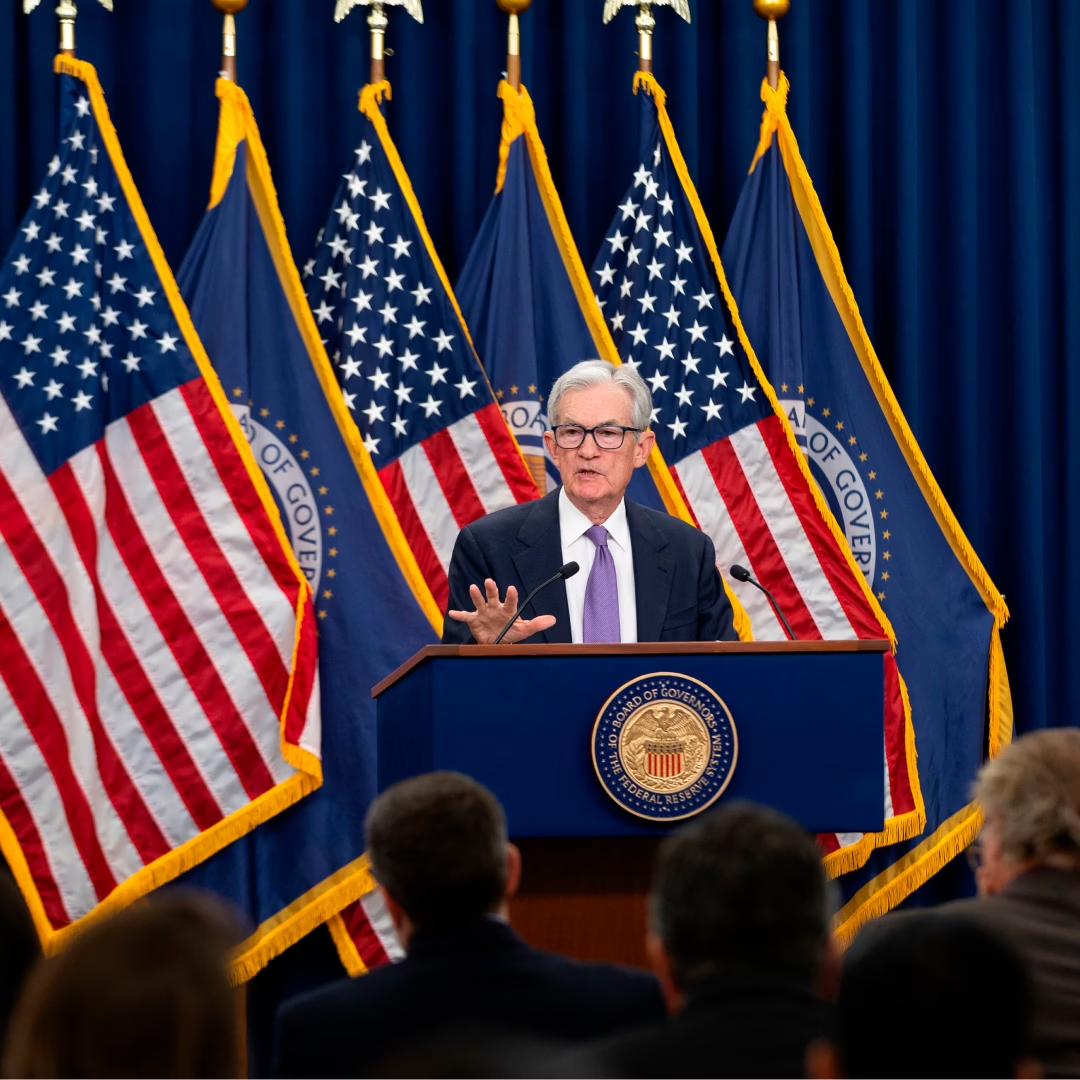
Fast forward to today. Trump is back and so is the pressure. After dismissing officials behind disappointing data and the departure of Fed board member Lisa Cook, he’s testing how far “independence” really goes.
By nominating economist Stephen Miran, an ally who supports his plan to cut interest rates aggressively, Trump could gain indirect influence over the Fed.
That worries investors, because once politics start steering monetary policy, trust in the system can unravel quickly.
Who is Jerome Powell?
Jerome “Jay” Powell isn’t your typical economist.
Trained in law, seasoned in investment banking, and experienced in public service under both parties, he became Fed Chair in 2018 appointed by Trump himself.
Powell is cautious, disciplined, and deliberate. The kind of man who speaks in measured sentences and avoids surprises. But he’s also ready to take action when needed.
During the pandemic, he slashed rates to zero and pumped trillions into the system to keep it afloat. When inflation surged, he reversed course and raised rates aggressively to stabilize prices.
Critics disagree on whether he’s too slow or too strict, but Powell’s guiding principle has never changed: protect the Fed’s independence above all else.
That independence is the foundation of global market trust. Without it, every rate move would look like a political act, not an economic one.
What’s at stake
As Trump once again challenges the Fed’s autonomy, the next few months could redefine the boundaries between politics and central banking.

For markets, that’s not a minor change. The Fed’s credibility rests on one fragile thing: trust. If that erodes, confidence in the dollar and in global financial stability could follow.
For households, that means more uncertainty: about inflation, mortgage costs, savings, and investments. Because when those who control money start fighting, the fallout rarely stays on Wall Street.
Why it matters
Central banks might seem remote, but they shape the rhythm of our financial lives.
All eyes are now on the Fed’s December meeting where investors are hoping for another rate cut.
And as the meeting approaches, remember: every sentence Powell delivers isn’t just about numbers. It’s about power - and about whether the world’s most important central bank can keep doing its job without someone else influencing.