16/9/26
What I Spent This Week as a Bid Manager and Entrepreneur Making $102K
Ever wondered how others really manage their money?

Ever wondered how others really manage their money?
In the A Week in My Wallet series, we share it all, because talking about money shouldn't be off-limits.
Every week, an anonymous member shares a week of their spending: no names, no filters, just honest stories about life's everyday financial choices.
Ready to join the conversation and help make money talk less taboo? Share your own story via our form here.
Monthly Take-Home Pay (after tax): £4,400ish ($5,940) — varies because of my freelance income. This is made up of £3,230 ($4,361) salary, £750 ($1,013) rental income, and £420 ($567) freelance writing income.
Do you share expenses with someone?: I share household bills with my partner. We both pay £475 ($641) a month into a joint account, covering groceries, utilities and council tax. We manage our other money independently (though we do talk about it!)
Household Income (if shared): £115,900 ($156,465)
What is your overall monthly budget?
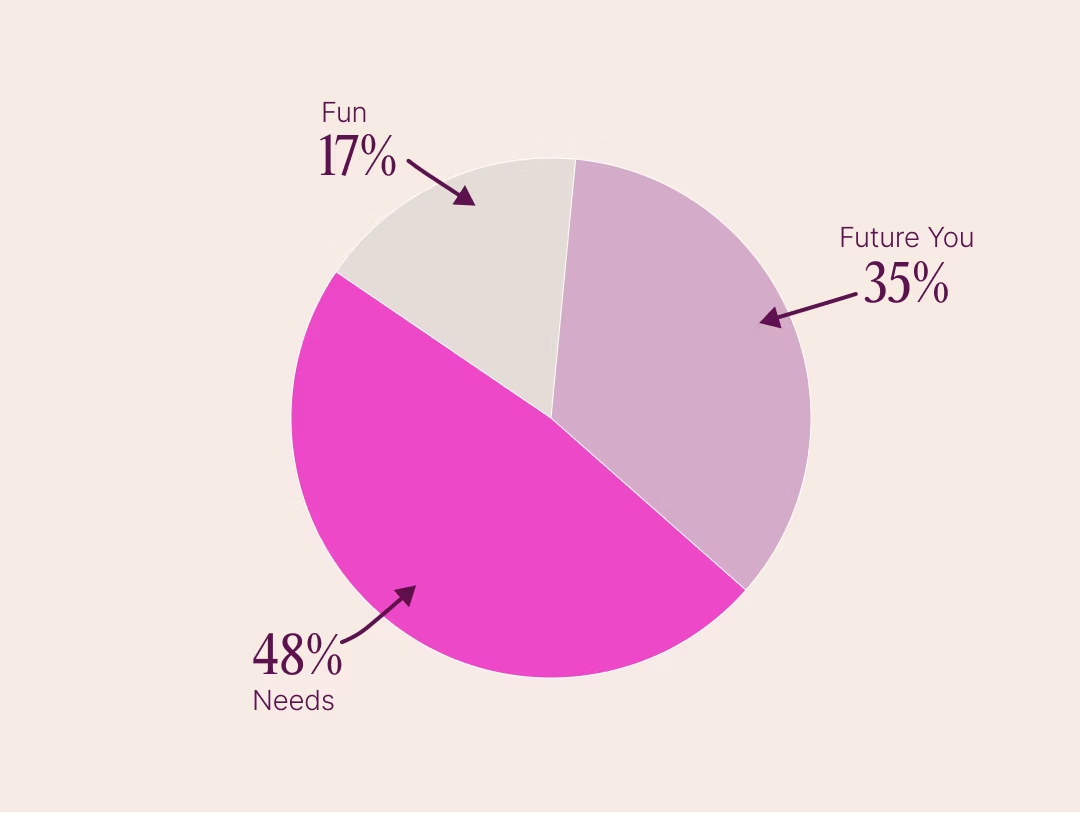
Needs: 48%: £2,000 ($2,700)
- Needs: My big personal expenses include my half of our household bills (£300 [$405]) and groceries (£200 [$270]). I also pay into a sinking fund for less frequent expenses, like trains, firewood, insurance, etc.
- £975 ($1,316) — Rental income expenses (I don't make a profit).
- £100 ($135) — Freelance writing business expenses.
Fun: 17%: £695 ($938)
- £695 ($938) — including £400 ($540) holidays/travelling.
Future You budget: 35%: £1,430 ($1,931)
- £385 ($520) — Investment in a Stocks and Shares ISA
- £720 ($972) — Investment in a SIPP
- £320 ($432) — Freedom fund top-up
Amount left each month after essentials (to spend, save or invest): £2,125 ($2,869)
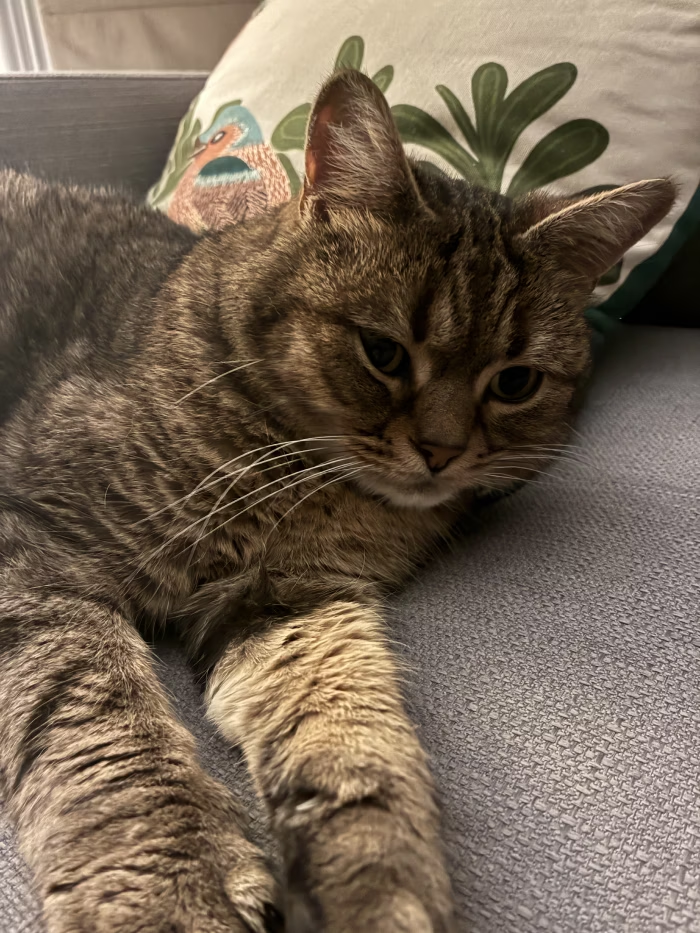
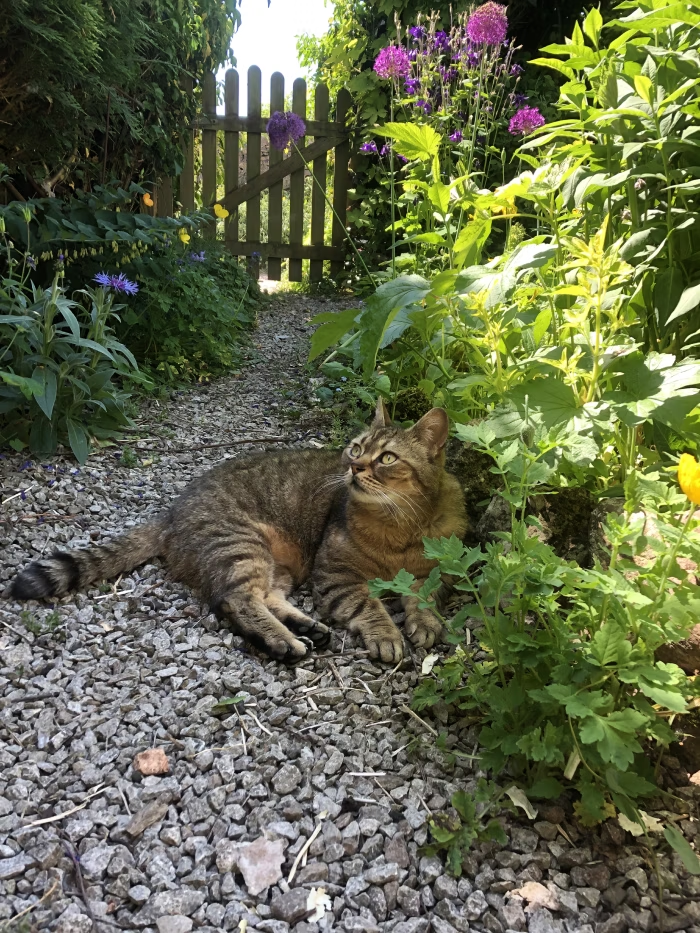
Dependents (if any): My tabby cat, Prince.
My Relationship With Money
Growing up, did your parents or guardians educate you around money?
No, but my upbringing undoubtedly shaped my money beliefs. I grew up in a household where wanting more money — or even just talking about it — was seen as materialistic and selfish. I come from a working-class background in Manchester, where living within your means was drummed into me. No-one in my family had ever worked for a private company, negotiated a payrise, started a business or invested in the stock market. I had to teach myself all of these things, just as I had to unlearn some of my limiting beliefs around money. Sometimes, it feels like I'm playing catch-up, especially as I only started investing a couple of years ago.
What was your first job and why did you get it?
At 13, I got a job doing the paper round after building up the courage to ask at the local newsagents. After uni, I applied to join the NHS Graduate Scheme, mainly because I felt I should get a graduate job and all my family worked for the public sector, so it didn't occur to me that I might have other options.
Did you worry about money growing up?
I had a happy childhood without having much. I was aware that we didn't have the same money to spend on things like Sky TV or holidays abroad, but I just accepted it. I only became aware of money worries in my late teens. My parents had taken out an interest-only mortgage without fully understanding it, and I remember things feeling on edge.
Thankfully, my dad received a voluntary redundancy payment at just the right time and was able to pay off the debt. I don't know what would have happened otherwise.
At what age did you become financially responsible for yourself and do you have a financial safety net?
I had multiple jobs while at sixth form and uni to pay for my living expenses. I got a 'proper' job and built my emergency savings in my early 20s. Sometimes I felt like I was missing out as my uni friends were doing casual jobs and travelling, though that wasn't really an option for me at the time. It gave me a strong sense of financial responsibility, but there have definitely been times where I've taken it too far and denied myself spending on fun because it felt frivolous and that I hadn't earned it.
Do you worry about money now?
Yes, though I'm working on it! It plays on my mind that my partner is in a relatively precarious money position (only one month's emergency savings, no pension), which could impact both of us if something goes wrong. We've talked about it and come up with a plan, and it's been satisfying to see him making progress towards his goals. I'm also conscious I can get a little obsessive about optimising my money, and am learning to be less attached. At this stage in my life, I'm giving myself permission to not always chase the small money savings, like cashback and switching bonuses. Instead, I'm learning to conserve my time and energy to rest and earn more.
What is your biggest money regret?
I regret ploughing too much money into bricks and mortar, believing it would buy freedom. I overpaid ridiculous amounts on the mortgage for my first flat and paid it off entirely by 32. At the time, I thought it was a massive achievement. But the truth was it gave me security, but not the financial freedom I really craved. It sounds silly to me now, but at the time I didn't know about investing in stocks as an alternative.
There was an echo of that mistake at 33. When I moved to the countryside with my partner, it didn't occur to me that I could sell my flat and put that money in a pension. Instead, I rented it out and ended up losing money. I'm now learning from this mistake and plan to sell the rental flat and invest the proceeds in a pension.
What financial goals are you working towards?
I have big ambitions to achieve financial freedom and retire at 55. My partner is 12 years older than me, so this would mean we can both enjoy retirement together. The reason why I invest so much now is to give myself the freedom to not work when I'm older.
My other big goal is to sell my rental property. I lose money each month, and the property's value is going down. It's a massive drain on my time and energy. The idea of selling it feels liberating. It will free up my headspace to go all-in with my writing business. Ultimately, this will help me move towards my goal of only working on my terms. I'm proud of myself for doing the hard work to rewire beliefs about money over the last couple of years. While it's all still a work in progress, I'm moving towards making decisions aligned with my values — freedom and fulfilment, rather than fear and scarcity.
Who is your financial role model (if any), and why?
My partner's sister is a brilliant entrepreneur and has created multiple successful retail businesses. While we have different values and spend our money very differently, I admire her money mindset. It feels like she represents the opposite of all the limiting money beliefs I grew up with. I love that she's always looking out for and seeing opportunities. That entrepreneurial spirit is something I can definitely learn from. She is very much in a creator, not a victim mindset.
Reflections on My Spending Habits:
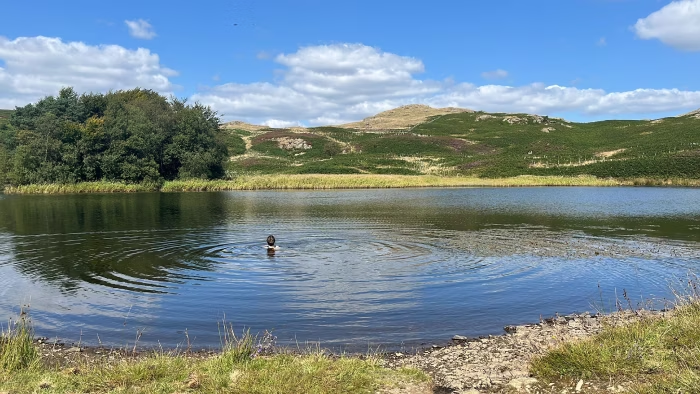
This is just a snapshot of one week, and isn’t reflective of my monthly allocations as it doesn’t include all my bills and investments. My lifestyle spending is very different now I live in the countryside. (No more brunches or after-work drinks). My favourite things don’t really cost money — a walk through the woods or a picnic by the lake. But the flipside is I spend WAY more on my house and garden than I used to — it’s a bit of a project.
What I Spent In A Week
Day 1: Monday – £32.50 ($44)
- £25.50 ($34) — An online yoga programme — it’s a big part of my wellbeing routine as the nights start to draw in.
- £7 ($9) — Booths groceries shop for a swimming trip at a wild swimming spot. We stocked up on picnic items like a baguette, garlic cheese, tomatoes, and elderflower cordial.
Day 2: Tuesday – £22 ($30)
- £20 ($27) — I’ve just joined the local bowling green. It’s right outside my house and it’s a great way to completely switch off from the modern world.
- £2 ($3) — We treated ourselves to cinnamon buns that were on offer.
Day 3: Wednesday – £88 ($119)
- £11 ($15) — Legal paperwork for my rental property as I prepare for selling it.
- £75 ($101) — My half of our energy bill.
- £2 ($3) — Turkey as a treat for Prince the cat.
Day 4: Thursday – £0 ($0)
- £0 ($0) — No spending day. This can happen easily as I work from home and there are only limited shops/cafés nearby.
Day 5: Friday – £15 ($20)
- £15 ($20) — My half of our veg box for making our meals for the week. My boyfriend does most of the cooking while I manage the household finances, so it’s a good partnership.
Day 6: Saturday – £10.79 ($15)
- £1.80 ($2) — A birthday card for my aunty. I’m yet to come up with a present idea.
- £7.49 ($10) — My half of our Spotify subscription.
- £1.50 ($2) — Eggs from a local farm. I have them for breakfast every day, so we’re constantly having to stock up.
Day 7: Sunday – £90 ($122)
- £75 ($101) — We had a trip to the garden centre to buy some plants and pots. There was a huge thunderstorm while we were there, so we sheltered in the café with a damson juice.
- £15 ($20) — Booths groceries. We picked up a couple of treats like a spinach and feta pie, alongside basics like sourdough, sweet potatoes, tomatoes, and butter.
Total Weekly Spend: £258.29 ($349)