3/9/26
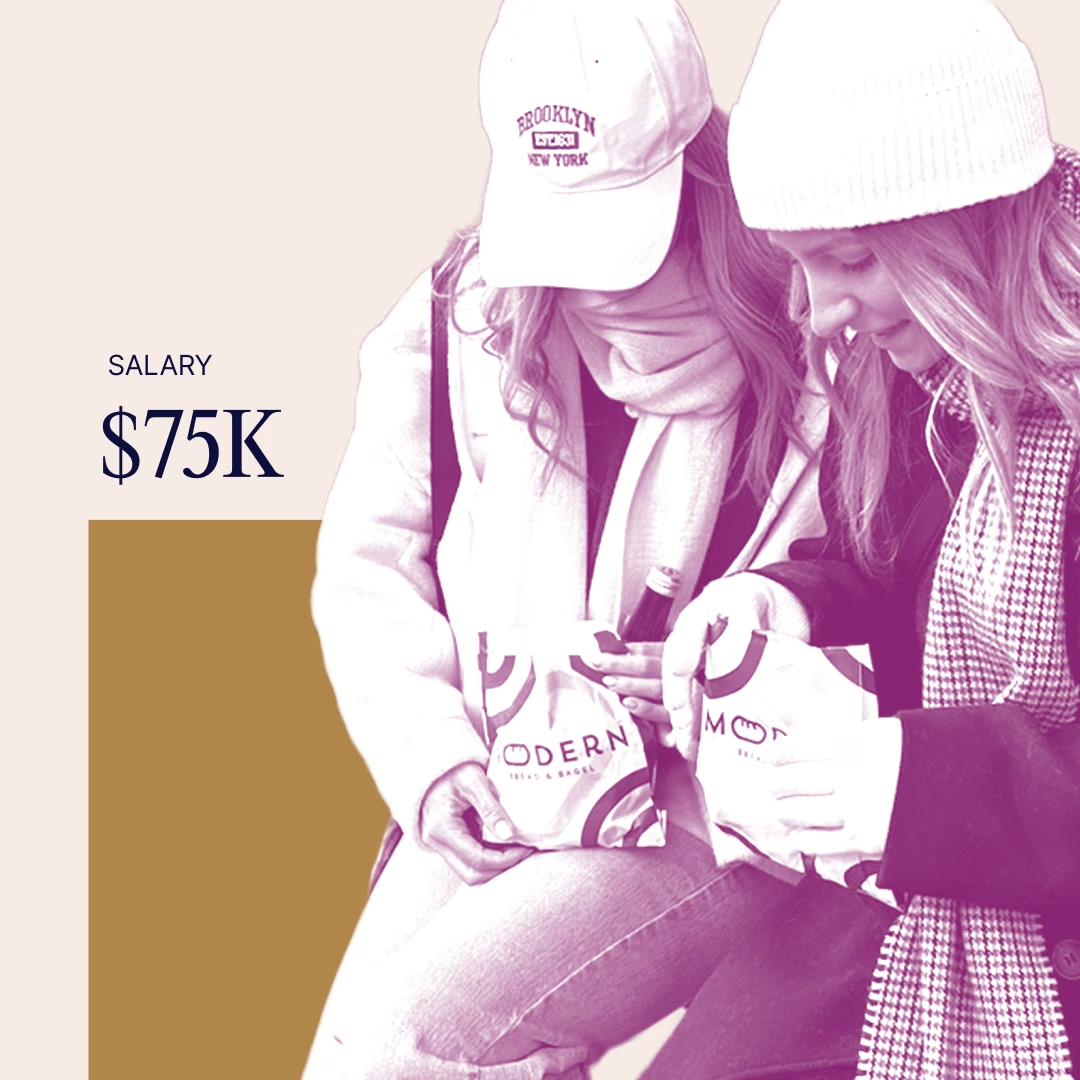
What I Spent This Week as a Hospital Pharmacist Making $75K
Ever wondered how others really manage their money?

Ever wondered how others really manage their money?
In the A Week in My Wallet series, we share it all, because talking about money shouldn't be off-limits.
Every week, an anonymous member shares a week of their spending: no names, no filters, just honest stories about life's everyday financial choices.
Ready to join the conversation and help make money talk less taboo? Share your own story via our form here.
Monthly Take-Home Pay (after tax): CAD $5,687 ($4,095)
Do you share expenses with someone?: No, but I am currently living with my parents, who take care of groceries.
What is your overall monthly budget?
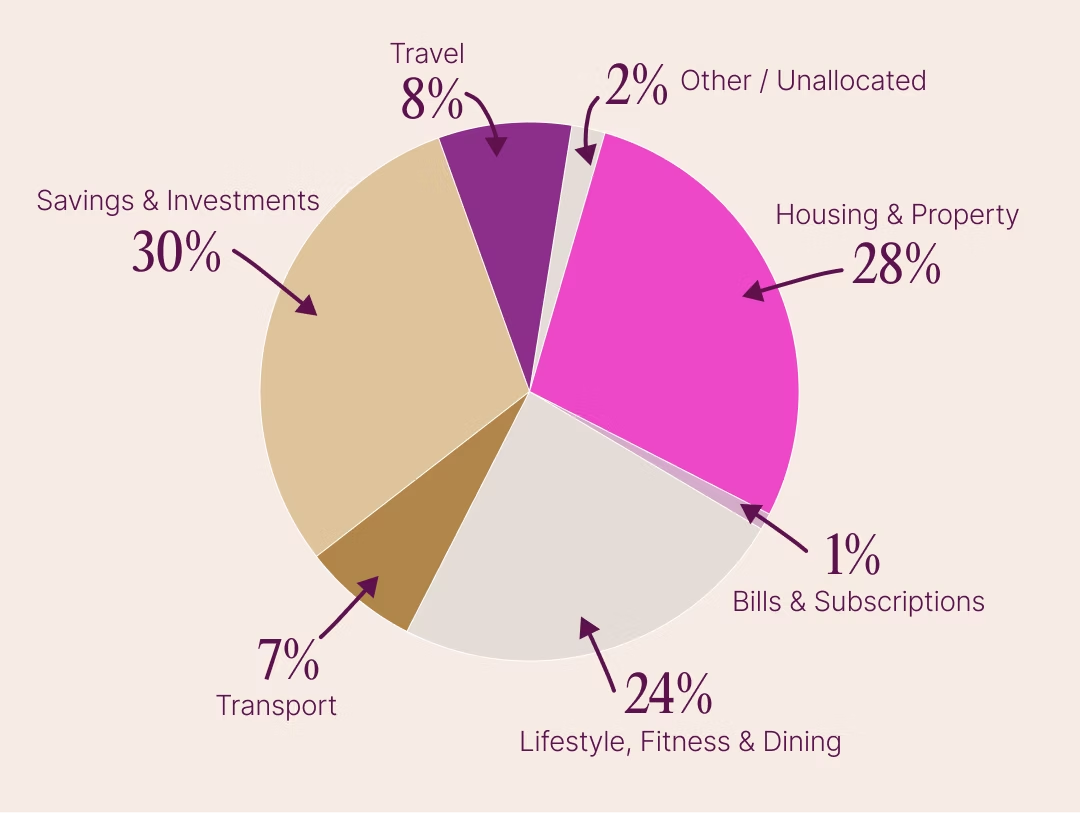
I modified the 50/30/20. My needs are around 40%, wants are 25%, and investments are 30%. This 30% for investments is after all the payroll deductions and does not include the pension contribution I mentioned above.
Even though my employer provides the opportunity to participate in a pension plan, I still want to save more in my 20s to build as solid a financial foundation as possible, so I have more flexibility and freedom in my career.
- Rent / Mortgage: Condo maintenance fee of CAD $1,240 ($893) per month and property tax of CAD $370 ($266) per month.
- Bills, Subscriptions & Utilities: My phone bill is CAD $39 ($28) per month. Music is CAD $4.50 ($3), as I split a subscription plan with my friends. Utilities are included in the condo maintenance fee.
- Transport: My car insurance costs CAD $200.17 ($144) monthly, and gas costs around CAD $160–$180 ($115–$130) each month for me.
- Groceries & Essentials: As mentioned previously, my parents take care of the groceries.
- These are more like wants than absolute essentials, but they are important to me: I spend around CAD $320 ($230) on fitness classes. I also allocate around CAD $600 ($432) for eating out with my friends and family and getting matcha, coffee, and all the other drinks I love.
- I put aside CAD $460 ($331) a month for vacations, plane tickets, and other travel-related stuff.
- Investment Contributions: I ensure I invest 20% of each pay check, but at the end of the month I will invest all the surplus, which increases the proportion to 30–40%.
Amount left each month after essentials (to spend, save or invest): CAD $3,644 ($2,624) for wants in general, including classes and eating out, and for investment.
Dependents (if any): None.

My Relationship with Money
Growing up, did your parents or guardians educate you around money?
Growing up, my parents never formally taught me how to budget, save, or invest, but I think I learned a lot about money simply by watching how they approached it. One of the biggest lessons I picked up was that you should never spend more than you have, which is something I still follow today—I never put more on my credit cards than I could afford to pay from my bank account. I also inherited their habit of looking beyond the price tag and comparing unit prices when shopping to make sure I'm getting the best value.
Looking back, I realise that even though we didn't have formal conversations about money, their everyday habits became my financial foundation. As I've gotten older, I've started building on that foundation by teaching myself about the areas I wasn't exposed to growing up, especially investing and long-term financial planning.
What was your first job and why did you get it?
My current job is actually my first job. I applied for the intern position my current institution posted on our school's job board a few months before I graduated. I started as an intern and transitioned to a staff pharmacist after I got officially licensed. I have been working at the same institution for slightly over three years now.
Did you worry about money growing up?
I wouldn't say I worried about money growing up, but I did grow up thinking my family was poor. My parents were very careful with spending and would always compare prices and look for the best value. I remember wanting a MacBook, for example, but my dad felt a Windows laptop could do the same things for less, so he wouldn't buy one. As a child, I took these decisions as a sign that we couldn't afford things.
It wasn't until I became an adult and started spending my own money that I realised my perspective had been a little off. Looking back, some of the hotels we stayed at and restaurants we went to growing up are actually places I now have to think twice about spending my own money on. I think my parents simply had a very frugal mindset, and I've definitely inherited that from them.
At what age did you become financially responsible for yourself and do you have a financial safety net?
I became financially responsible for myself after one year of working. My financial safety net is mainly my emergency fund.
Do you worry about money now?
Yes, especially when I think about living on my own in the future. With the cost of living continuing to rise, I sometimes worry that a larger portion of my income will go towards everyday expenses, leaving less room to save and invest for the future.
What is your biggest money regret?
My biggest money regret is not learning about investing and starting earlier—ideally as soon as I got my first full-time job. Honestly, I wish I had discovered Female Invest sooner! I also spent thousands on designer items during my first year of working, which I would definitely not do now, as I am much more intentional about spending in a way that actually reflects my priorities and values.
What financial goals are you working towards?
Right now, my two biggest financial goals are potentially taking a career break next year to pursue a Pilates certification and saving for a down payment on a house within the next four years. I've been thinking about exploring fitness more seriously because it's something I genuinely enjoy and feel passionate about, and I'd like the time and freedom to see where that could take me. I already own a condo, but eventually I'd like to have a house that would be more suitable for starting a family.
These goals are motivating me to be more intentional with my money so I can give myself some flexibility to explore my interests while still working towards my longer-term goals.
Who is your financial role model (if any), and why?
My financial role model is my dad. He taught me to be thoughtful about where my money goes and to avoid paying interest whenever possible, because he sees it as money that could have been used for something more valuable. He also taught me to always think about whether I'm getting good value for what I spend. I've realised that a lot of my everyday money habits—comparing prices, avoiding unnecessary debt, and thinking twice before making a purchase—come directly from him.
Reflections on My Spending Habits:
I feel like my spending was pretty well aligned with my values. This year, I've been making health and wellness more of a priority, and I'm happy that I've been consistently going to fitness classes. I've set aside a specific budget for them, so even though the Lagree pass was one of my bigger expenses this week, it was planned and still within my budget.
On the other hand, I was a little shocked that two matcha lattes and two pastries came to almost CAD $40 ($29)! I've been making coffee at home most days to cut back on these smaller expenses, and that's been working well for me. At the same time, I don't want to eliminate little treats altogether—I think treating myself or my loved ones once in a while is money well spent.
Overall, this week reminded me that being mindful with money doesn't have to mean saying no to everything; for me, it's more about making sure my spending reflects what I actually value.

What I Spent In A Week
Day 1: Monday – CAD $256.02 ($184)
• CAD $200.17 ($144) — Car insurance
• CAD $55.85 ($40) — Gas
Day 2: Tuesday – CAD $0 ($0)
• CAD $0 ($0) — No expenses today.
Day 3: Wednesday – CAD $33.57 ($24)
I was off work and went to an appointment with my dad.
• CAD $14.57 ($10) — Two matcha lattes for us
• CAD $19 ($14) — Pastries for the two of us
Day 4: Thursday – CAD $48.03 ($35)
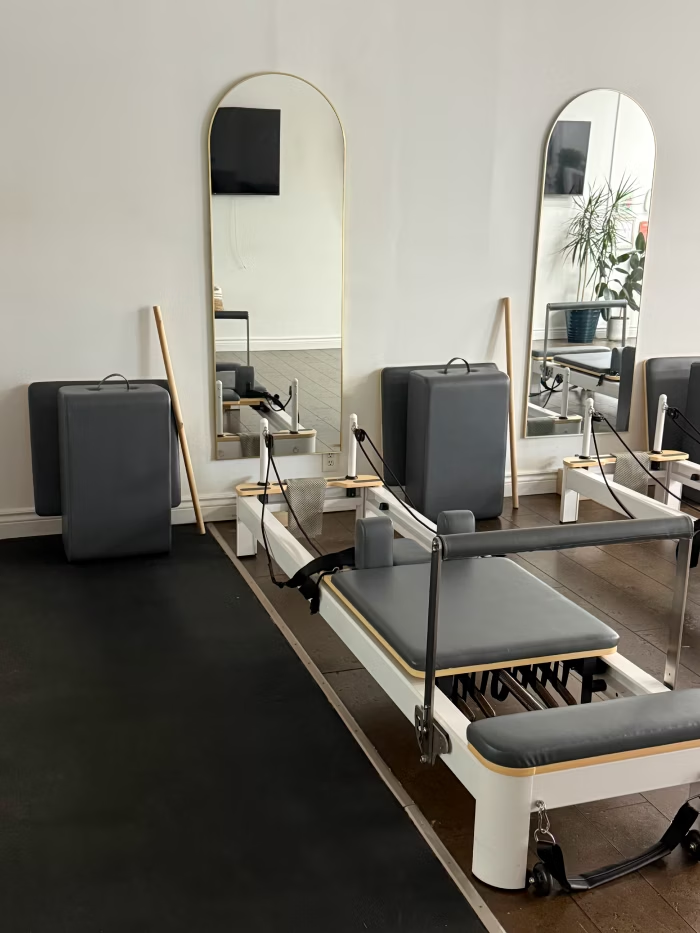
• CAD $48.03 ($35) — Two drop-in Pilates classes on Sunday for my boyfriend and me. I love Pilates so much, so I would love for him to try it out!
Day 5: Friday – CAD $0 ($0)
• CAD $0 ($0) — No expenses today.
Day 6: Saturday – CAD $276.53 ($199)
• CAD $186.45 ($134) — Two-week class pass for fitness classes
• CAD $90.08 ($65) — Sushi dinner for my boyfriend and me

Day 7: Sunday – CAD $3.38 ($2)
• CAD $3.38 ($2) — A bag of sponge toffee from a local snack store that we stumbled upon on our way back from the Pilates class
Total Weekly Spend: CAD $617.53 ($445)