
26/11/25
What Just Happened to Crypto?
What Just Happened to Crypto?

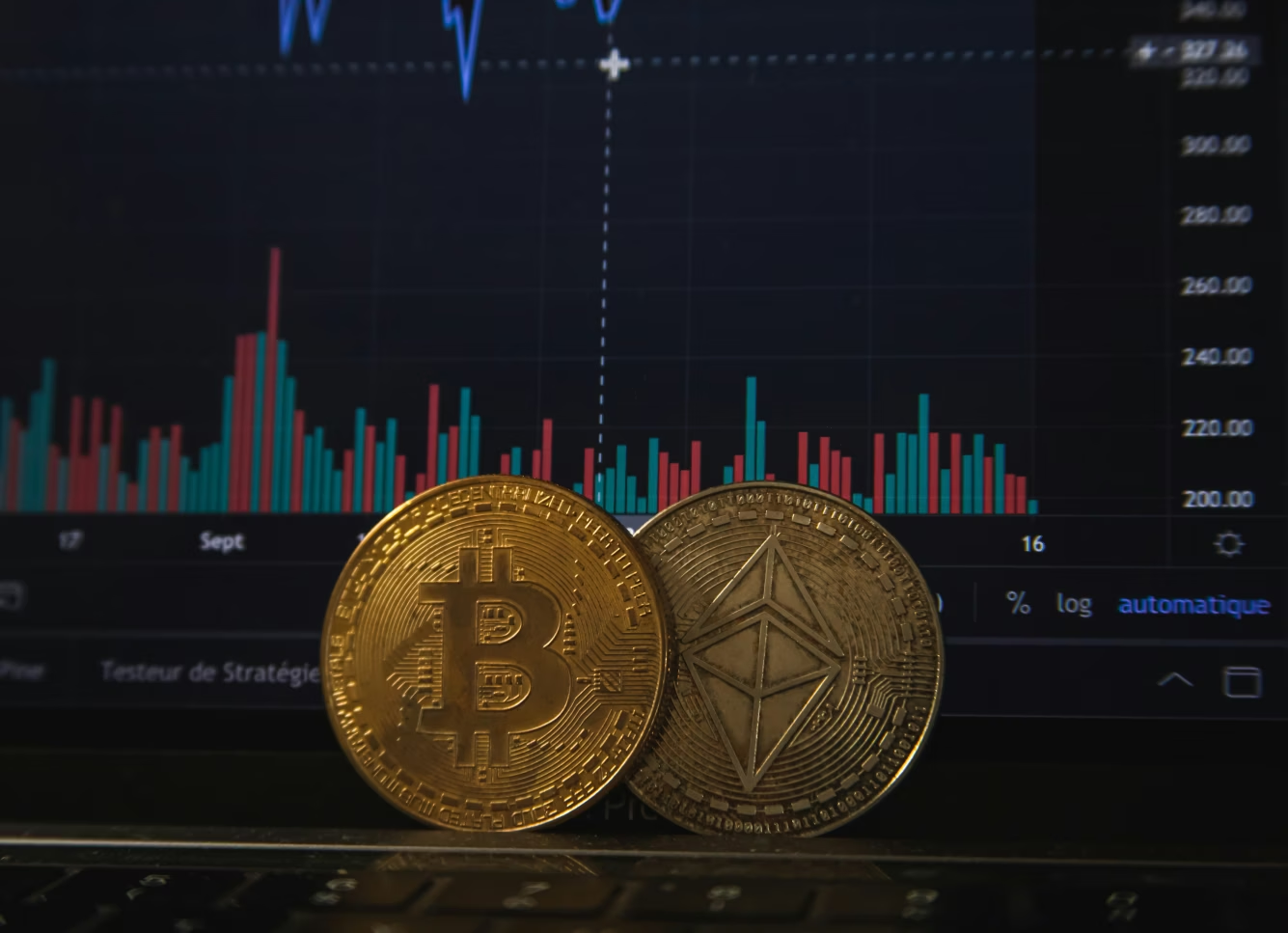
The last weeks have been rough for the crypto market. Really rough.
- $1 trillion in value wiped off the crypto market since October 7th
- Bitcoin is down 35% from its peak on October 6th
Bitcoin’s price dipped below to $81K early on Friday, having fallen more than 9% in the past 24 hours.
For many crypto investors, it feels like déjà vu: big gains followed by big drops.
But what’s actually going on - and what does it mean for you?
Let’s start at the beginning.
A quick refresher: What is cryptocurrency, anyway?
If you’re new to crypto, here’s the speed-run version:
- Crypto is a digital form of money that isn’t issued by any central bank.
- It runs on blockchain technology, a system that lets value move from one person to another without a bank in between.
- There are thousands of crypto currencies, for example: Bitcoin, Ethereum, Thether, Solana, XRP to name a few.
- Bitcoin is the “digital gold story” - a scarce digital asset often compared to gold.
- Ethereum and Solana are the “technology story” - platforms for building apps, smart contracts, and more.
So crypto is part currency, part technology, part investment. That mix is exactly what makes it so sensitive to news, interest rates, and investor mood swings.
Why is Crypto Falling Right Now?
There’s no single villain here. A few different forces are hitting at once and together they’re shaking confidence.
1. Uncertainty around U.S. interest rates
Markets were hoping for an interest-rate cut in December, something that usually boosts riskier assets like crypto because government bonds become less attractive.
But now the signals have turned murkier and there’s a lot of uncertainty now around whether or not we’ll get a rate cut after all in December.
Less hope for lower rates → less appetite for risk → less appetite for crypto.
2. The AI hype cycle is cooling and investors are jumpy
Crypto and tech stocks tend to move in the same emotional orbit. Many investors hold both, and sentiment leaks between them. So when major AI stocks like Oracle and Nvidia start slipping, nerves show up everywhere.
After blowing past expectations with a huge earnings beat, Nvidia’s stock shot up initially - but then reversed and closed down, dragging other AI names with it.
Why?
Investors are suddenly anxious about whether AI stocks have run up too far, too fast. It’s a perfect reminder of why long-term investing matters more than short-term swings.
3. Crypto’s own boom-and-bust rhythm is raising questions
Bitcoin has a long history of four-year cycles:
Boom → crash → new boom → new crash.
It happened in 2017.
It happened in 2021.
And after hitting an all-time high in October 2025, investors are now asking:
Is this the start of another downturn?
Analysts disagree, but the uncertainty alone is enough to create big swings.
4. The wild card: “Treasury firms”
Huge public companies like Strategy own enormous amounts of bitcoin - roughly 3% of all the bitcoin that exists globally.
Their share price has now fallen more than 45%. And if the stock drops to a point where the company becomes worth less than its bitcoin stash, incentives shift:
Management suddenly has a reason to sell bitcoin to support the share price.
Just the possibility of that is enough to rattle the market.
So what does all of this mean for you?
It’s key to understand that investing in crypto is high risk and volatility - as you know by now - is expected.
That’s why, for many investors, crypto is a small slice of the portfolio representing:
- Belief in new technology
- The possibility of high long-term growth
- Diversification beyond traditional stocks
And even though the headlines sound dramatic, big swings are completely normal in the crypto world. The key is not to panic, but to understand the mechanics behind the noise.
Here are three things worth remembering:
1. Crypto moves faster than the stock market
That can mean bigger gains, but it also means sharper drops. Your time horizon needs to be long enough to handle turbulence.
2. Small positions can be plenty
You don’t have to go all-in. Many investors keep crypto at 1–5% of their portfolio. That’s more than enough to benefit if the market rebounds.
3. Don’t let emotions steer the wheel
When prices fall, it’s tempting to bail out fast. But pause and ask yourself:
Has anything fundamental changed in your strategy? If the answer is no, try not to react to short-term fear.
Is this the end, or the beginning of the next chapter?
No one knows.
But there’s one thing that makes this moment different from crypto crashes of the past:
- Crypto is far more mainstream.
- Big institutions and funds now own Bitcoin and Ethereum.
- Regulation has tightened - and generally improved.
- Stablecoins are woven into the broader financial system.
That’s why many analysts don’t believe we’re heading into another classic 80% decline and year-long bear market. But history doesn’t make promises.
One last thing: Crypto isn’t for everyone and that’s completely fine
The real question isn’t whether you should invest in crypto.
It’s whether you understand what you’re doing and why you want to invest in crypto.
Crypto is fascinating because it sits at the intersection of finance, technology, psychology, and global change. It’s also risky - which means curiosity and solid financial habits have to go hand in hand.