
30/10/25
When the World Raises Its Rent: Understanding Interest Rates (and Why You Should Care)
How do global interest rates actually work? We break it down for you.

One Tuesday morning in late 2022, the headlines blared: “The Federal Reserve Raises Interest Rates Again.”
Most people scrolled past. After all, what did a decision by a group of economists in Washington have to do with your grocery bill in Copenhagen, your student loan in London, or your savings account in Nairobi?
But a few weeks later, everything seemed more expensive. Mortgages jumped. Stock portfolios dipped. Groceries crept up again. Even the cost of borrowing for a new electric bike suddenly felt steeper.
It felt like the world had quietly raised its rent - and, in a sense, it had.
The Price of Money
Every economy in the world runs on one invisible ingredient: money. But money, like any other good, has a price. That price is called the interest rate - the cost of borrowing today instead of waiting until tomorrow.
When you borrow money, you pay interest. When you save money, you earn interest. It’s the financial heartbeat that keeps everything - from home loans to global trade - pulsing.
Central banks, such as the U.S. Federal Reserve, the European Central Bank (ECB), or the Bank of England, influence this heartbeat.
They don’t set every interest rate directly - most rates are determined by the market - but they set the policy or “base” rate: the short-term rate banks use when lending to each other.
That base rate acts as a benchmark, shaping the cost of credit across the economy. Market forces - expectations of inflation, risk, and demand for loans - then build on top of it to form the actual rates you see on mortgages, car loans, or savings accounts.
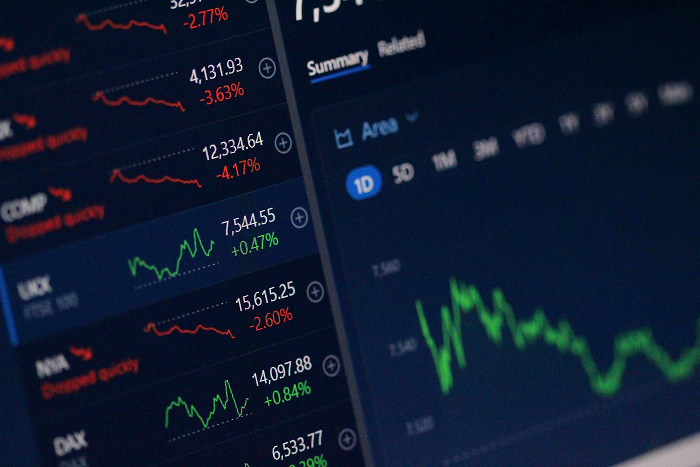
Think of it like adjusting the thermostat: central banks set the temperature target, but how warm each room feels still depends on the insulation and air flow (the markets).
• When it’s too hot - prices rising too fast, too much money chasing too few goods - the central bank turns down the heat by raising rates. Borrowing becomes more expensive, people spend less, and the economy cools.
• When it’s too cold - unemployment rising, demand drying up - they turn up the heat by lowering rates, encouraging borrowing and investment.
Every move on that dial sends a ripple through billions of lives.
How One Country’s Decision Shakes the World
In today’s globalized economy, a rate change in one country - especially the United States - rarely stays put.
When the Fed raises rates, investors around the world rush to buy U.S. dollars. Why? Because suddenly, U.S. government bonds (the safest asset in the world) pay more. That makes the dollar stronger.
Those bond “yields” - basically the interest you earn from lending money to the government - aren’t set by the central bank. They’re set by what investors expect will happen next.

If the Fed raises interest rates (or even hints that it will), investors know they could soon get better returns on new bonds. So they stop buying the old, lower-paying ones, which pushes their prices down and their yields up.
Higher yields make U.S. bonds more attractive to investors around the world, because they now pay more with very little risk. To buy those bonds, investors need U.S. dollars - and that extra demand is what makes the dollar stronger.
But here’s the twist: as the dollar rises, other currencies - the euro, pound, yen - often weaken. Imports become more expensive. Inflation in those countries can climb again.
To fight that, other central banks often follow suit, raising their own rates. What started as one move in Washington turns into a global dance of tightening and reacting - a domino effect that can push entire regions into slowdown.
Emerging markets feel it the most. Many borrow in U.S. dollars; when the dollar strengthens, their debt becomes harder to repay. In 2022, countries from Sri Lanka to Argentina felt the squeeze of a global rate spiral - one that started thousands of miles away.
If the world economy were a web, interest rates would be its tension points: pull one, and everything shifts.
A Quick Journey Through Time: How We Got Here
Let’s rewind a bit.
In 2020, the world shut down. Central banks slashed rates to near zero to keep economies alive during the pandemic. Money became almost free. People borrowed, governments spent, and investors flooded markets with capital.
Then came the aftershock: supply chains broke, energy prices soared, and consumers emerged ready to spend. Too much money met too few goods. Inflation surged to the highest levels in 40 years.
So, starting in 2022, central banks did what they always do when the economy overheats - they raised rates. Aggressively.
The U.S. Federal Reserve raised rates from near 0% to over 5% in less than 18 months. The Bank of England followed. The ECB too. Mortgage rates tripled in some countries. Suddenly, “cheap money” - the fuel of startups, property booms, and growth stocks - evaporated.
The result was a global reset. Growth slowed, valuations fell, and saving money started to make sense again.
It was painful, yes - but also necessary.
Because unchecked inflation is like a silent thief: it erodes the value of your salary, your savings, and your future. Higher rates, though unpopular, are one of the few tools that can stop it.
Even so, markets often move ahead of central banks, pricing in expected rate changes months before they happen - a reminder that perception can be as powerful as policy
What Happens When Rates Rise - and When They Fall
Here’s how that global “rent increase” shows up in your life:
1. Mortgages and Loans
Higher rates mean banks charge more to lend you money. If you’re buying a home, even a 1% increase in rates can add hundreds of euros or pounds to your monthly payment.
That’s why real estate prices often fall when rates rise - people simply can’t afford as much.
2. Credit Cards and Debt
Variable-rate loans, like credit cards or overdrafts, get pricier fast. Suddenly, that 15% annual rate becomes 20%. Compound interest - the good kind when you’re investing, the terrible kind when you’re borrowing - starts working against you.

3. Savings and Bonds
Here’s the silver lining: savers finally earn something again. For years, people earned almost nothing on their deposits. Now, savings accounts and bonds offer real returns. It’s a reminder that even in tough markets, there’s always an opportunity - if you know where to look.
4. Stocks and Investments
When rates rise, borrowing becomes expensive for companies. Profits shrink. Future earnings look less valuable. That’s why stock markets often fall when rates go up.
But not all sectors suffer equally. Banks and energy companies often benefit, while high-growth tech firms - the ones relying on cheap money - tend to feel the squeeze.
5. Currency and Travel
Higher rates attract foreign investors seeking better returns. That strengthens your currency - good for travel, bad for exports. A Danish or British tourist might suddenly find New York shopping cheaper, while local businesses exporting to the U.S. struggle to compete.
The world economy is a balancing act of these moving parts, each turning with the rate dial.
How to Think About Interest Rates as an Investor
For most of us, the words “Federal Reserve statement” don’t exactly make the heart race. But for investors, they’re pure gold - clues to where the world’s money is headed next. Because every word shapes expectations of future rates, which in turn move today’s bond yields, stock prices, and even currencies.
When rates rise:
• Bonds and cash become more attractive.
• Growth stocks lose their shine.
• Real estate cools.
When rates fall:
• Borrowing and risk-taking surge.
• Stocks rally.
• Currencies weaken, exports grow.
Understanding that rhythm helps you make smarter decisions - not just about investments, but about timing big life moves, like buying property or refinancing debt.
As one economist once put it: “Interest rates are the tide that lifts or lowers all boats.” Knowing where the tide is heading lets you steer, instead of drift.
The Gender Angle: How Rates Affect Women Differently
Here’s where the story gets even more interesting - and more personal.
Women, statistically, are less likely to invest in riskier assets like stocks and more likely to hold cash. When rates are low, that hurts - savings earn little, and the value of cash erodes with inflation.
When rates are high, however, disciplined savers can benefit. Suddenly, cash and bonds offer returns that keep pace with inflation.
But there’s another side: higher borrowing costs can disproportionately affect women, who on average have smaller incomes and less access to credit.
Mortgage affordability, student loans, and small-business financing all tighten.
The takeaway isn’t that rates are good or bad for women - it’s that understanding them is power. Knowing how they move helps you make proactive choices instead of reactive ones.
When you understand the system, you stop being at its mercy.
The Human Side of a Global System
It’s easy to think of central banks as cold, technocratic institutions - men in suits debating percentages. But their decisions ripple through the most human parts of life: the family deciding whether to buy their first home, the entrepreneur trying to fund a dream, the young woman saving for maternity leave.
Interest rates shape all of that. They decide which dreams get funded, and which have to wait. And yet, the more you learn, the less mysterious it becomes.
Interest rates are simply the world’s way of managing balance - between spending and saving, growth and stability, today and tomorrow.
They rise and fall in cycles, just like the seasons. The secret is not to fear them, but to understand what season you’re in - and plan accordingly.
The Aha Moment: Turning Awareness into Agency
Here’s what this means for you, concretely:
• If rates are high, focus on paying off expensive debt and maximizing returns on your savings. Fixed-income investments like bonds or high-yield accounts can shine.
• If rates are low, it’s often a better time to borrow and invest - just remember that cheap money can inflate bubbles.
• Always stay diversified. The economy will shift again - and your power lies in being prepared, not predicting perfectly.
Understanding interest rates isn’t about memorizing jargon or following every central-bank headline.
It’s about recognizing that behind every percentage point lies a story - one that touches your wallet, your work, and your world.
.avif)
Closing: The World’s Pulse
Next time you hear that the Federal Reserve, the ECB, or the Bank of England has raised rates, don’t scroll past. Pause and picture the invisible web connecting your savings account, your grocery bill, and your future investments.
That number isn’t abstract. It’s the pulse of the world economy - and by extension, of your financial life.
When the world raises its rent, the goal isn’t to panic. It’s to understand the system well enough to make it work for you.
Because money isn’t just about numbers; it’s about power.
And knowledge - especially this kind - is financial power in its purest form.