
2/9/25
Attachment Issues? Same - But With Money
Ever ghosted your bank account after a splurge, or obsessed over every penny like it’s a crush who left you on read?

Ever ghosted your bank account after a splurge, or obsessed over every penny like it’s a crush who left you on read? I've definitely done both - sometimes in the same week.
Years ago, Dr. Amir Levine and Rachel Heller’s book "Attached" transformed how I understood relationship dynamics. That was the first time I heard about attachment styles, and since then, my friends and I have analyzed countless dating disasters through this lens.
But it recently hit me…these attachment style goes beyond romantic relationships. What if they also applied to other aspects of our lives, such as money?
The truth is, how we handle money often reads like a script lifted straight from our best - or worst - relationship moments.
Born to Bond: Why Attachment Styles Matter
Before we dive into the financial part, let’s get the theory straight first.
The idea behind attachment theory is this: Early in life, we develop behavioral patterns, usually without even realizing it. These patterns become our attachment styles, and they quietly influence how we seek closeness, handle conflict, and respond to uncertainty.
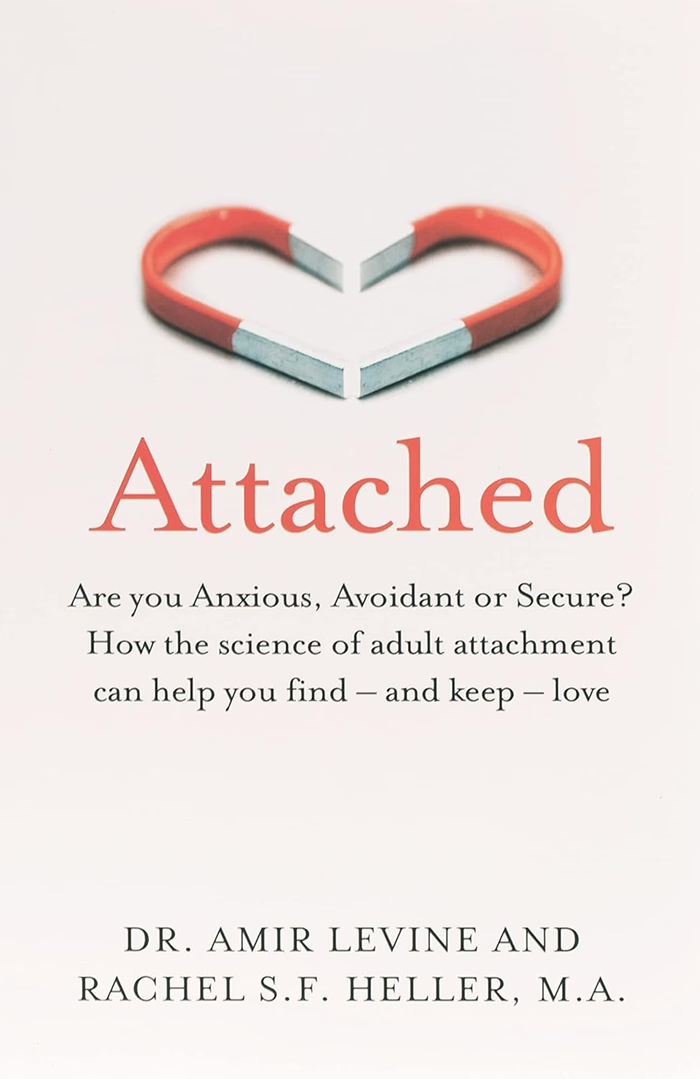
Supported by decades of research, attachment theory reveals the enduring impact of early emotional bonds on adult psychology and behaviour.
But recent research shows that the same attachment styles shaping our relationships also shape our money lives.
Anxious or avoidant types, for example, are more likely to take risky money decisions, feel dissatisfied, and scrutinize a partner’s spending habits.
…Because Money Is Never Just Money
Money holds memory, emotion, and identity, all shaped by early family stories. If you grew up with money stress, you’re probably still carrying that weight.
Avoidant, anxious, and disorganized attachment styles aren’t quirks; they’re survival strategies we learned early on.
And left unexamined, they can keep us stuck - financially and emotionally.
Recognizing these patterns is more than introspection. It’s self-compassion and the first move toward rewriting your financial story. You’re not “bad with money”; you’re following patterns you once learned for survival.
Ready to see how? Let’s meet the four styles.
Meet the Attachment Styles
Secure types are comfortable with both closeness and independence. They trust easily, communicate openly, and adapt well to challenges.
Avoidant types lean into self-reliance. They might shy away from emotional conversations, preferring to handle things on their own.
Anxious types crave certainty and reassurance. They often worry about being left behind and seek frequent validation.
Disorganized types experience a confusing mix of needing closeness and wanting distance. They often push-pull in relationships, unsure whether to approach or flee.
You’ve probably met these types in your dating life.
The anxious partner who texts “Are we okay?” after a slightly delayed reply.
The avoidant one who vanishes for days after they’ve let you get too close.
Now imagine those two trying to split a dinner bill. The anxious one is already asking how much they owe you before dessert, while the avoidant is “forgetting” their wallet for the third time this month.
Money Attachment in Real Life
So, how do these attachment styles actually show up with money? Let’s see how this plays out, starting with Sally the Secure Saver.
Sally the Secure Saver
Sally sets up standing orders for savings before payday even lands. She’ll review her statements over Sunday coffee, neither fixating nor flinching. When her car needs repairs or her rent rises, she might grumble, but she adjusts and moves on - trusting her habits enough to handle the blips.
Amy the Avoidant
Amy’s banking app is installed, but you’d never know it from the untouched notifications. Direct debits, emails marked “important,” financial to-dos - she leaves them gathering dust, hoping the numbers sort themselves out. When friends ask about splitting costs, she shrugs it off or changes topics. Later, she might binge-fix everything in a panicked late-night session, swearing she’ll stay on top of it next time.

Alice the Anxious Accountant
Alice cannot set her phone down without refreshing her account - even for small purchases. Every pending card charge feels like a warning. If a bill is higher than expected, she’ll comb through every line-item, calculating, recalculating, and sometimes losing sleep. She regularly asks friends “Is this normal?” or double-checks split payments so nothing is missed.
Diana the Disorganized Drifter
Diana’s financial life is lived in cycles. On payday, she’ll treat herself, enjoy gifts and nights out, then pivot abruptly: no meals out for weeks, determined to “get control.” Spreadsheets for budgeting? She’s tried. But between impulse buys, emotional spending, and financial fasts, balance always slips away.
Chances are, you see shades of yourself in more than one. That’s because most of us don’t live in just one box.
Your style can shift depending on your history, your stress levels, and current circumstances. That's why it’s worth pausing to notice your own patterns - before they quietly run the show.
Which Money Attachment Style Are You? (Mini Quiz)
Before you can change your money habits, you need to see the emotional patterns behind them. Grab a journal or have an honest talk with yourself:
- How do you respond when an unexpected expense comes up? Calmly adjust, feel anxious, avoid the issue, or swing between both?
- How often do you check your account balance? Daily, only when necessary, or fluctuate between extremes?
- Do you prefer to manage money on your own, or do you seek advice and support from others?
- Does talking about money feel comfortable, or does it bring up discomfort, worry, or shame?
- Are your spending and saving habits steady, or do they move between splurges and strict cutbacks?
If you find yourself resonating most with one response, that might point to your dominant attachment style. Most people are a mix, and your mindset can shift depending on context or life stage.
You might be the Secure Saver with your salary, but the Anxious Accountant when you start dating someone new and splitting expenses.
The important thing is noticing your patterns - and knowing they can evolve.
Mind Over Money: Therapy For Your Wallet
Can your relationship with money feel steady, safe, even secure? Absolutely. But like any healthy relationship, it takes intention and small, consistent steps. The first step for all the types is to treat money check-ins like brushing your teeth - simple, regular, emotionally neutral.
If you’re avoidant, set a recurring reminder to look at your balance.
No, seriously - we mean it: add an actual calendar appointment with yourself, set an alarm on your phone, or check if your bank offers to send a text message with your balance every day. Whatever works for you - just make it concrete and unavoidable.
Anxious? Try a “money-free” day - skip the checking and see how trust feels.

If you swing between extremes, pick the smallest possible habit: jot down expenses every week and keep showing up, even when you slip.
If you’re secure, put your good habits into words and help normalize honest money talk for someone else.
Building trust with your finances is like building trust with yourself. Each small, repeated action rewires the pattern.
Remember: progress over perfection.
So here’s a challenge for you - whether you’re an Avoidant Amy or Secure Sally.
Have one honest conversation about money this week. Talk about a recent win or a mistake, ask a question you’ve been avoiding, and really listen to the other person.
The more we bring money out into the open, the less power it has to isolate or shame us.
If you’re not sure where to start, the Female Invest community is a great place to find support.
Rewrite Your Money Story
My own journey toward financial security began with simply acknowledging these patterns without judgment. Some weeks I still oscillate between careful planning and complete avoidance, but the cycles are less extreme now that I understand their roots.
It’s still a work in progress.
Your money story is a living thing, and you’re allowed to edit as you go.
Every time you check your account with a little less dread, ask a brave question, or forgive a past misstep, you rewrite the script. It’s radical self-care, and a quiet act of rebellion in a world that profits from your silence and uncertainty.
No matter where you start, you have the power to rewrite your story – on your terms.
Join the Conversation
Which attachment patterns do you recognize in yourself? What’s the next step you want to try? Share your reflections in the comments below.
Sources:
- OECD, “Bridging the Gender Gap: Education, Skills and Employment
- World Economic Forum, “Global Gender Gap Report 2023
- The Financial Diet, “How Gender Roles Shape Our Money Habits
- https://news.arizona.edu/news/how-your-romantic-attachment-style-affects-your-finances-well-being
- Attached by Dr. Amir Levine & Rachel S. F. Heller https://www.attachedthebook.com/wordpress/