3/3/26
A Historic Week for Women's Rights in Europe: What the EU's Abortion Decision Means
A Historic Week for Women's Rights in Europe: What the EU's Abortion Decision Means

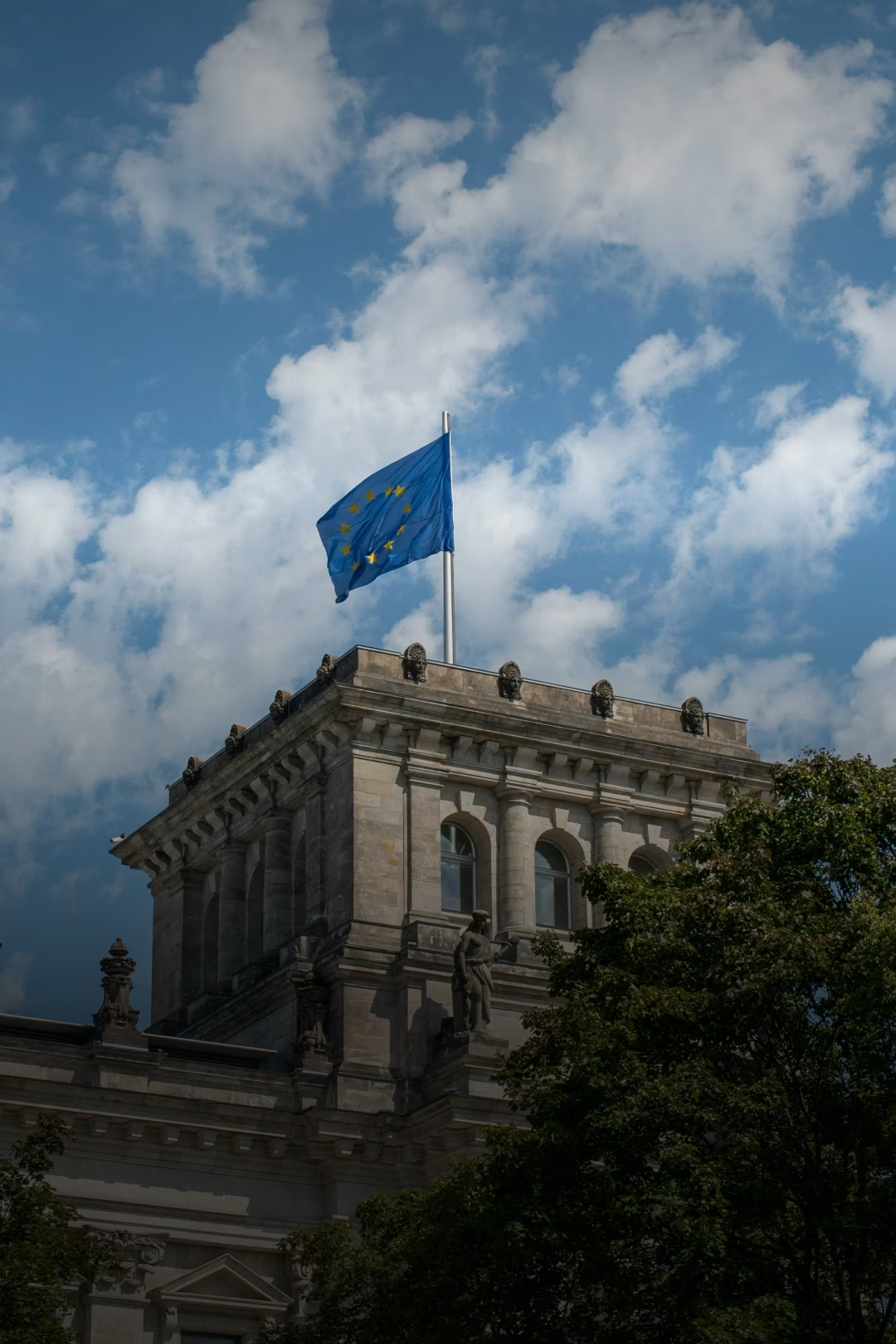
Last week, the European Commission made a decision that women's rights activists have been working toward for three years.
It's being called historic.
It's also being misrepresented.
Here's what actually happened, why it matters, and what still needs to change.
What The Commission Actually Decided
For the first time, the EU has confirmed that member states can use an existing fund, the European Social Fund Plus (ESF+), to support women's access to safe and legal abortion. That means covering travel, accommodation, and medical costs, whether a woman needs to cross a border or simply travel within her own country to reach a clinic.
The ESF+ itself isn't new. It's a €142.7 billion fund running from 2021 to 2027, normally used for social, employment, education, and health policies. What changed is the Commission explicitly saying abortion access falls within its scope.

What didn't change is just as important to understand.
No new fund was created, and no member state is required to do anything. And crucially, countries with the most restrictive laws, Malta, where abortion is banned entirely, and Poland, where access is severely limited, are under no obligation to change their laws or join such programmes.
For women in those countries, the situation on the ground remains unchanged.
How 1.2 Million Signatures Moved Brussels
What's remarkable about this decision is that it didn't come from politicians or institutions - it came from citizens.
My Voice, My Choice is a European Citizens' Initiative, a mechanism that lets ordinary people demand action from the European Commission if they gather at least one million signatures across at least seven EU countries. Over three years, the campaign collected 1,124,513 signatures across all 27 member states.
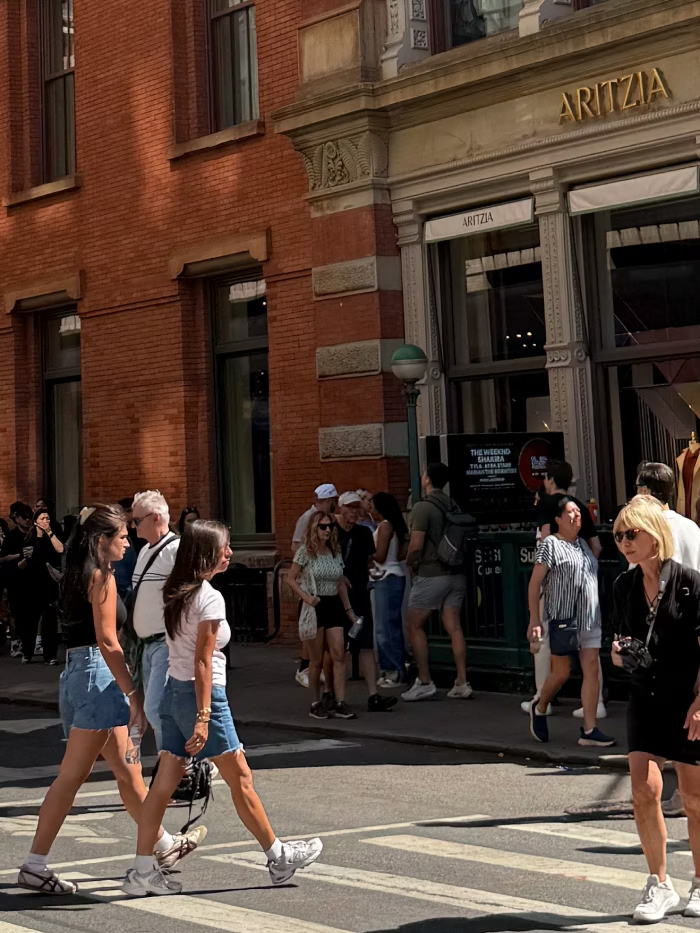
It started, in the words of coordinator Nika Kovač, "on the streets, with a group of women who had had enough of being treated as secondary citizens." It grew into a movement with over a million Instagram followers, reaching women in places where street protest carries real legal and social risk. In Malta, where abortion is criminalised, the campaign's online presence let women show support without showing their faces.
Once the signatures crossed the threshold, the European Parliament was required to debate the issue and passed a resolution calling for a brand new dedicated funding mechanism. The Commission went a different route, pointing to ESF+ instead of creating something new. It was less than activists asked for, but more than the EU had ever done before on this issue.
Historic Step, But Are We Doing Enough?
Women's rights groups are calling this historic, and in many ways it is.
Healthcare policy in the EU is normally decided entirely at national level, so the Commission entering this space at all is a meaningful shift. As reproductive rights expert Katrine Thomasen noted, it was previously unclear whether member states could even use EU money this way. Now there's a clear answer, and that clarity opens doors.

The Commissioner for Equality, Hadja Lahbib, put it plainly: almost 500,000 unsafe abortions take place in Europe every year, and safety and freedom should not depend on your postcode or your income.
But the limits are real and worth naming. No country is forced to participate. The countries where women need this most urgently face no obligation to change their laws or spending. And even for governments that want to act, nothing is automatic. They still need to design programmes and define how women can actually access support in practice.
Some anti-abortion groups and conservative politicians have tried to frame this as a rejection of My Voice, My Choice, arguing that because no new fund was created, nothing changed.
But that framing doesn't tell the whole story. The Commission responded to over a million voices by formally confirming, for the first time, that EU funds can support abortion access.
But it also stops short in key ways: no dedicated fund, no obligation on member states, and no clear instructions yet on how governments should actually implement it. Still, it created something that didn't exist before: a clear legal pathway and the EU’s explicit backing to use it.

What This Has To Do With Your Money
Reproductive rights and economic rights are not separate issues, and they never have been.
Access to safe abortion is directly connected to women's ability to plan their lives, their careers, and their finances. When women cannot make decisions about their own bodies, those decisions get made for them, with consequences that ripple through every part of their lives, including their financial ones.
Access to safe abortion is directly connected to women's ability to plan their lives, their careers, and their finances.
This decision is also a reminder that democratic pressure works. A campaign built on streets and social media, over three years, with more than a million signatures, moved one of the world's largest political institutions to act in an area it had never touched before.
The fight is far from over.
Women in Malta and Poland are no better off in legal terms than they were last week. But a pathway now exists that didn't exist before, and the women who built it did so by refusing to accept that the table wasn't big enough for them.