27/2/26
Nvidia Just Reported Its Biggest Quarter Ever. So Why Isn't Anyone Celebrating?
Nvidia Just Reported Its Biggest Quarter Ever. So Why Isn't Anyone Celebrating?

Nvidia reported its latest earnings this week, and on paper the numbers were remarkable. Revenue hit $68.13 billion for the quarter, up 73% from the same period a year ago. Its guidance for the next quarter came in well above what analysts had expected. By almost any conventional measure, this was an outstanding result.
And yet the stock barely moved.
That gap between the numbers and the market reaction tells you something important about where we are in the AI investment story.
Here's what's behind it.
What Nvidia Actually Reported
If you're new to following earnings, here's what matters.
Nvidia makes the chips that power artificial intelligence. The data centres run by companies like Microsoft, Google, and Amazon are full of them, and demand has been extraordinary.
This quarter, Nvidia's data centre division, which is the part of the business that sells those chips, brought in $62.3 billion, making up about 91% of total revenue. The company also issued guidance, which is its forecast for the next quarter, of around $78 billion. That figure was well ahead of even the most optimistic analyst predictions, and it marked the fourth consecutive quarter of accelerating growth.
By any typical standard, this is an exceptional business performing exceptionally well.

So Why The Muted Reaction?
The share price edged up just over 1% in early trading after the results. For a company that has been one of the most talked-about stocks in the world, that's a notably quiet response.
The reason is that investors are asking a bigger question than "did Nvidia beat expectations this quarter?" They're asking whether the companies buying Nvidia's chips, the hyperscalers like Microsoft, Google, and Amazon, can keep spending at this pace.
These companies have been pouring enormous sums into AI infrastructure, and some investors worry that this level of spending isn't sustainable indefinitely.
As one analyst put it, the debate has shifted away from near-term results and toward whether the AI investment boom has legs. That's a harder question to answer with a quarterly earnings report.
The China Problem
There's a second issue worth understanding, and it's more complex.
China used to account for at least a fifth of Nvidia's data centre revenue. Export restrictions from the US government forced Nvidia to stop selling its most advanced chips there, and a specially designed lower-capability chip it developed for the Chinese market was also eventually banned.

More recently, the US government approved sales of a more advanced chip to China, but with conditions attached. So far, Nvidia hasn't generated any revenue from those sales, and the company is genuinely uncertain whether it will be allowed to ship them at all.
Meanwhile, Chinese AI companies are growing fast. Several have recently gone public, and Nvidia's own CFO acknowledged on the earnings call that Chinese competitors "have the potential to disrupt the structure of the global AI industry over the long term."
That's a striking admission, and it reflects a real shift in the competitive landscape.
Nvidia's own CFO acknowledged on the earnings call that Chinese competitors "have the potential to disrupt the structure of the global AI industry over the long term."
What This Means For Investors
A few things are worth understanding here.
First, beating expectations isn't always enough. Markets are forward-looking, and when a company is priced for perfection, even very good results can feel underwhelming. Nvidia has had an extraordinary run, and a lot of optimism is already built into its share price.
Second, geopolitics is now a genuine business risk for tech companies, not just background noise. Nvidia's China situation shows how quickly a market representing a fifth of your revenue can become inaccessible due to decisions made in Washington or Beijing.
Third, the broader AI story is still unfolding. The question of whether the companies spending heavily on AI infrastructure will see returns that justify that spending is one of the most important open questions in markets right now. Nvidia's results don't answer it, but they're one of the clearest windows we have into how that story is developing.
If you hold a global tech fund or an index fund with significant US tech exposure, Nvidia is almost certainly in there.
Understanding what's driving it, and what the risks are, is part of being an informed investor.
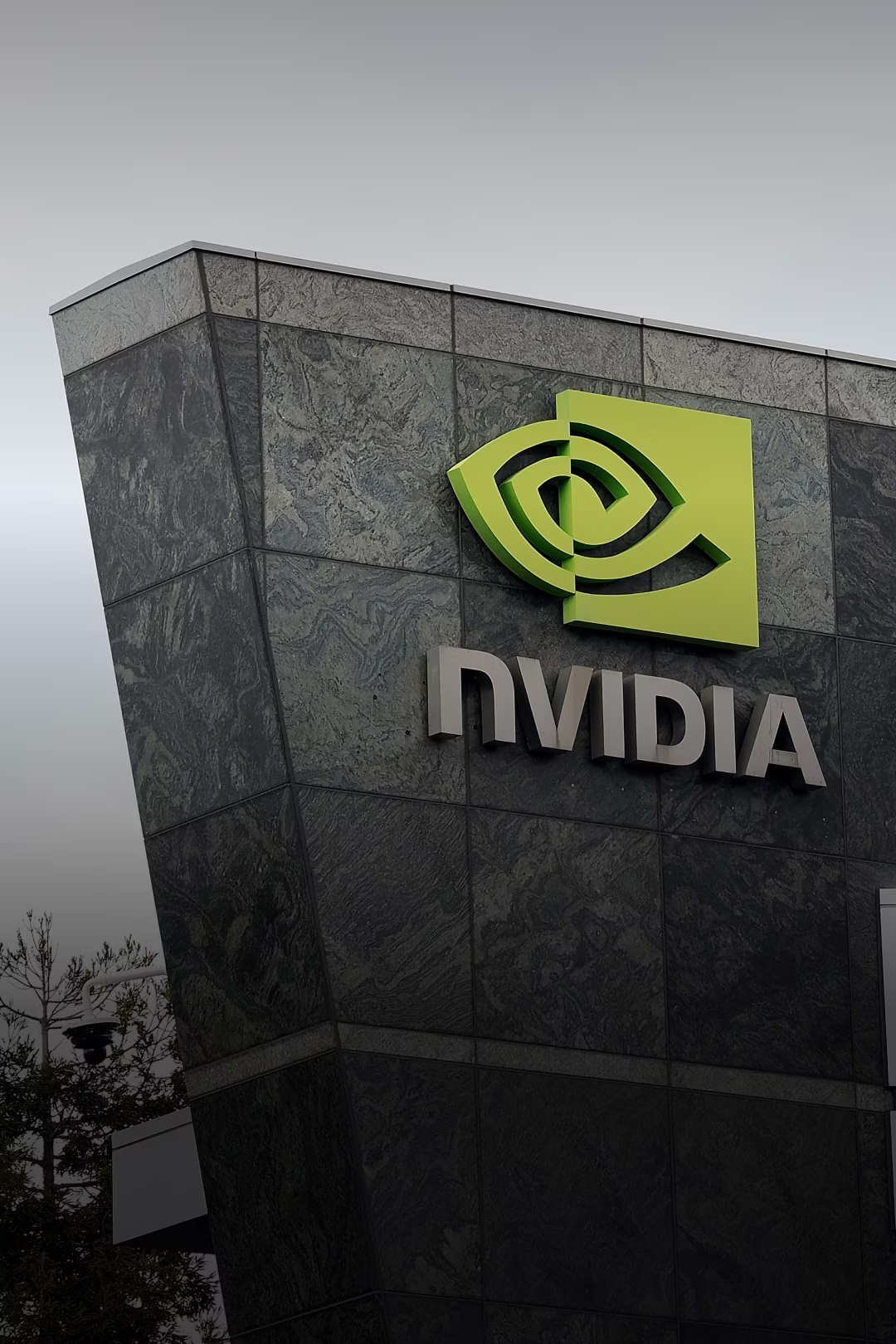
Cover photo: John G. Mabanglo/EPA/Ritzau Scanpix
Sources:
- https://www.cnbc.com/2026/02/26/nvidia-nvda-stock-price-q4-earnings.html
- https://www.cnbc.com/2026/02/26/nvidia-china-chip-sales-export-controls-ai-competition.html