1/12/25
The FED’s next chapter - why is everyone talking about Kevin Hassett
The FED’s next chapter - why is everyone talking about Kevin Hassett

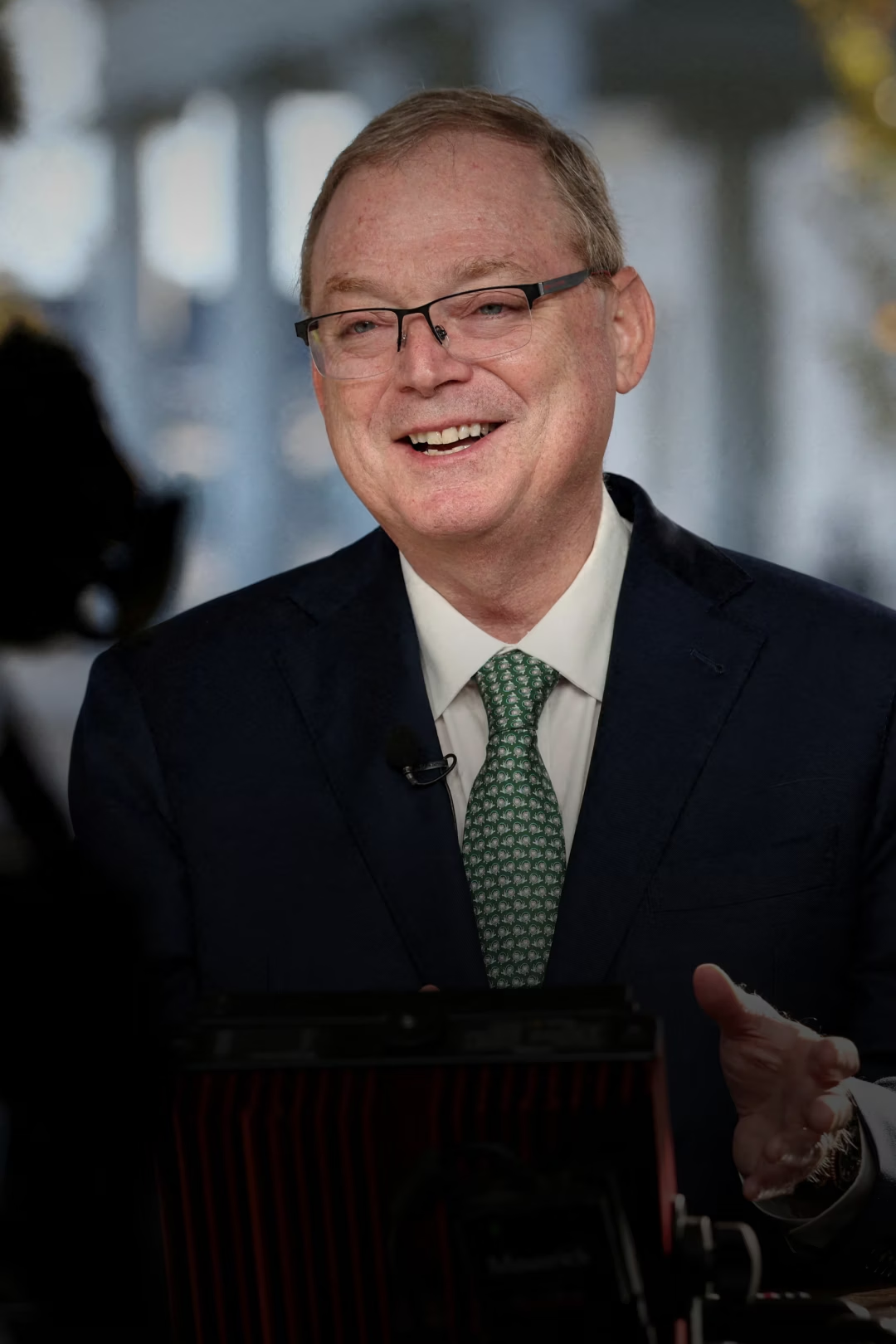
According to Bloomberg, longtime Trump advisor Kevin Hassett has suddenly become the top contender (the odds have risen to 77% on the leading prediction markets) to replace Jerome Powell as chair of the U.S. Federal Reserve when Powell’s term ends in May.
Treasury Secretary Scott Bessent even hinted that Trump’s pick could be announced by Christmas. Yes - the world’s most important economic job might be wrapped up under the tree this year.
So why is this such a big deal?
Why should any of us care who becomes the new chair at the Fed?
And who exactly is Kevin Hassett?
Let’s break it down.
Quick Reminder: What is The Fed?
Most countries have their own version of a central bank. In the U.S. the central bank is called the Federal Reserve - or simply, “the Fed.”
So, what do they actually do? The Fed works under what’s called a “dual mandate” - it’s responsible for keeping prices stable and making sure as many people as possible have jobs.
One of the ways the Fed can affect price stability is by adjusting interest rates - the cost of borrowing money - to cool things down or heat them up.
When inflation is high, the Fed raises rates to slow spending and bring prices under control. When growth stalls, it lowers them to boost the economy by encouraging borrowing and investments.
In short, the central bank’s role is to make sure the economy doesn’t catch fire or freeze over.
Why the Fed Chair Matters (way more than you think)
The Federal Reserve set the tone, the direction, and the expectations for the biggest economy.
They do that by adjusting the interest rates.
Interest rates might sound abstract, but they shape everyday life.
When the Fed raises rates in the US, mortgages tend to get pricier, car loans cost more, and businesses scale back borrowing which can slow job growth. On the brighter side, savers earn more on their deposits.
When the Fed cuts rates, borrowing becomes cheaper, boosting the economy and fueling growth but it can also push prices up (hello inflation).
So when investors debate “rate cuts,” what they’re really asking is whether money will feel tighter or looser in the coming months - for everyone.
- When the Fed raises rates, borrowing gets more expensive, growth slows, markets wobble, and savers breathe a tiny sigh of relief.
- When it cuts rates, borrowing gets cheaper, stocks usually rally, and the economy gets a boost.
The role as Fed Chair is one of the most powerful roles.
That’s why investors, CEOs, governments, and journalists are all watching this selection process like it’s the finale of a prestige drama.
Because if Trump picks someone who believes in cutting rates aggressively - someone like, say, Kevin Hassett - that could reshape the entire economic outlook of 2026 and beyond.
So… Who is Kevin Hassett?
Kevin Hassett is not a household name unless your household regularly debates fiscal policy over dinner.
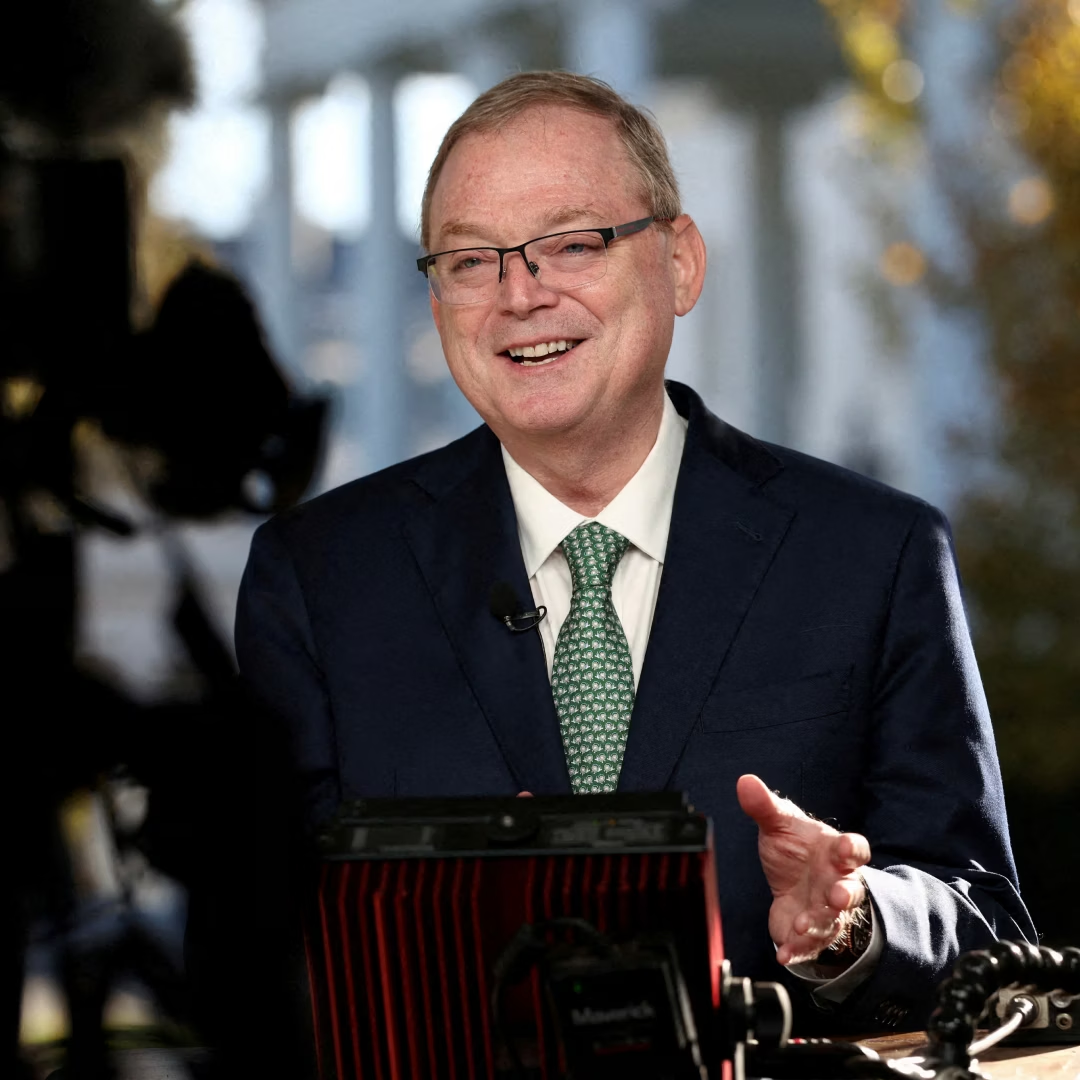
Here’s the short version:
- He chaired Trump’s Council of Economic Advisers during Trump’s first term as president.
- He helped design the Tax Cuts and Jobs Act of 2017 — one of Trump’s signature economic achievements.
- He’s currently the director of the National Economic Council.
- He’s been a close Trump advisor for years and is widely seen as aligned with Trump’s economic instincts.
- And yes — he has openly said he’d be happy to take the Fed job:
“President Trump has a whole bunch of great candidates, and I think any one of them would be a big trade-up from where we are… If he picks me, I'll be happy to serve.”
If he picks me, I'll be happy to serve
Hassett is also known for publicly supporting lower interest rates.
This week he told Fox News that if he were Fed chair right now, he’d “be cutting rates” because “the data suggests that we should.”
That alone makes markets sit up a little straighter.
One interesting twist?
Hassett has also disagreed with Trump on some things — like tariffs and immigration.
But lately he’s been publicly upbeat about Trump’s economic plans, predicting 2026 could be “an absolute blockbuster year.”
What It Means For Investors
Here’s the investor-friendly translation:
A potential Hassett-led Fed = a more aggressive push toward interest-rate cuts.
Markets love the idea of lower rates.
It’s why bond yields dipped and stocks perked up as soon as rumors started swirling that Powell’s replacement might be chosen soon and might be someone more aligned with Trump’s view that rates should already be lower.
If Hassett gets the job, investors may expect:
- earlier and faster rate cuts
- lower borrowing costs
- a boost to equities (especially tech and growth stocks)
- a weaker dollar if cuts go too fast, too soon
- and more market volatility as politics and monetary policy become more intertwined
But remember: nothing is confirmed.
Trump is known for surprising choices. (See also: basically every political headline from 2017–2020.)
And whoever the nominee is, the Senate still has to approve them — a process that can get… dramatic.
Who Else Is In The Running?
Scott Bessent narrowed the shortlist from about a dozen names down to five finalists:
- Kevin Hassett
- Christopher Waller (current Fed governor, Trump-appointed)
- Michelle Bowman (Fed governor + vice chair for supervision)
- Kevin Warsh (former Fed governor, Wall Street–favored)
- Rick Rieder (BlackRock’s global fixed-income chief — bond-market royalty)
Interviews are wrapping up this week, and the final candidates will meet with White House Chief of Staff Susie Wiles and Vice President JD Vance.
What The Selection Timeline Looks Like
Here’s the expected timeline for selecting the next Fed chair:
Now → December
- Trump makes his final decision (possibly announced by Christmas).
January → Spring
- Formal nomination is sent to the Senate.
- Hearings begin
May 2026
- Jerome Powell’s term officially ends.
- New chair takes over — unless the Senate blocks the nominee, which would trigger… more drama.
For now, Powell stays in his seat, guiding monetary policy through what might be the most politically charged transition in Fed history.
The Bottom Line
Kevin Hassett emerging as the frontrunner matters because it signals a potential shift toward lower rates, closer alignment between the White House and the Fed, and a more politically influenced central bank.
For investors, this moment is a reminder that:
- Politics moves markets
- Monetary policy shapes your portfolio
- And understanding what’s happening behind the headlines gives you power
We’ll be watching every development closely - and we’ll break it down for you every step of the way. Until then, keep your portfolio diversified.