28/5/26
How AMD’s Lisa Su is quietly becoming one of the most powerful leaders in tech
How AMD’s Lisa Su is quietly becoming one of the most powerful leaders in tech

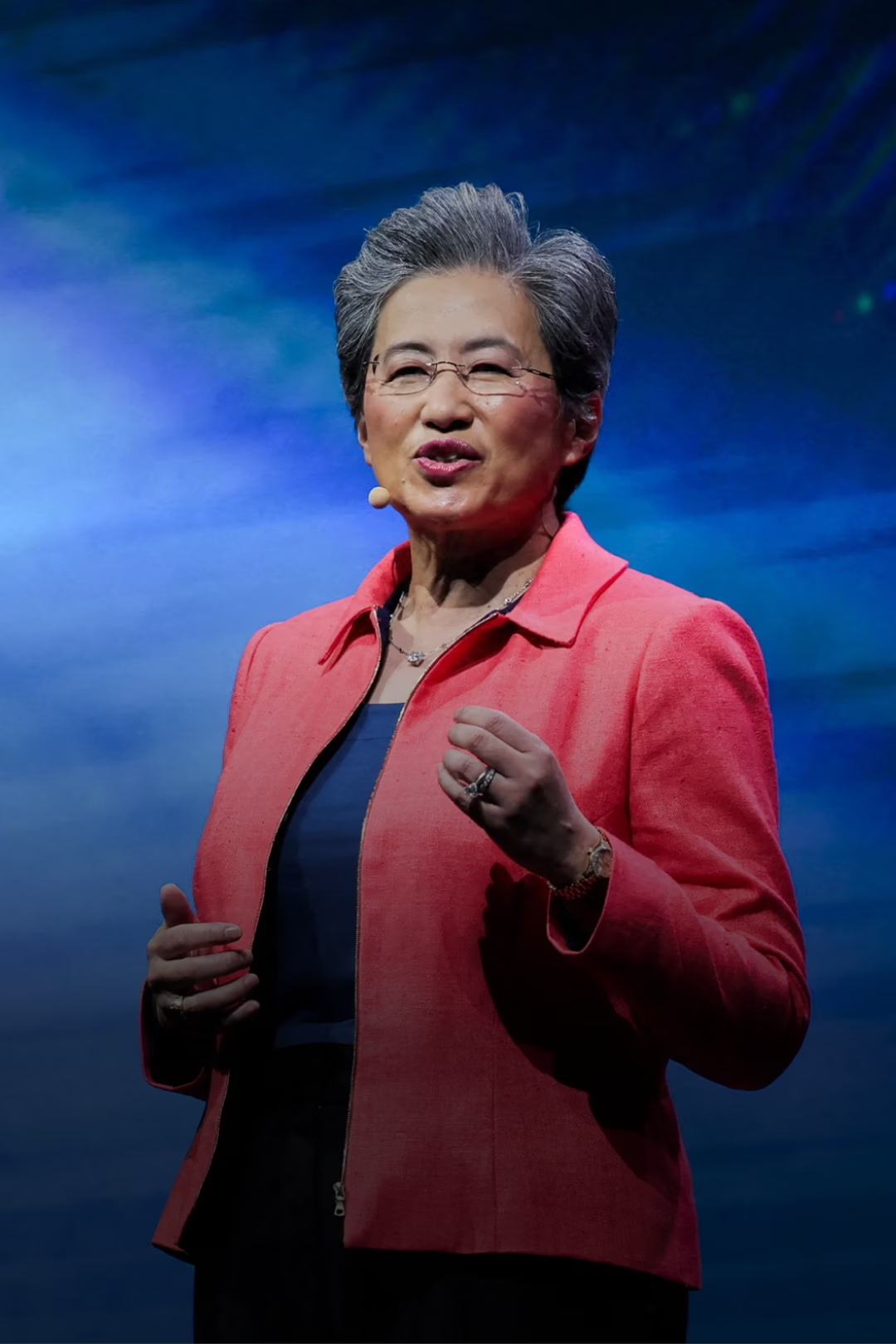
AI chips are having a moment and Lisa Su is the woman steering one of the biggest players in the game.
This week, the CEO of AMD (Advanced Micro Devices) told investors that the company expects to grow by around 35% per year over the next few years.
Why?
Because demand for artificial intelligence chips, she says, is “insatiable.”
If that sounds ambitious, it is. But so is Lisa Su.
Under her leadership, AMD has gone from struggling to survive to becoming one of the most important names in the chip world - and the only serious challenger to Nvidia, which currently dominates the AI hardware market.
Lisa Su just laid out one of the boldest roadmaps in big tech.
At AMD’s analyst day in New York, the first financial day in three years, the company said it’s targeting roughly 35% compound annual revenue growth over the next three to five years, powered by demand for AI chips in giant data centers.
AMD also said the overall data-center chip market could reach about $1 trillion by 2030 — a sign of how fast AI infrastructure is expanding.
Meet Lisa Su
Lisa Su is one of the few female CEOs in big tech and one of the only women ever to lead a global semiconductor company.

Born in Taiwan and raised in New York, she was fascinated by how things worked from a young age (she once took apart her brother’s toy car just to see the motor inside).
She earned a PhD in electrical engineering from MIT, worked at IBM and Freescale Semiconductor, and joined AMD in 2012.
When she became CEO in 2014, AMD was on the brink of collapse. Its stock was trading under $3, its products lagged behind, and many analysts had written it off.
A decade later, AMD is worth nearly $400 billion and Lisa Su is considered one of the most effective leaders in Silicon Valley.
So what does AMD actually make?
To understand AMD, think of it as the company that builds the “brains” of modern technology.
- CPUs (central processing units) – These are the main processors that handle everyday computing tasks. Every time you open a file, load an app, or stream a video, a CPU is doing the math in the background. AMD’s line of server CPUs, called Epyc, powers cloud data centers used by companies like Microsoft and Google, while its Ryzen chips go into laptops and gaming PCs.
- GPUs (graphics processing units) – Originally made for video games, GPUs are specialized chips that can handle thousands of calculations at once. That ability makes them perfect for artificial intelligence, where models need to process massive amounts of data in parallel. AMD’s version is the Instinct GPU family - the competitor to Nvidia’s famous AI chips.
- Custom chips – AMD also designs the chips inside gaming consoles like the PlayStation 5 and Xbox Series X, blending graphics and processing power in one piece of hardware.
In simple terms: if your device computes, displays, or learns something, AMD probably helps make that possible.
Why this moment matters
AMD has set its sights on expanding its data-center AI business, aiming for roughly 80% annual growth in that segment over the next few years.
Again, this is a target, not a guarantee but it shows where the company is heading.
The star of that plan is AMD’s Instinct MI300 chip, which is already driving big growth in server sales.
The company says demand from cloud providers and AI startups has surged as they search for alternatives to Nvidia’s hardware.
Nvidia currently dominates the market - analysts estimate it controls around 85–90% of AI GPU sales — but that doesn’t mean there’s no room for others. The market itself is growing so quickly that even a small slice can mean billions in revenue.
The OpenAI connection
AMD announced a long-term partnership with OpenAI, the company behind ChatGPT in October.
The deal involves AMD supplying OpenAI with large volumes of its Instinct chips starting in 2026.
According to reports, it could be worth several billion dollars, with an option that might let OpenAI take a small ownership stake - though the exact terms haven’t been confirmed.
If the collaboration goes as planned, AMD’s chips will help power the next generation of OpenAI systems - a major validation for Lisa Su’s AI strategy.
The bigger picture
The AI chip race isn’t just a story about faster technology - it’s about who gets to shape the next decade of innovation. Nvidia may be leading today, but if AMD manages to capture even a slice of this booming market, the balance of power in tech could shift in a big way.
And at the center of it all is Lisa Su — a quiet force in an industry that rarely hands the microphone to women