
18/11/25
How to Survive Black Friday Without Destroying Your Budget
Black Friday is designed to make you overspend. Here are Lisa’s smartest ways to fight back.

I don’t know about you, but my inbox and social media feed are already screaming “Black Month.” Spin-the-wheel discounts. “Limited stock” countdowns. “Extra 10% if you check out in the next 12 minutes.”
It’s a circus - and a very strategic one.
And as much as I’d love to pretend I’m above all of it, I’m not.
Last week I clicked on an ad (yes, it was a sparkly dress I absolutely don’t need but imagined wearing on New Year’s Eve). And just seconds later my feed turned into a fast-fashion casino.
Three more ads popped up, all perfectly targeted. It’s like the algorithm had an espresso shot.
My inbox? Flooded.
“Early access,” “warm-up sales,” “Black Friday preview.”
It’s only mid-November, but somehow I already feel behind on a sale I never planned to participate in.
And that’s the point. The system works.We feel the pull - not because we’re weak, but because the whole thing is engineered to trigger us.
This year, I want to try something radical: a Black Friday detox. No panic-shopping. No impulse buys.
Just smart decisions and a calm budget.
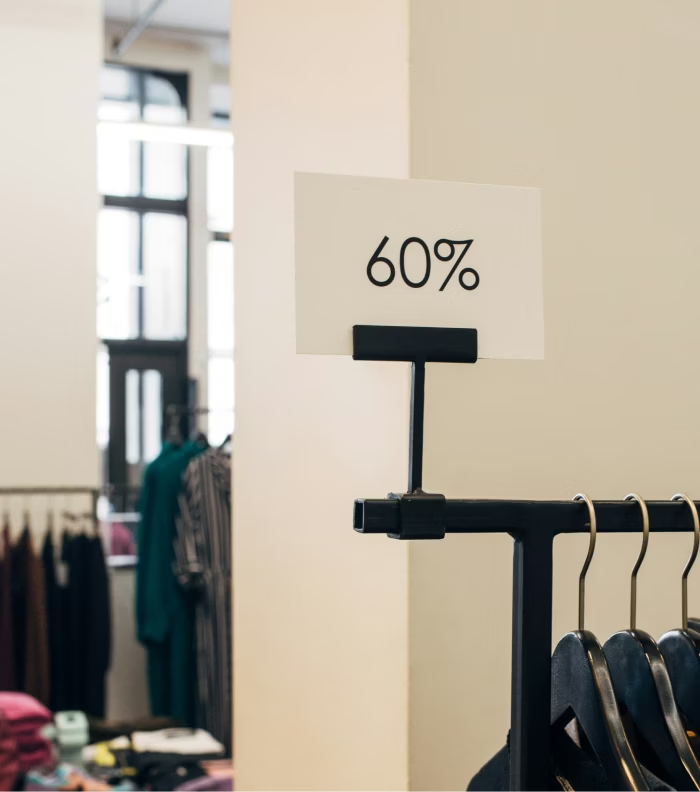
If you’re feeling the same, stick with me.
Let’s break down what’s happening in our brains so we can outsmart the chaos.
The Psychology behind FOMO
Let’s talk about FOMO - the Fear of Missing Out.
It’s that tiny voice whispering, “Everyone else is getting the deal… maybe you should too.”
It’s irrational, emotional, and unbelievably effective. And marketers know exactly how to poke it.
FOMO hits three of our brain’s most sensitive pressure points:
- Belonging → “Everyone else is doing it.”
- Scarcity → “Hurry, it’s almost gone!”
- Social validation → “This is what smart shoppers do.”
We don’t want to be left out. We hate the idea of missing an opportunity. And when we see everyone else jumping on a deal, it feels like we should too - even if we weren’t interested two minutes ago.
It’s classic social comparison theory. We measure ourselves against others constantly - what they buy, where they go, what they post.
Studies show that FOMO lights up the same areas in our brain as physical pain or anxiety. No wonder it feels uncomfortable to skip a deal even when the discount is… let’s be honest… mediocre at best.
Add the modern shopping environment to the mix: countdown banners, push notifications, “only 5 left,” buy-now-pay-later reminders, and your impulse control barely stands a chance.
The Dopamin Loop
This is where things get sneaky.
Every time you scroll, click, or add something to your cart “just to check the price,” your brain releases a tiny hit of dopamine.It’s a reward loop. And Black Friday is built to keep that loop spinning.
And here’s the wild part: FOMO doesn’t even need to be real to work. Seeing the words “almost gone” or “exclusive access” is often enough to make us act impulsively.
That’s why Black Friday feels so intense. It’s not about what we actually need, it’s about not wanting to be the one who “missed the deal.”
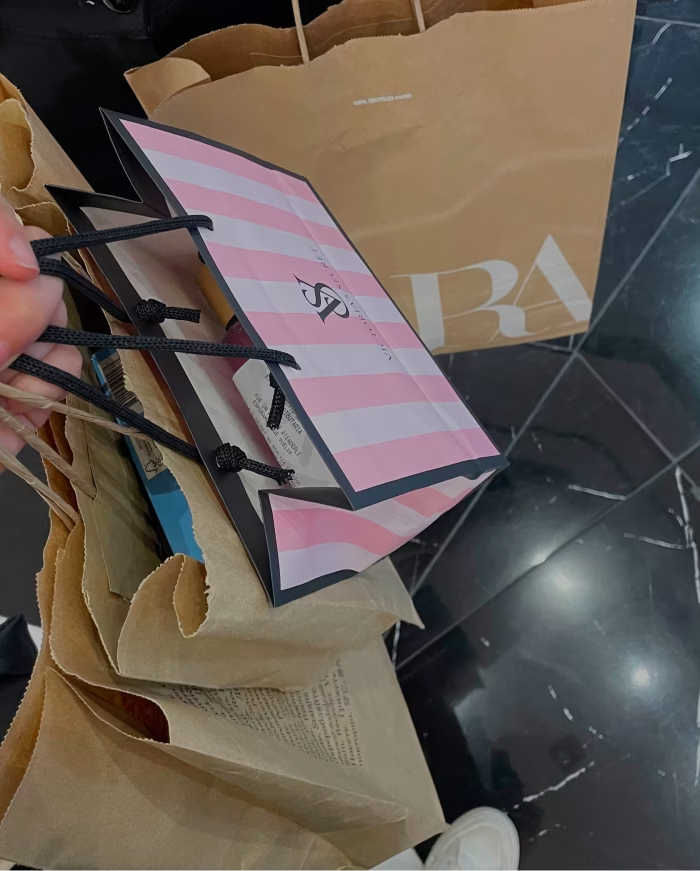
Nearly half of U.S. adults who have used buy now, pay later services experienced financial difficulties, such as overspending or missing a bill payment, according to a recent survey.
The result?
Overspending, buyer’s remorse, and sometimes even debt. One study found that 30% of millennials have gone into debt just trying to keep up with what others are buying.
And nearly half of U.S. adults who’ve used “buy now, pay later” services have struggled with overspending or missed payments.
So it’s not you being “bad with money.” It’s neuro-marketing. A system designed to overwhelm your internal brakes.
And once you see it for what it is, you can start taking back control.
Let’s Get Down to Business
After digging into all of this, I feel two things:
Frustrated: because the manipulation is intense.
And motivated: because now I actually understand the game well enough to stop playing it.
Even if we can’t fight the algorithms, we can at least stop feeding them.
Here’s my plan for a Black Friday detox:
- Unsubscribe from every “early access” or “exclusive offer” newsletter.
- When an ad pops up, mark it as irrelevant.
- Stop clicking on anything that screams “limited time only!”
But honestly? That’s not enough on its own.
I needed a proper strategy, something that actually keeps me accountable.
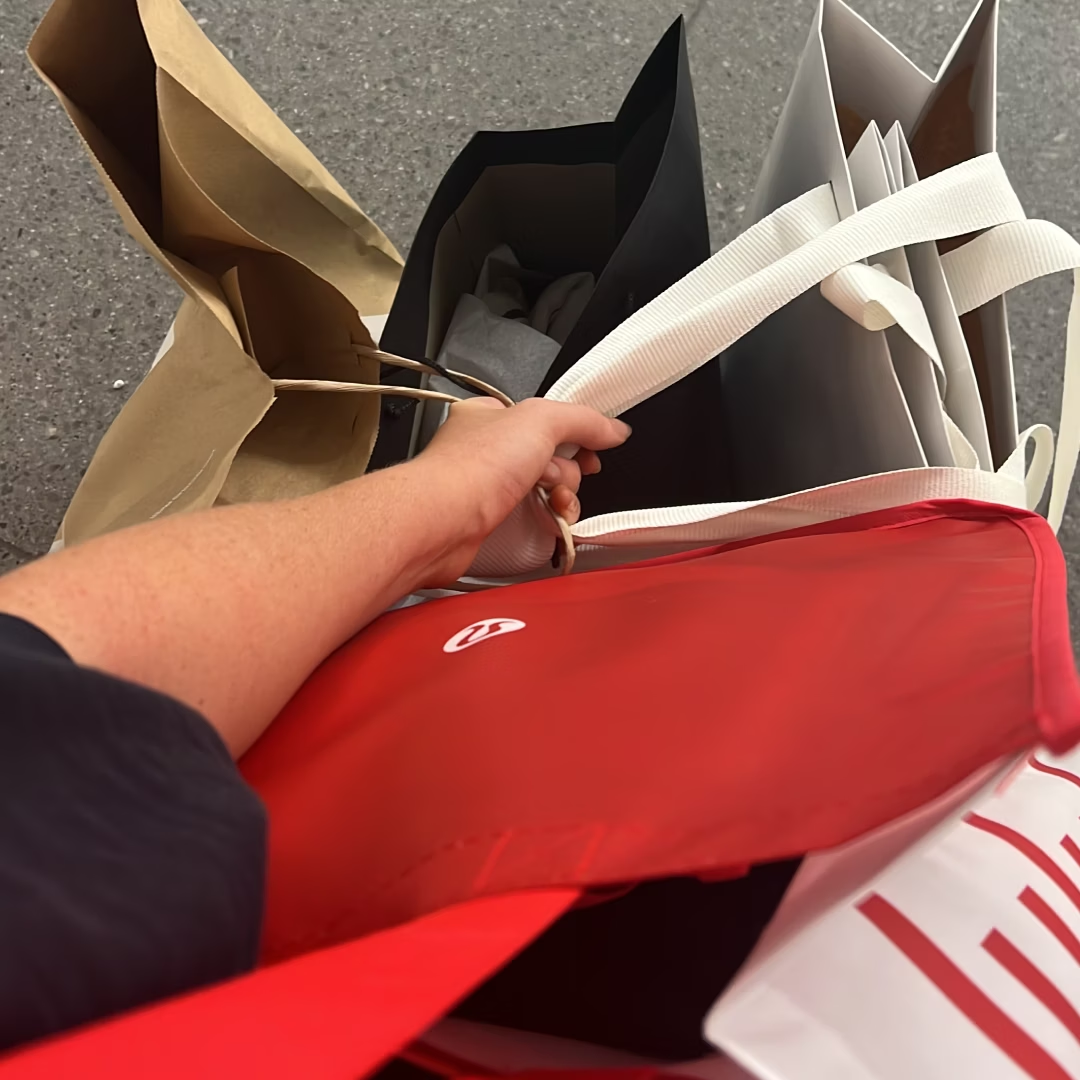
Looking for answers, I turned to the one and only Lisa Meller.
Here are her best tips to help you avoid overspending and stay on track.
Lisa’s best pieces of advice
What is the best way to avoid overspending?
- Set a sustainable budget
- Look at your last 3 months of spending.
- Add them together → divide by 3 → that’s your real baseline.
- Use this number to set a realistic monthly budget.
- Use one spending account
- Choose one card or app to track everything.
- Only put your budgeted amount in that account.
- Keep the rest somewhere you can’t casually dip into.
- Plan big purchases ahead of time
- Break them down into monthly “mini-savings.”
- Example: instead of dropping £300 at once, save £50 over 6 months.

How to avoid temptation
- Create a Want List
- Write down everything you feel tempted to buy. All of it.
- Keep it in your Notes app.
- Pause before buying
- Leave items on the list for 1–2 weeks.
- This builds the habit of delayed gratification.
- Prioritise
- Ask yourself: If I could only buy one thing, what would it be?
- Rank the items — high priority to low.
- Your Black Friday filterOnly buy if the item:
- Was already on your list
- Is high priority
- Still feels like a good idea after reviewing
- AND fits your budget
- AND the discount is real
- Unfollow accounts that trigger spending.
- Move shopping apps to a folder called “Do I really need this?”
How to stay focused on your financial goals
Do one big annual review
- Go through your income, savings, debts, investments, and big upcoming expenses.
- Then refresh your goals to match your current life stage.
Automate everything you can
- Set standing orders or automatic investment contributions.
- Schedule them the same day your income arrives.
- Pay yourself first” is the secret weapon.
Use labelled savings pots
Create dedicated accounts named things like:When money has a job, you’re less likely to “borrow” from it.
- Holidays
- Christmas
- Emergency fund
- Taxes
If you are going to shop on Black Friday… do it smartly
- Prepare before the sale
- Check your Want List.
- Decide what you actually want.
- Write down the normal prices so you can spot fake discounts.
- Evaluate properlyOnly buy if:
- The deal is real
- The item is high priority
- You planned for it
- It fits your budget
- You won’t regret it tomorrow
- Stay disciplined
- Don’t browse for entertainment.
- Set a maximum spend.
- Use one card/account to track everything easily.
- Ignore time-pressure tactics — most deals last at least 24 hours.
- Sleep on it if you’re unsure.