2/9/25
Jeff Bezos threw a $50 million wedding - while his warehouse workers grind 14-hour days without breaks for $1 an hour
Hosting such an extravagant celebration isn’t simply a personal decision. It’s a statement. About power, about priorities.

You have probably seen it in the news - Last week Amazon founder Jeff Bezos and Lauren Sanchez got married in Venice - and we have some thoughts.
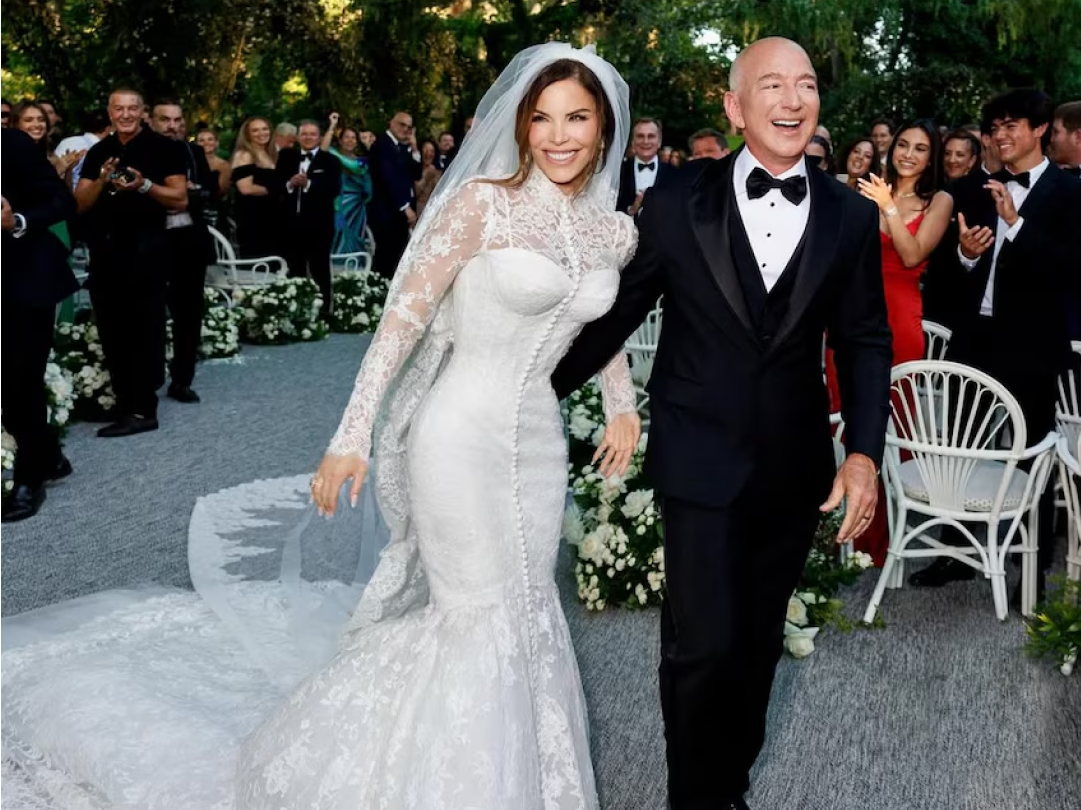
Lauren Sánchez wore a white lace corset fastened with 180 silk chiffon-covered buttons. Jeff Bezos wore a black shirt, a black suit.. and the $230 billion net worth that paid for the entire Venetian spectacle.
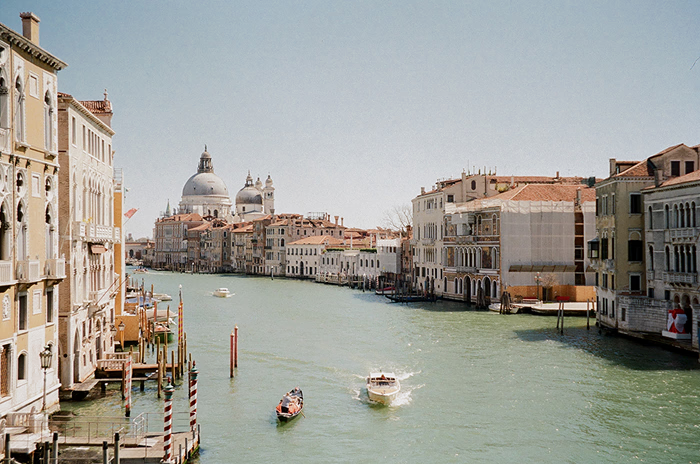
The Amazon founder’s three-day wedding played out across palazzos and canals. Oprah was there. The Kardashians were there. Ivanka Trump and Jared Kushner were there.
And circling above it all: protest banners, news helicopters, and a rising tide of public outrage.
This wasn’t just a wedding.
It was a display of extreme wealth and privilege staged on one of the most vulnerable cities in Europe.
In every way, it was a metaphor.
Love in the Time of Billionaires
The ceremony was shrouded in secrecy and yet globally public. Social media blackouts were enforced among the guests, while Melissa Bell from CNN literally chased the couple’s boat through the canals for a glimpse of the bride.
Even Vogue joined the performance, publishing a digital cover of Sánchez in her Dolce & Gabbana gown - a move so off-brand for the fashion magazine that speculation is still swirling over whether it played a role in Anna Wintour’s abrupt departure from Vogue this week.
Meanwhile, protesters gathered outside, holding signs that read: “No Space for Bezos,” “Kisses Yes, Bezos No,” and the instant classic - Greenpeace unfurled a giant banner over St. Mark’s Square reading: “If you can rent Venice for your wedding, you can pay more taxes.”
What were they protesting, exactly? Everything… and nothing. Bezos’ wedding was not the cause of Venice’s existential crisis, but it was its perfect symbol. Over tourism, climate change, the billionaire-as-celebrity industrial complex - all wrapped in satin and sequins and serenaded down the Grand Canal.
“This Is Not a Restaurant”
One city official tried to defend the event by saying, “If I had a restaurant I should be happy to have Bezos at a table.” But as activist Tommaso Cacciari replied, “Venice is not a restaurant. And we are not waiters.”
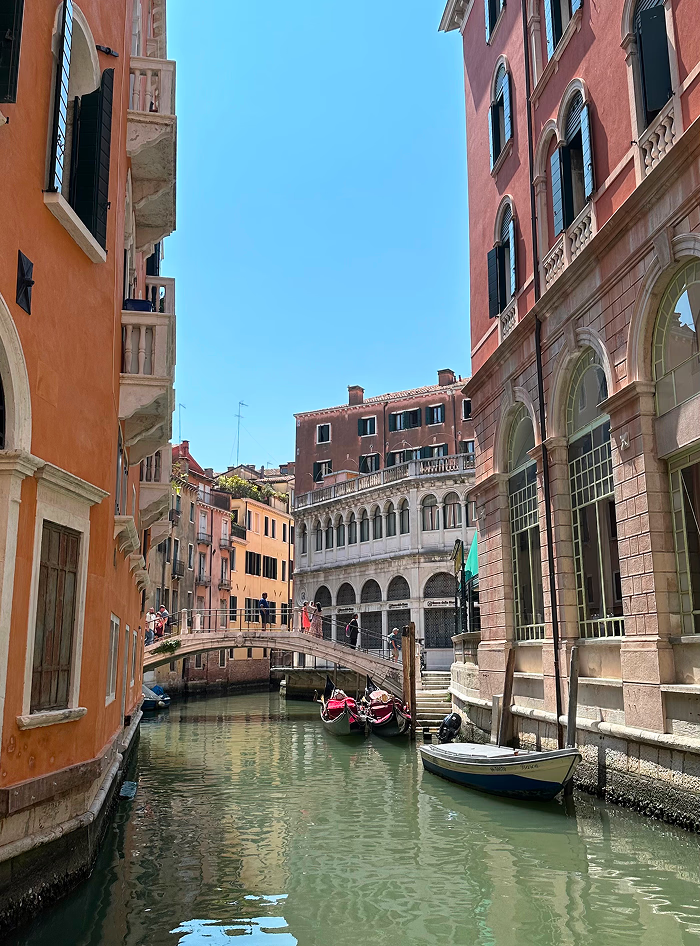
For Venetians, whose city has been hollowed out by tourism and flooded both literally and figuratively by rising waters and real estate speculation, this wedding was just another reminder that the world is not built for them. It’s built for guests. Billionaire ones.
Venice’s population has dwindled to around 50,000 permanent residents. Local shops have shuttered under the weight of Amazon’s dominance. Rent is unaffordable. Cruise ships loom like alien motherships.
In his defence, Bezsos did make a donation: €1 million to each of three local conservation organizations. A PR band-aid, critics argued, on the gaping wound of inequality.
If the protests in Venice were loud, the online commentary was louder. As author, Tova Leigh put it in an instagram post: “Sure, Bezos made a donation to lagoon research. Cute. Like pouring a bottle of Evian on a house fire.”
Sure, Bezos made a donation to lagoon research. Cute. Like pouring a bottle of Evian on a house fire
Then there was The Needling, a satire account that imagined Bezos raising a toast at the wedding - not with champagne, but with a “vintage bottle of Amazon employee urine aged since 2015.” A reference, of course, to reports from just a few years ago that Amazon workers were forced to urinate in bottles due to punishing delivery quotas and inhumane break schedules.
Praise for MacKenzie
Notably absent from the festivities was MacKenzie Scott.
The billionaire philanthropist and ex-wife of Jeff Bezos did not attend his star-studded wedding on June 27. Nor has she publicly commented on the event.
Yet Scott’s presence was nonetheless felt in contrast. While Bezos posed in the Grand Canal, Scott’s Instagram, where she has just one post, from 2020, lit up with praise.
“You’ll probably never read this but… thank you for being such a classy, kind, and generous human being,” one comment reads - a nod to her staggering donations, which now total over $19.2 billion since 2019, according to AP News.
Even actress Mia Farrow couldn’t resist a jab, posting the day after the wedding: “How awesome is MacKenzie Scott!” The comment, while veiled in admiration, landed like a slap in the face for those attending the wedding.
Scott, who shares four children with Bezos and was one of Amazon’s very first employees, helped build the empire that paid for that corseted lace fantasy in Venice. She helped write the business plan. She did the unpaid labor of empire-building and child-rearing.
And now, she’s become a modern anti-Bezos - the billionaire who gives it all away, quietly.
Just Because You Can Doesn’t Mean You Should
Of course, Jeff Bezos is entitled to spend his money. He is, by all conventional measures, self-made. A man who built one of the most powerful companies on Earth from a garage in Seattle. He created an empire, revolutionized online commerce, and became the fourth-richest person in the world. No one disputes that he has the means, or the legal right, to throw the wedding of his dreams.
But that’s not the point.
The question isn’t whether he can throw a $55 million party in one of the most environmentally fragile cities on the planet.
The question is what it means to do so - especially when that fortune was built, in large part, on labor practices that many see as exploitative.
Amazon has faced years of criticism over working conditions in its warehouses. Reports have revealed alarmingly high injury rates, intense productivity quotas, constant surveillance, and mounting concerns around worker mental health.
Employees have described pain, exhaustion, and burnout. Some have been forced to take unpaid time off to recover from the physical toll. As mentioned, some even made headlines for having to urinate in bottles because bathroom breaks weren’t compatible with their schedules.
So while Bezos and his guests dined on fine Venetian cuisine and cruised in private gondolas, the people who helped make his wealth possible were still grinding - often for wages that barely cover basic living costs. Against that backdrop, the opulence doesn’t just feel out of touch. It feels like an unnecessary flex.
Because hosting such an extravagant celebration isn’t simply a personal decision. It’s a statement. About power, about priorities. In an age of deepening inequality and planetary crisis, that kind of display isn’t neutral. It’s provocative.
Because for all the fireworks fanfare, the water still rises.
And Venice, beautiful and fragile and tired, stayed afloat.
For now.