
28/5/26
Michael Burry’s $1 Billion Bet Against AI: What the Man Who Predicted the 2008 Crash Sees Coming Next
In 2008, the global financial system was on the verge of collapse, and one man saw it coming before almost anyone else.

In 2008, the global financial system was on the verge of collapse, and one man saw it coming before almost anyone else.
His name was Michael Burry, a quiet, data-obsessed doctor turned investor who spent months digging through mortgage documents and realized the entire housing market was built on fantasy.
Wall Street laughed at him.
Then the world crashed, and Burry made hundreds of millions.

That story became The Big Short, both a bestselling book and an Oscar-winning film.
Christian Bale played Burry as an eccentric genius with noise-canceling headphones, betting against the system while everyone else was celebrating record profits.
Now, nearly two decades later, Burry is back in the spotlight.
And this time, he has placed a $1 billion bet that two of the world’s most hyped artificial intelligence (AI) companies — Nvidia and Palantir — are headed for a fall.
The Return of The Big Short
In a recent financial filing, Burry revealed new investments that will make money if the stocks of Nvidia and Palantir drop in value.
It is a bold move. AI has become the defining story of this decade — a technology investors believe will change how we work, communicate, and create wealth.
Companies linked to AI have seen their share prices explode.
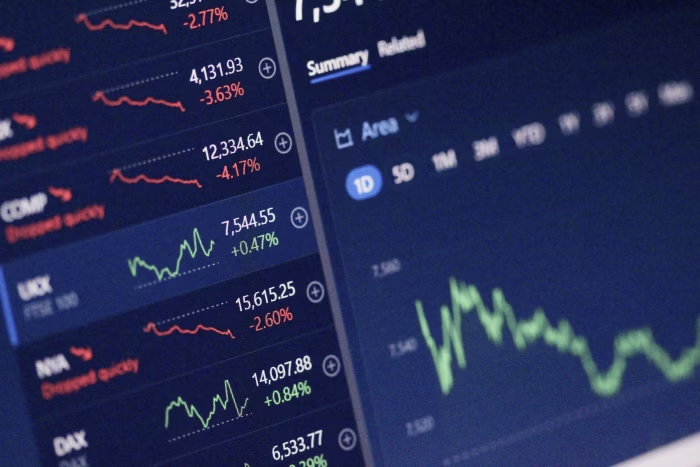
Some are now worth more than the GDP of entire countries.
So why would the man who became famous for spotting bubbles think this moment looks familiar?
The Targets: Nvidia and Palantir
Nvidia: The Engine of AI
If AI is the gold rush, Nvidia sells the shovels.
Its chips power everything from ChatGPT to self-driving cars.
Over the past two years, its stock has surged so dramatically that Nvidia briefly became the most valuable company on Earth.
But Burry believes the story may be running ahead of reality.
Nvidia’s growth has been extraordinary, but its valuation assumes that demand will stay sky-high forever.
To an investor like Burry, that kind of perfection looks like risk, not safety.
Palantir: The Secretive Software Company
Palantir is a data analytics firm originally backed by the CIA that helps governments and corporations make sense of massive datasets.
It has become something of a meme stock, popular among retail investors who see it as both futuristic and patriotic. But the numbers tell a more complicated story.
Palantir trades at more than 200 times its expected earnings (around 8 times as much as the S&P500 average), which suggests investors are paying a very high price for future potential.
When Burry’s short position became public, Palantir’s CEO Alex Karp went on television to call him “bat-- crazy.” The stock dropped 7 percent that day.
What It Means to “Short” a Stock
To “short” a stock means to bet that its price will go down instead of up.
Here’s how it works:
- You borrow shares of a company and sell them at today’s price.
- If the stock later falls, you buy them back at the new, lower price and return them — keeping the difference as profit.
- But if the stock rises instead, you lose money because you still have to buy back those shares at a higher price.
Because stock prices can theoretically rise without limit, shorting can be very risky.
To manage that risk, Burry used “put options” — financial contracts that rise in value if a stock drops but limit how much he can lose if it doesn’t.
In plain language, Burry is not selling these companies short directly, but rather buying insurance against what he sees as an overhyped market.
Why He’s Doing This Now
Every few years, markets fall in love with a story.
In the 1990s it was the internet.
In the 2000s it was housing.
In the 2010s it was crypto.
Now, it’s AI.
Each of these revolutions began with real breakthroughs and ended with unrealistic expectations. Investors started believing that prices would only go up — until they didn’t.
Today, AI companies are trading at record valuations, and capital is pouring into the sector faster than ever.
For Burry, who has built a career spotting the moments when excitement turns into mania, this looks like a familiar setup.
Is He Right?
Michael Burry is not always right. He has made several predictions since 2008 that did not come true.
But his skepticism often serves as an early warning.
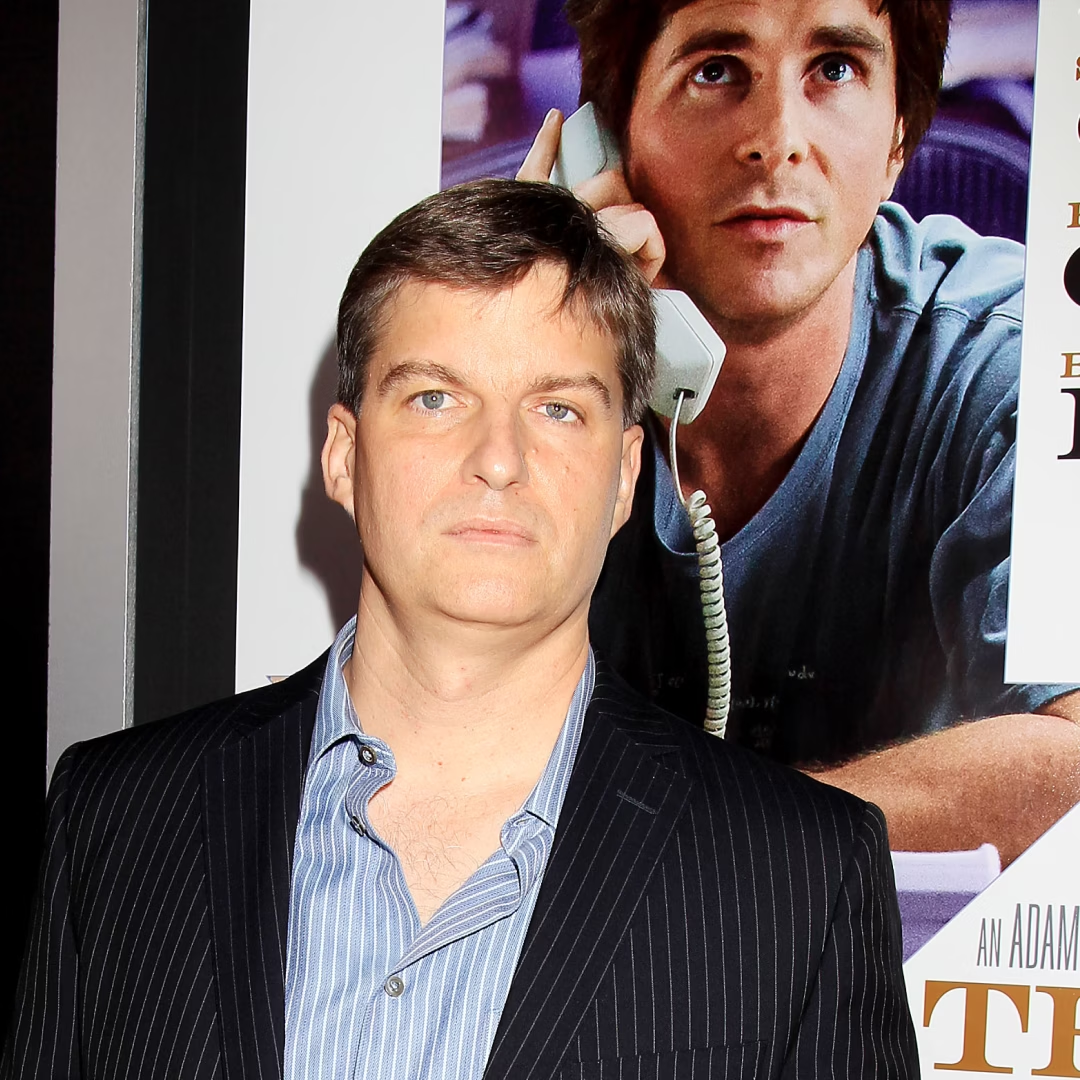
He does not seem to be predicting the collapse of AI itself. Instead, he is questioning whether some of the biggest players in the field are worth what investors are currently paying.
It is a reminder that markets can be both visionary and irrational at the same time. A company can lead a real technological revolution and still see its stock price fall if expectations grow faster than reality.
What This Means for Everyday Investors
For regular investors, Burry’s $1 billion short is not a call to panic. It is an invitation to think critically.
A few key lessons stand out:
- Hype is not value. Excitement can push prices higher, but fundamentals eventually matter.
- Valuations count. Even great companies can be bad investments if bought too expensively.
- Stay balanced. Diversify and avoid betting everything on a single theme, no matter how promising.
Investing is not about guessing the next crash or the next boom. It is about staying calm, informed, and patient through both.
The Bigger Picture
When The Big Short hit theaters, it wasn’t just a movie about finance.
It was a story about human psychology — about what happens when everyone believes the same story for too long.
Today, AI is rewriting the world as we know it.
It will change industries, create new ones, and shape the future of work. But for investors, the key is to balance excitement with realism.
Michael Burry’s $1 billion bet does not mean the AI revolution is over. It means that even revolutions can become bubbles when too much money chases too few opportunities.
In every boom, there comes a moment when confidence turns into overconfidence.
And that is usually when the smartest people start looking twice.