5/11/25
Tariffs, Explained: How Border Politics Impact Your Wallet
What are tariffs? Why a Supreme Court case is suddenly in the middle of it? And what it means for you as a shopper and investor?

What are tariffs? Why is a Supreme Court case suddenly in the middle of it? And what does it mean for you as a shopper and investor?
That's what we're diving into in this deep dive article...
What are tariffs, and why do governments use them?
A tariff is a border tax on imported goods. So if a €100 pair of sneakers crosses the border with a 15% tariff, someone pays an extra €15.
At first, companies may absorb it; over time, it tends to seep into prices, thinner discounts, and cheaper materials.
Governments use them to:
- Protect strategic industries (like steel, chips, and autos)
- Squeeze other countries in negotiations (“change your policy or we’ll raise your duties”)
- Bring in revenue (yes, tariffs have become a meaningful cash machine this year)
While tariffs sound like a straightforward fix, they’re actually a rare move in modern economics. Most countries avoid them because they tend to raise consumer prices faster than they protect jobs. That’s why a broad tariff wave, like the one we’re seeing in 2025, is so unusual - and so disruptive.
In general, the broader and higher the tariff, the more likely those costs spread into everyday prices over the following months.
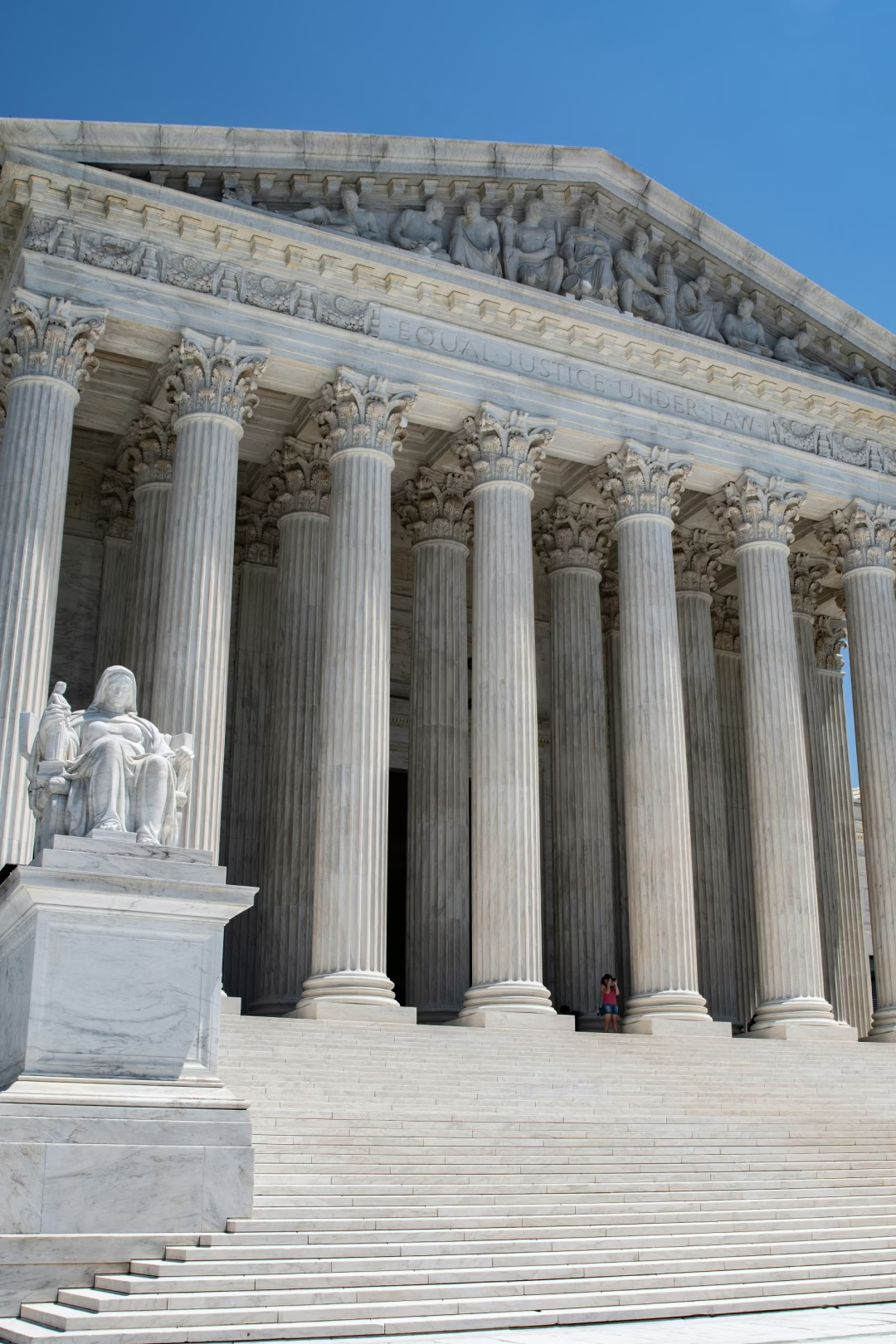
Why is the Supreme Court involved now?
In the U.S., it’s Congress that is supposed to set taxes and tariffs.
But in 2025, President Trump declared the trade deficit a “national emergency” so he could act quickly, apply tariffs widely, and gain leverage in negotiations without waiting for Congress.
It also created a steady stream of tariff revenue right away.
Lower courts pushed back, saying that law wasn’t built for sweeping, across-the-board trade taxes. Businesses and former officials filed briefs warning that this “fast lane” creates planning chaos for companies and families.
Meanwhile, Trump’s administration argues it needs flexible tools in a turbulent world.
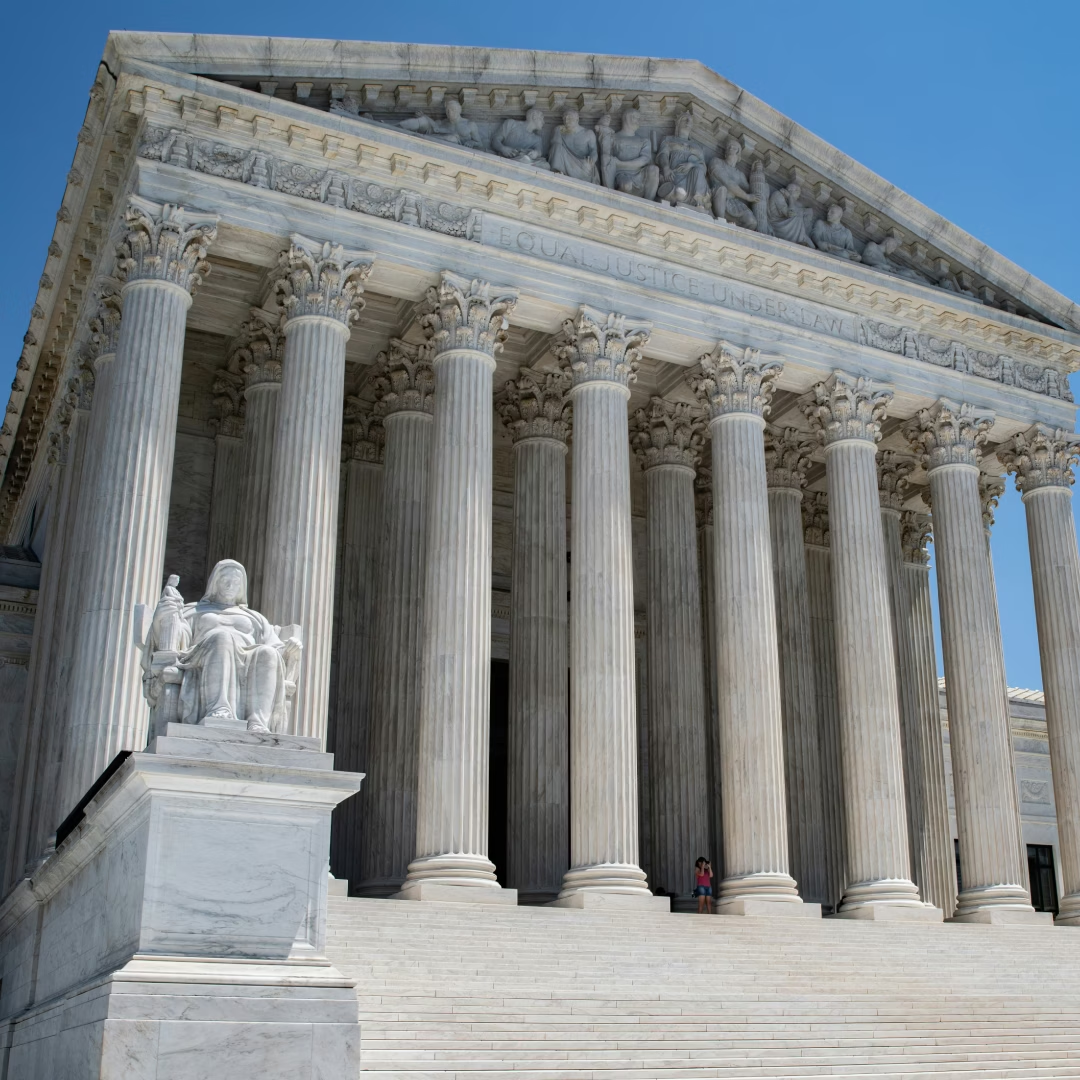
Currently, the Supreme Court is hearing arguments on whether these tariffs are lawful.
The justices heard arguments in early November, but a decision could take months. Typically, the Court reviews written briefs, hears oral arguments, and then issues a ruling - often in the spring or early summer. Until then, the existing tariffs remain in place, and companies are left planning around that uncertainty.
But even if this door closes, other trade laws still let a president impose targeted tariffs - so a ruling here shapes how, not whether, tariffs show up.
Can the Court limit emergency powers?
Could it limit them? Yes. A narrow decision draw a clear line that emergencies must be time-limited and specific, not open-ended trade policy.
That would push tariffs back to Congress, while leaving more targeted national-security or unfair-trade tools in place.
If that happens, expect a bit more predictability.
Tariffs wouldn’t vanish, but they’d likely arrive in more focused bursts, with clearer justification and timelines.
If the Court goes the other way and leaves the emergency route wide open, the White House keeps the ability to move fast and broadly.
That can be powerful leverage, but it also means companies, prices, and markets may live with more sudden changes.
Either outcome still points to a world where tariffs matter.
The difference is whether they’re narrower and slower, or broader and faster.
How this actually hits your wallet
In 2025, new tariffs covered roughly 80% of imports from China, ranging from 10% on consumer goods to as high as 60% on electric vehicles and batteries. That ripple is now visible across almost every aisle.
- Clothes & home goods: Brands tried moving production out of China - but many “backup” countries were tariffed too. Expect fewer big sales and slightly higher base prices, rather than a single huge jump.
- Tech repairs & gadgets: Tariffs on metals and components show up in spare parts and accessories; promotions get stingier.
- Groceries: When packaging, equipment, or transport costs rise, shelves follow, especially on items like coffee or beef.
- Small businesses: Indies have fewer ways to dodge costs. We’re seeing hiring freezes, pricier credit to pay tariff bills, and delayed product launches - early warning signs for local jobs and variety on store shelves.
What might happen next - and what it means for investors
If the Court decides to limit the president’s use of emergency powers, it would likely slow things down but make trade policy more predictable.
Tariffs wouldn’t disappear, but they’d have to come through other, narrower laws - like those focused on national security or unfair trade practices.
That means fewer overnight policy shocks and a bit more stability for companies planning where to produce or source their goods.
Markets might wobble at first, especially if refunding tariff revenue becomes an issue, but in the long run, clearer rules tend to calm investors.
If the Court instead upholds the emergency powers, expect tariffs to remain a central part of U.S. economic strategy.
The White House would keep broad authority to raise or adjust tariffs quickly, which can boost negotiating leverage but also keep markets guessing. Investors would likely keep factoring in a “tariff premium” - slightly higher costs, stickier inflation, and uneven performance across industries.
In simple terms: a ruling that narrows these powers favors predictability; a ruling that preserves them favors flexibility.
Either way, it’s worth watching how companies adapt. Firms with diverse supply chains, strong balance sheets, and the ability to pass on costs tend to weather these swings best, while those dependent on one region - or constant discounting - feel the strain first.
The Global Ripple Effect
Europe, Asia, and emerging markets are deeply tied to U.S. demand.
When U.S. tariffs rise, costs and production decisions shift across Europe, Asia, and emerging markets. Partners haggle for carve-outs - or retaliate.
That reshapes flows of cars, chips, critical minerals, and food.
If metal becomes more expensive in Korea, it affects parts in Vietnam, assembly in Mexico, and prices in Copenhagen or London - because tariffs travel.
Everyday Takeaways: Turning Headlines into Action
It’s easy to feel like trade battles are just background noise.
But every tariff, court ruling, and new deal eventually filters down to your daily life - through what you buy, where you work, and how your money grows.
Here’s how to stay grounded while the world debates.
- Start with your spending. Prices for clothes, tech, and home goods are unlikely to collapse anytime soon. Instead of waiting for discounts that may not come, think about value and longevity - fewer impulse buys, more investment pieces. If you’ve been eyeing a new laptop or phone, compare brands that manufacture closer to home.
- Look at your investments. Tariff news moves markets, but usually in waves, not earthquakes. Companies with flexible supply chains and solid finances can adapt; others that rely on a single cheap source often struggle. Keeping a mix of regions and sectors in your portfolio helps smooth those ups and downs.
- And finally, think about your work. Global trade shifts don’t just change prices - they reshape what skills are valuable. Logistics, automation, and sustainability are expanding as supply chains evolve. Investing in skills that make you adaptable can future-proof your career, without needing to reinvent it.
The Takeaway
Tariffs are the bridge between global politics and your daily life, and you don’t need to memorize trade laws to understand their impact.
The simple pattern is this: when borders get more expensive, so does everything that crosses them.
Prices rise, company profits adjust, and markets reshuffle who wins and who struggles.
Understanding how policies like tariffs travel through the system isn’t about becoming a trade expert. It’s about realizing that global economics isn’t far away at all: it’s built into the price of your morning coffee, your next pay rise, and the value of your future investments.
The more you see those connections, the more control you have over them.
The smartest move isn’t trying to predict the next headline, it’s building a life and financial plan that can handle them.
Keep your investments spread out, your expectations grounded, and your skills adaptable.
Whether the Court tightens the rules or keeps things as they are, the people like you who stay informed and flexible will always be one step ahead of the chaos.