
5/11/25
The Obesity Drug Wars: Why Pfizer Might Still Win Against Novo Nordisk
Novo's latest drama: a surprise, nine-billion-dollar bid to snatch the biotech firm Metsera away from Pfizer.

A few years ago, Novo Nordisk could do no wrong.
The Danish pharmaceutical company had transformed itself from a quiet insulin maker into Europe’s most valuable company, worth more than the entire Danish economy.
Its blockbuster weight-loss drugs, Ozempic and Wegovy, became cultural touchstones - celebrity-endorsed, memeified, and prescribed faster than pharmacies could restock them.
Investors and analysts alike spoke of Novo as a generational success story, the company that had cracked both the science of obesity and the psychology of modern self-improvement.
But the higher the climb, the steeper the fall.
Over the past year, Novo’s once unstoppable ascent has faltered.
Its stock has tumbled sharply from its record highs as a series of challenges have piled up: a wave of cheaper copycat versions flooding the market, growing scrutiny from regulators over pricing and safety, and, most recently, a leadership shake-up that has rattled investors’ confidence.
When longtime chief executive Lars Fruergaard Jørgensen stepped down earlier this year, his replacement, Mike Doustdar, was tasked with doing something Novo hasn’t done in decades - act like a hungry startup again. Doustdar, known for his bold, even brash style, arrived with a mandate to move faster, take risks, and reclaim lost momentum.
One of his first moves was to reshuffle Novo’s board, replacing several long-serving members seen as too cautious for the new era.
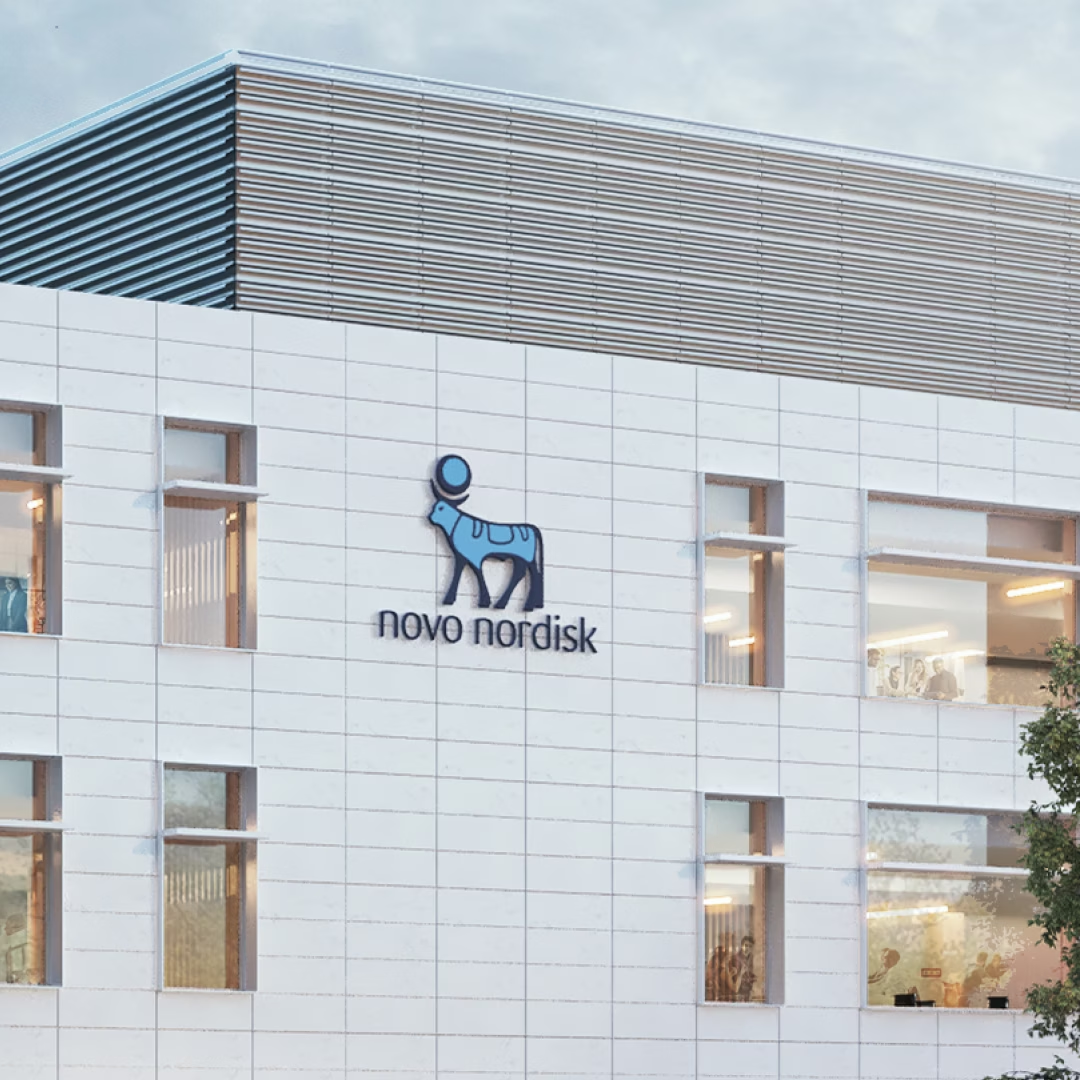
This aggressive shift has culminated in the company’s latest drama: a surprise, nine-billion-dollar bid to snatch the biotech firm Metsera away from Pfizer.
A Corporate Tug-of-War
Pfizer had already agreed to acquire Metsera for 7.3 billion dollars, hoping to use its obesity drug candidates as a way back into relevance after the collapse of its pandemic profits.
But Novo’s counteroffer - an unsolicited attempt to outbid Pfizer - shocked the industry.
It was an unusually public act of corporate one-upmanship that underscored just how desperate Novo has become to defend its territory.
Metsera’s appeal is obvious.
The company is developing a monthly obesity injection that could undercut Novo’s existing products, which require weekly doses. If successful, it could reset consumer expectations and eat into Novo’s already slowing growth. But Novo’s bid has raised uncomfortable questions: If the company is confident in its own research pipeline, why the rush to buy another firm’s?
Pfizer’s answer was swift and brutal.
Within 24 hours, it filed a lawsuit accusing Novo of breaking the terms of Pfizer’s binding merger agreement with Metsera.
It argued that Novo’s offer was not “superior” in any legal sense because it was less likely to win regulatory approval and was structured in a way that violated Delaware corporate law.
Novo, for its part, insists the deal would be complementary and accelerate innovation.
The dispute now sits in a Delaware courtroom, a corporate tug-of-war being watched closely by investors across the globe.
A Changing Market - and Rising Competition
Behind the scenes, Novo faces another looming threat: its patents on Ozempic and Wegovy are set to expire later this decade.
That ticking clock has emboldened a growing number of generic and biosimilar manufacturers eager to cash in on the GLP-1 drug craze.
Some of these “copycat” products are already circulating online, often through telehealth startups or compounding pharmacies, in a legal gray zone that is nearly impossible to police.
The result is that Novo, once the innovator, now finds itself playing defense. Competitors like Eli Lilly have surged ahead with newer, more effective formulations.
Meanwhile, Pfizer, once written off as a post-COVID has-been, sees a chance to reinvent itself as a serious player in the most profitable sector of modern medicine.
More Than Just a Pharma Battle
To the uninitiated, all of this might sound like the typical jockeying of giant corporations.
But the stakes are far higher than most realize.
The global obesity drug market is projected to exceed 100 billion dollars by 2030, a number that would make it one of the most lucrative categories in pharmaceutical history.
The drugs are also reshaping consumer behavior, from how people eat and exercise to how companies design food products and fashion brands market clothing.
For women, the impact has been particularly complex.
Obesity has long been a gendered issue - medicalized for men, moralized for women.
Drugs like Wegovy and Mounjaro have offered a new, clinically backed alternative to diet culture’s false promises, but they have also reignited debates about body autonomy, health access, and the commodification of female bodies.
With prices still exceeding a thousand dollars per month in many markets, access remains limited to the wealthiest patients, and the outcome of Pfizer’s and Novo’s legal fight could help determine how quickly that changes.
Lessons for Investors
For investors watching from the sidelines, this saga offers a case study in how innovation, regulation, and psychology collide in the stock market.
Pharma companies live and die by their pipelines, and when a patent clock starts ticking, desperation can set in. Mergers and acquisitions often signal not confidence, but fear of stagnation.
Pfizer, for all its troubles, has time and cash on its side.
It can afford to pay more for Metsera if it must, and it needs the deal to reestablish growth.
Novo, by contrast, is defending its empire from all sides - legally, financially, and reputationally. Its stock, once Europe’s crown jewel, now reflects a company fighting to rediscover its footing.
For everyday investors, the takeaway is simple but profound.
The future of obesity treatment is not just a scientific story; it’s an economic one, intertwined with questions of access, competition, and consumer psychology.
As these companies battle it out, the real winners may not be the ones making the drugs, but the investors who understand how transformative—and volatile—this new era of medicine is becoming.