2/9/25
The Price of Pride
More than 100,000 people marched through the streets of Budapest. For one afternoon, the city belonged to its people - not its government.

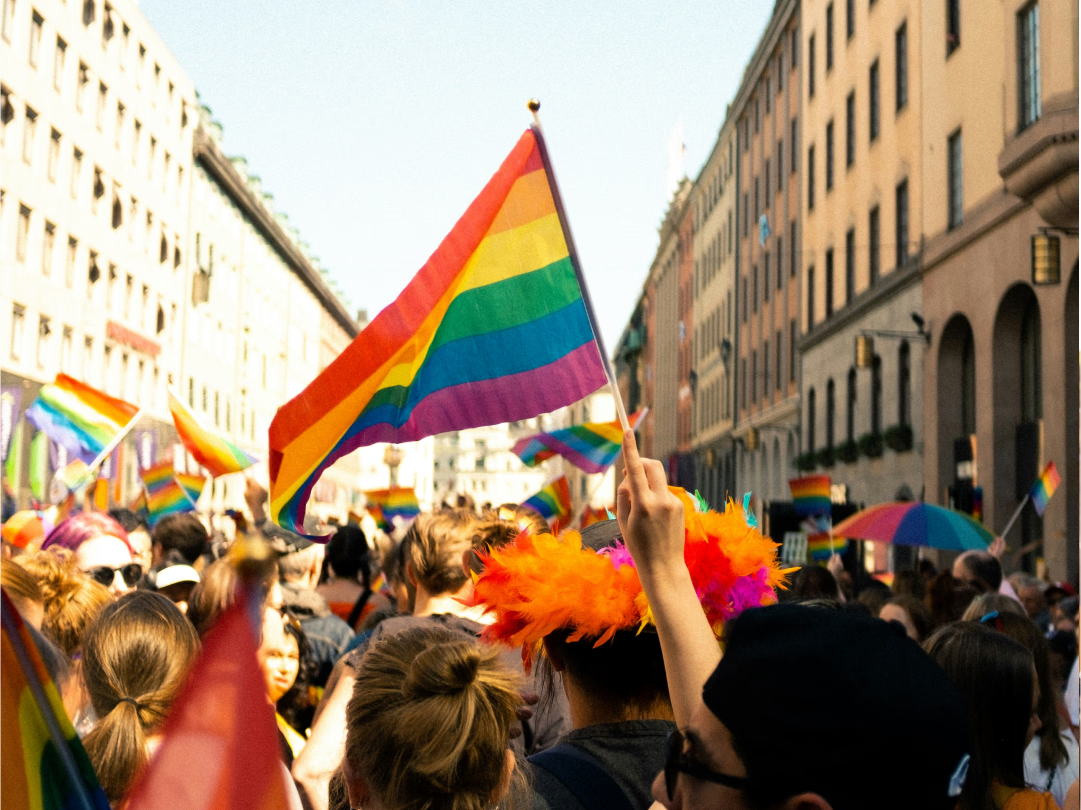
On Saturday, more than 100,000 people marched through the streets of Budapest in what became Hungary’s largest-ever Pride parade.
Just one day earlier, the event had been officially banned by Prime Minister Viktor Orbán’s government, following the passage of legislation that criminalizes public gatherings like Pride.
Officials warned that participants could face “clear legal consequences.”
But still… they showed up.
In response to the ban, Budapest’s mayor rebranded the event as “Pride Freedom Day,” linking it to the country’s historical liberation from Soviet occupation in 1991.
The symbolic shift gave the march additional legal protection, but also sharpened its political resonance: this was no longer just a Pride parade.
It was a mass demonstration against the authoritarianism of Orbán’s regime.
Police stood by, but did not interfere, as the crowd reclaimed the streets in an act of joyful defiance.
For one afternoon, the city belonged to its people - not its government.
For one afternoon, the city belonged to its people - not its government
The Contradictions of Pride Month
At the same time, Pride Month was unfolding in other parts of the world with a strikingly different tone. In cities like London and New York, Pride was defined by drag brunches, brand-sponsored floats, and rainbow-colored product lines.
But the celebration often coexisted uncomfortably with another reality: a rise in anti-LGBTQ legislation, online hate campaigns, and political backlash.
This contradiction is not new.
Corporations roll out rainbow branding every June, but frequently remain silent on issues that materially affect LGBTQI+ people: housing, healthcare access, job discrimination, or trans rights. Pride has become increasingly commercialized in many countries, marketed with slogans of inclusion and joy, but often stripped of its political urgency or any real acts of support.
For anyone wondering whether Pride still matters, the answer lies not in a rainbow display or a parade permit, but in places like Budapest.

The Ongoing Reality of Risk
Globally, being LGBTQI+ remains dangerous. In more than 60 countries, same-sex relationships are still criminalized. In some, they are punishable by death. Even in nations with strong legal protections, social and economic discrimination remain widespread.
In the UK, LGBTQI+ people are twice as likely to be victims of violent crime. One in five LGBTQI+ workers say they have experienced workplace discrimination. And 24 percent of homeless youth identify as LGBTQI+, often after being rejected by their families.
The Economic Penalty of Queerness
Beyond violence and exclusion, many also face a quieter but persistent hardship: the financial cost of living openly.
For example, gay and bisexual men in the UK earn 4–10 percent less than their straight counterparts. Before the introduction of equal marriage laws in 2013, same-sex couples were excluded from spousal pensions and taxed at a disadvantage.
For transgender individuals, economic inequality is even more severe. Waiting times for gender-affirming care through the NHS (the publicly funded healthcare system in the United Kingdom) now exceeds five years. Many are forced to seek private care, paying £10,000 to £30,000 out of pocket.
And even then, the job market is far from equitable. Trans women often experience a drop in earnings after transitioning, while trans men frequently see an increase - underscoring how gender bias and transphobia intersect.
These are not isolated incidents.
They are part of a broader pattern of systemic inequality that accumulates over time. Because financial penalty of being LGBTQI+ doesn’t just affect individuals - it limits stability, opportunity, and wealth.
And true economic empowerment means understanding not just the numbers, but the inequalities behind them and that’s why it matters to share stories like this, right here in the Female Invest app.
Why Pride Still Matters
The global conversation around Pride is too often shaped by its most marketable parts and which company makes the loudest campaign. But at its core, Pride was and remains a protest against exclusion.
In Budapest, 100,000 people marched. Not in celebration, but in resistance. Not because it was safe or easy, but because idleness was simply not an option.
The march was a reminder: the progress Pride represents is neither inevitable nor complete. Its visibility is still contested. Its rights still reversible. And in many places, the price of queerness is still being paid in full.
Pride endures not because the struggle is over, but because the struggle persists.