
30/10/25
I Went Down the #Tradwife Rabbit Hole - and It’s Darker Than You Think
Women are opting out of impossible expectations - at the cost of their freedom and safety.

Early this summer, I was scrolling through Instagram on the train when the algorithm served me a reel I thought was satire:
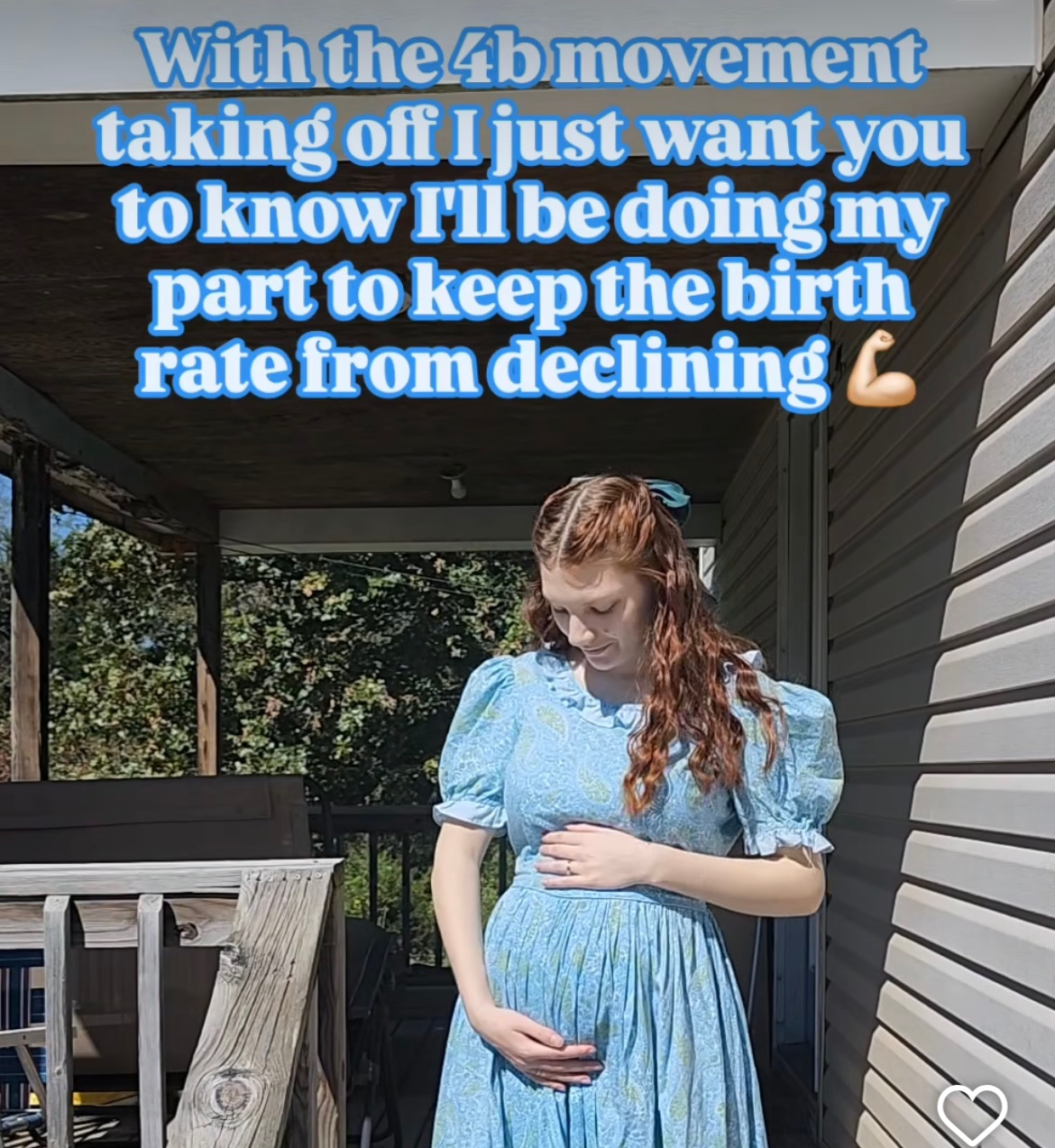
Because I’d been digging into another story on online subcultures, my feed had started serving me odd corners of the internet.
And when you spend your days writing about financial empowerment, stumbling on #tradwife posts feels like stepping into another universe.
Call it morbid curiosity, or maybe research, but I tapped the hashtag.

Breath stuck in my throat, I kept going.
“If being a housewife is a job, then she should also be in uniform” with an AI image of a woman in a pioneer dress and bonnet.
As I scrolled through reel after reel, a heavy pit grew in my stomach.
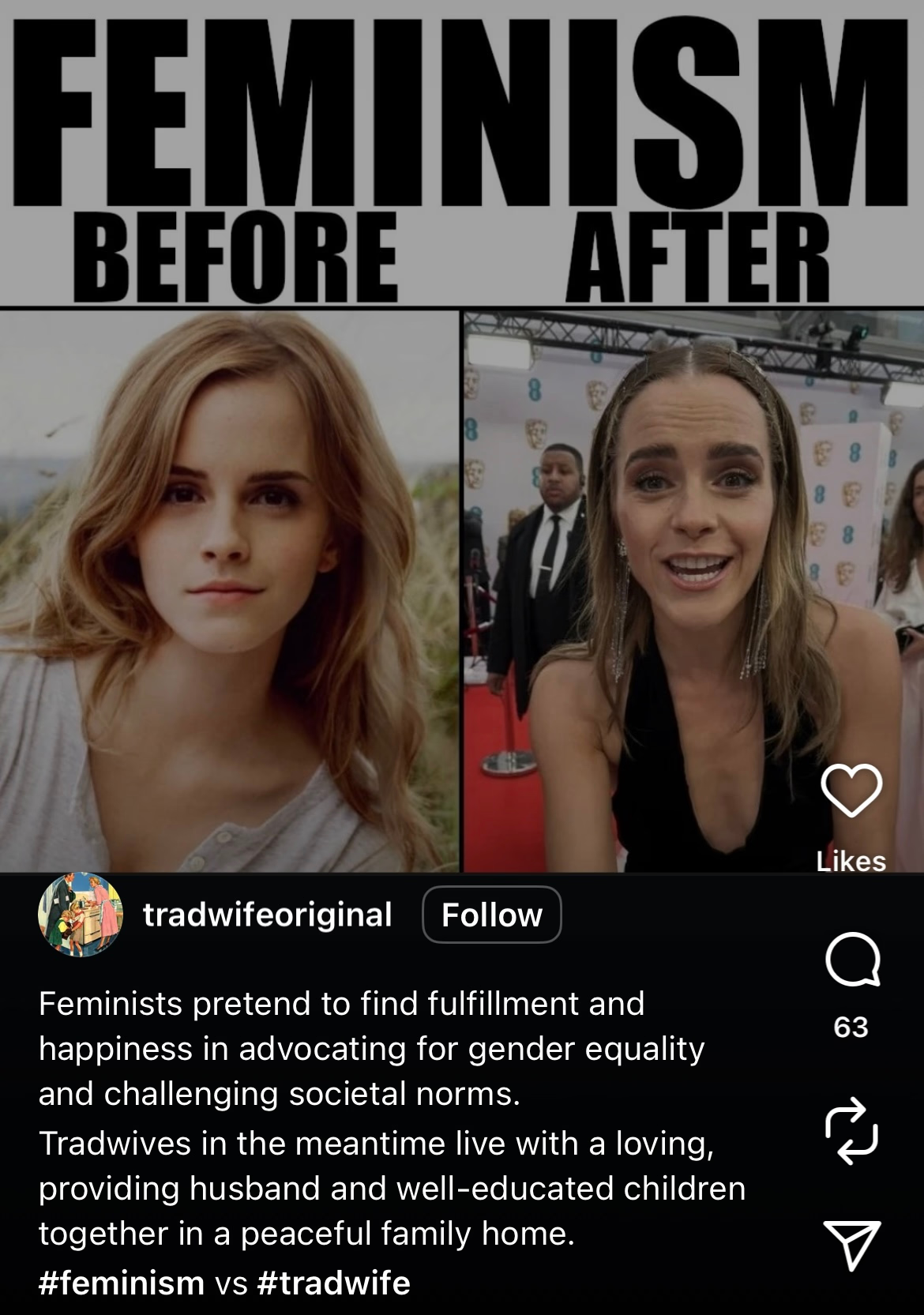
“’On my way to go cancel out my husband’s vote!’… is something you’ll never hear me say”
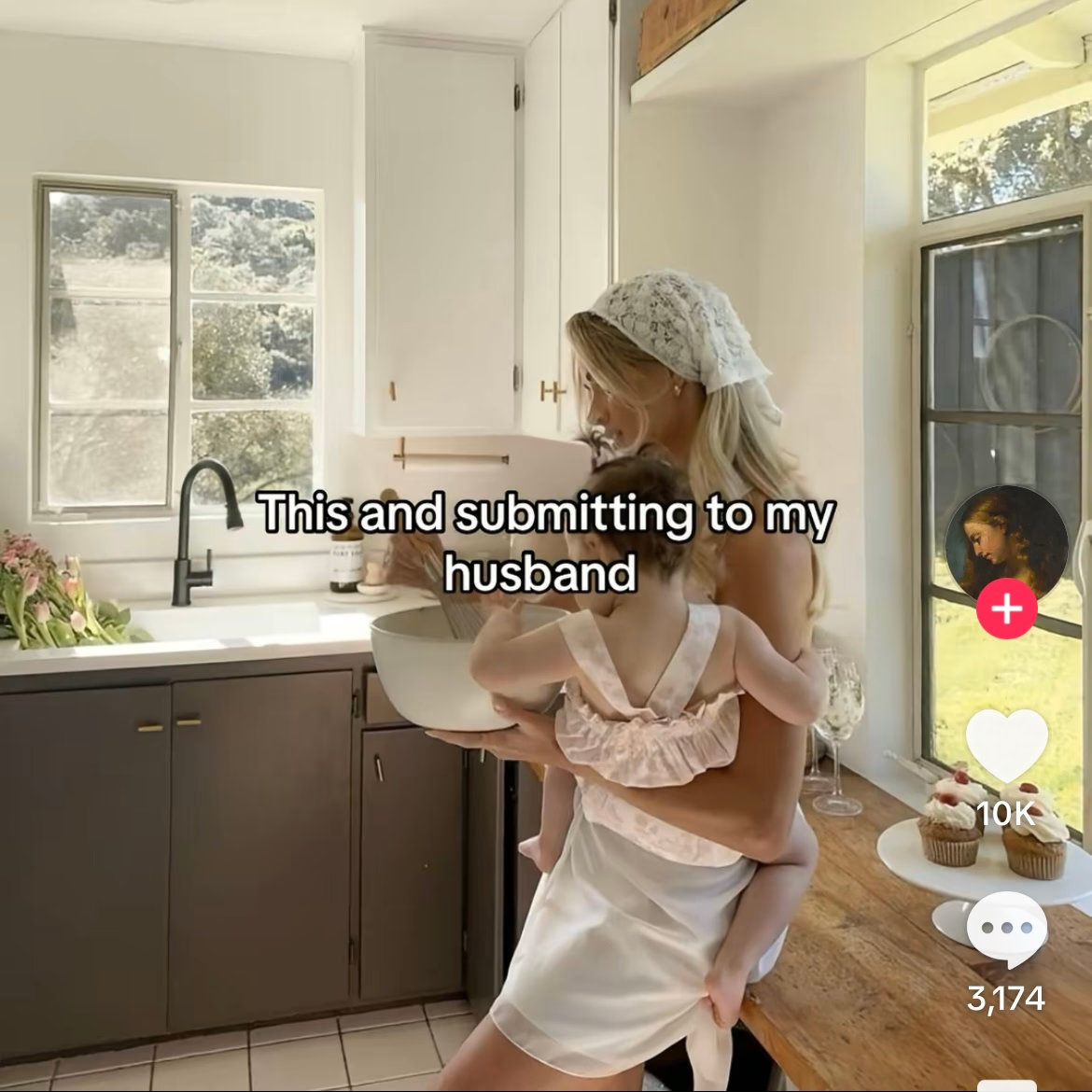
“Traditional things I will do for my future husband: Birth 7-12 kids, churn butter, be in the kitchen, submit to his love and authority, only wear dresses”

The polished clips with soft focus slow pans over rising bread dough looked like lifestyle ads, but gave me the queasy feeling of watching a movement recruit in real time.
Because this isn’t an aesthetic.
It’s a deliberate rejection of the feminist frameworks we are fighting for.
The Questions I Couldn’t Shake
I couldn’t just scroll past. I wanted to know what makes someone walk away from personal autonomy that, to me, is non-negotiable.
I was itching to know: who identifies with this movement, and why? How much damage is it doing to feminist progress? And most importantly, what can women do to protect their choices?
Looking for answers, I hopped on the phone with Dr. Rebecca Stotzer, a professor and leading researcher at the University of Hawaiʻi. Together with her co-author Ashley Nelson, she published two in-depth studies this year on the tradwife phenomenon.

Dr. Stotzer’s research spans hate crimes, gendered violence, and the evolving landscape of online extremism. Recently, a striking trend in digital spaces caught her attention: “In the last five years or so, we've seen this emergence of online communities where gender is being discussed in regressive ways.”
She explains, “Women's communities, which are often the foil or the complement to men's communities, have been under-researched. That’s how I moved along this trajectory of social justice research into these very gendered communities, and how they may be changing our real world - not just the online world.”
The Many Faces of Tradwife Ideology
The stereotype is simple: a woman stepping back into a 1950s male-gaze fantasy of obedience and dependence.
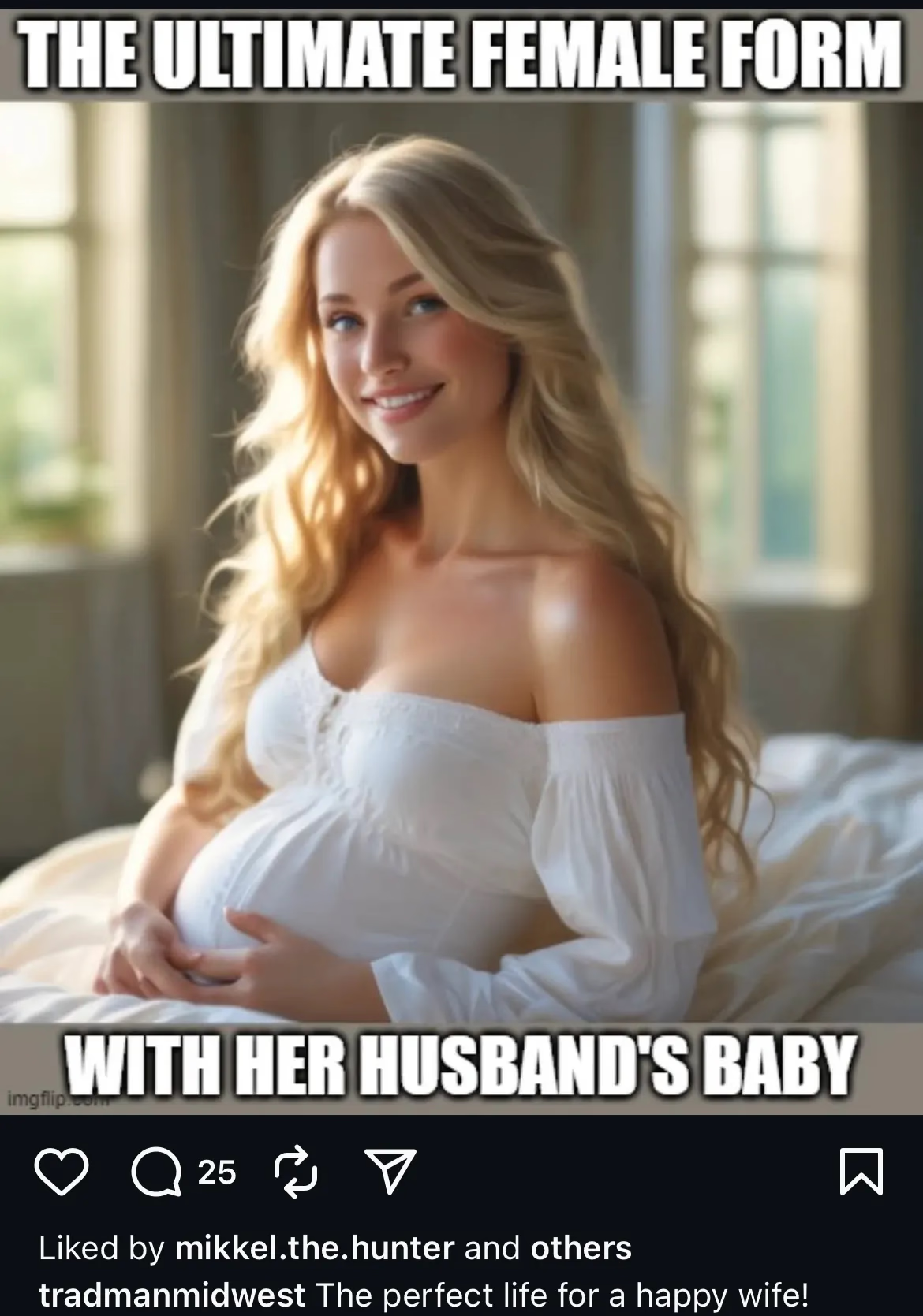
But Dr. Stotzer’s new research shows the reality is more complicated.
“There were some people who fell along the ideological lines we expected, like white nationalism, racism, red pill ideology, conservatism, anti-transgender ideologies. But roughly 40% of our sample did not identify as white and there were, also surprisingly, some people who were on the more liberal side of the spectrum.” Stotzer explains.
But despite the diversity, one narrative dominates: you have to choose between feminism or femininity.
The False Binary
The deeper you scroll, the tone shifts from lifestyle to ideology, framing feminism as not just unnecessary, but as the problem. Dr. Stotzer’s research showed that tradwife content perpetuates “the idea that feminism is contributing to the devaluing of femininity”, presenting them as rivals.
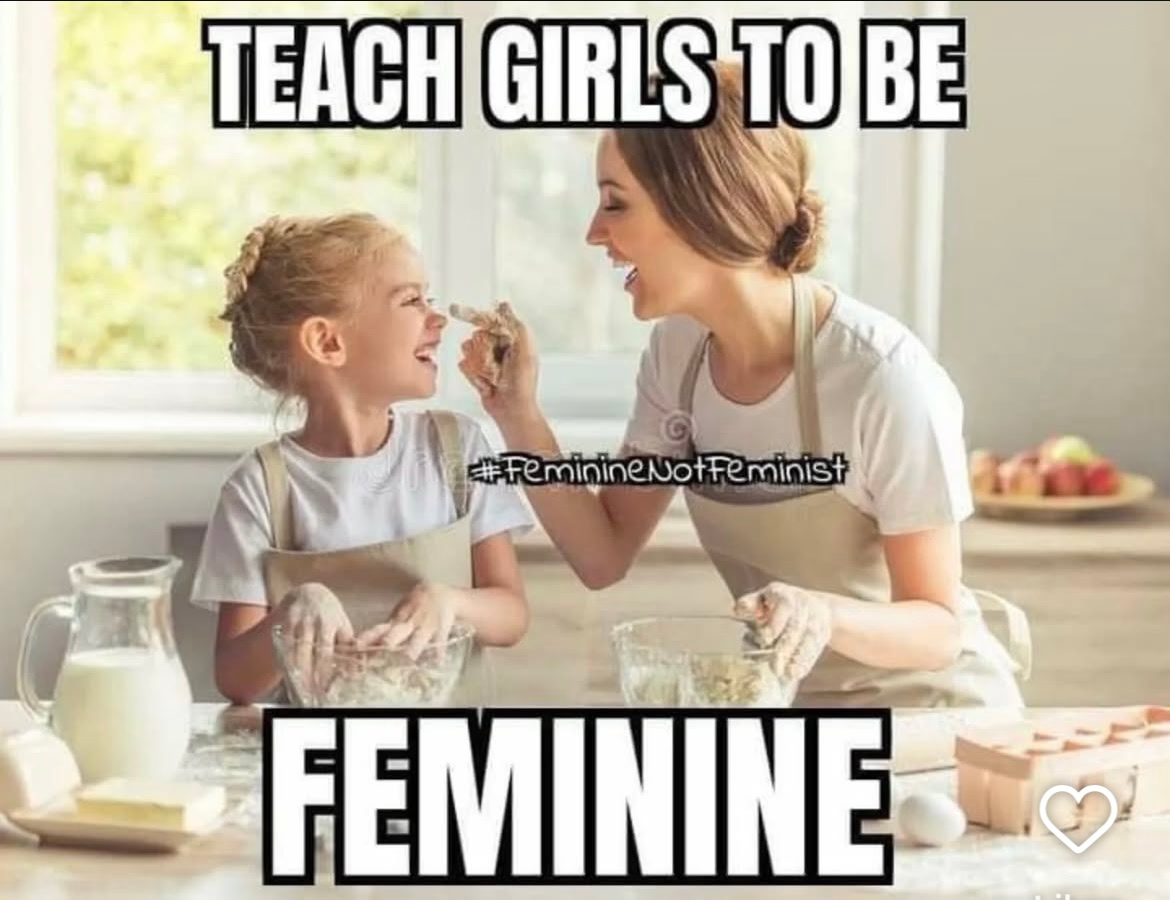
She notes that ”most of the women did not seem very well versed on feminism.” As a result, they aren’t rejecting feminist theory, but rather a caricature of it.
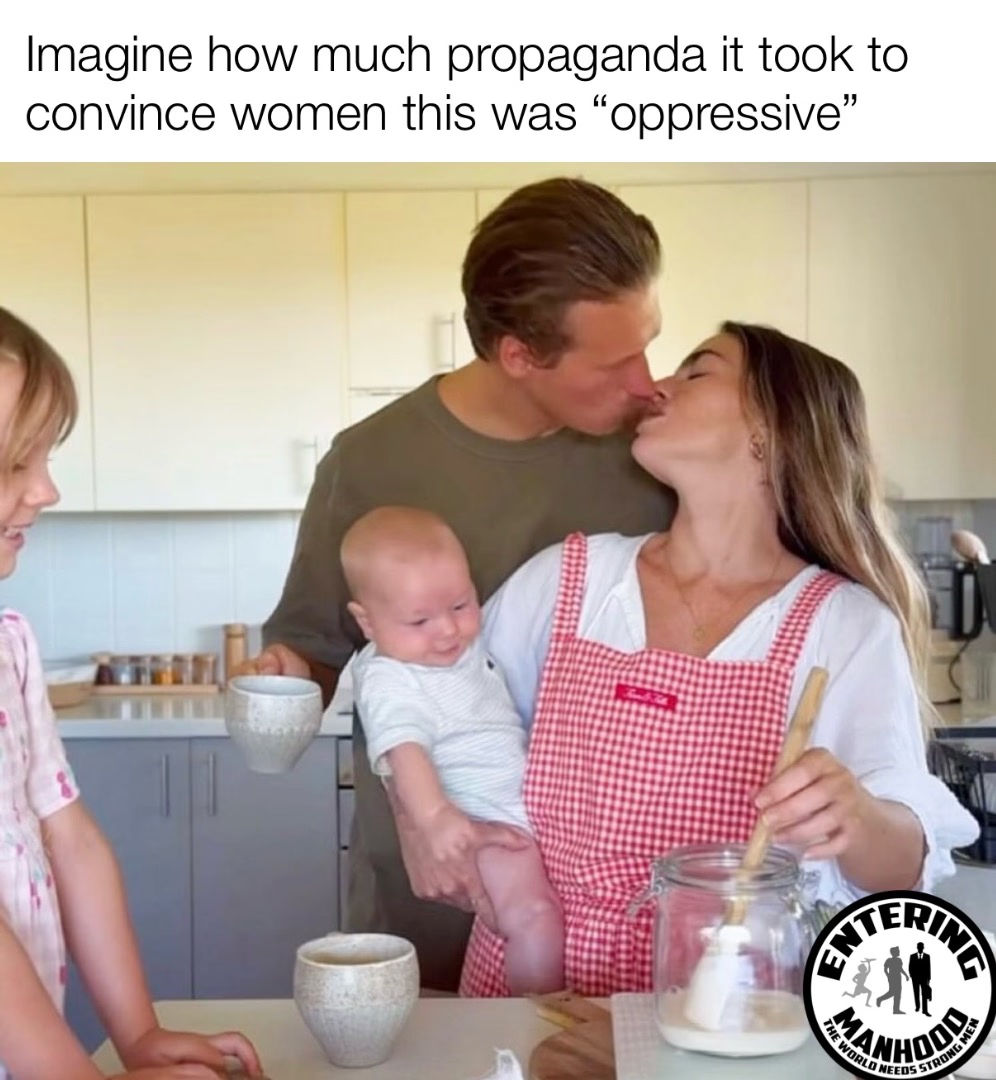
In that vacuum, a set of grievances emerges: that feminism has “ruined” men by making them weak; that it has “ruined” women by forcing them into the workforce and away from their “true natures”; that it has “ruined” relationships by teaching women not to submit to men.
Dr. Stotzer noted that online negativity can reinforce the divide. “Their perception of being under attack was also legitimised essentially by online trolls; it only reinforced their idea that the feminists were out to get them or were disapproving or were trying to change their choice. It's super easy to be critical of women in ways that we aren't critical of men that we need to be wary of, too.”

She continues, “Many tradwives felt like they were protecting women by trying to undo feminism and everything that feminism has ‘ruined’ for us.”
What gets lost is that feminism, at its core, is about expanding choices - not restricting them.
So let’s be clear: “It's not inherently an unhealthy pattern to have one partner who stays at home and one person who works, right? But it's all the other stuff that gets packaged with that pattern that we need to think more critically about.”
Because many people find deep satisfaction and meaning in homemaking, and it can be the right choice for many families.
It’s also often a practical choice: for many, staying at home is necessary due to caregiving needs, chronic health conditions, or a number of other reasons.
But these anti-feminist narratives don’t appear out of thin air. Something else is accelerating the impact - something invisible, but incredibly powerful.
Algorithm Politics
You don’t even have to go looking for tradwife content: the algorithm brings it straight to you. Watch a few harmless baking reels and suddenly you’re seeing tradwife accounts, alpha-male influencers, and a pipeline of manosphere propaganda.
Dr. Stotzer explains, “If you seek out information, that's your choice, but if you're being fed information, that's not your choice.”
What begins as a lifestyle hashtag can turn into a culture-shaping narrative in a matter of days - digital recruitment for a far-right worldview, hiding in plain sight as wholesome advice or aspirational womanhood.
“Many of the ways that women end up being recruiters is this ‘soft’ kind of content that, on its face, kind of looks like nothing - recipe videos, cleaning videos, etc.” she explains.
“We have decades of research that shows most people have to be educated into racism or antisemitism; people rarely come to these movements already familiar with those ideologies. But by presenting this softer face, they can slowly get radicalised through this other entry point, and women who go there first often bring their men with them.”
And the content speaks for itself.

This reel riffing on the popular “share the craziest thing you’ve done” trend stopped me in my tracks:
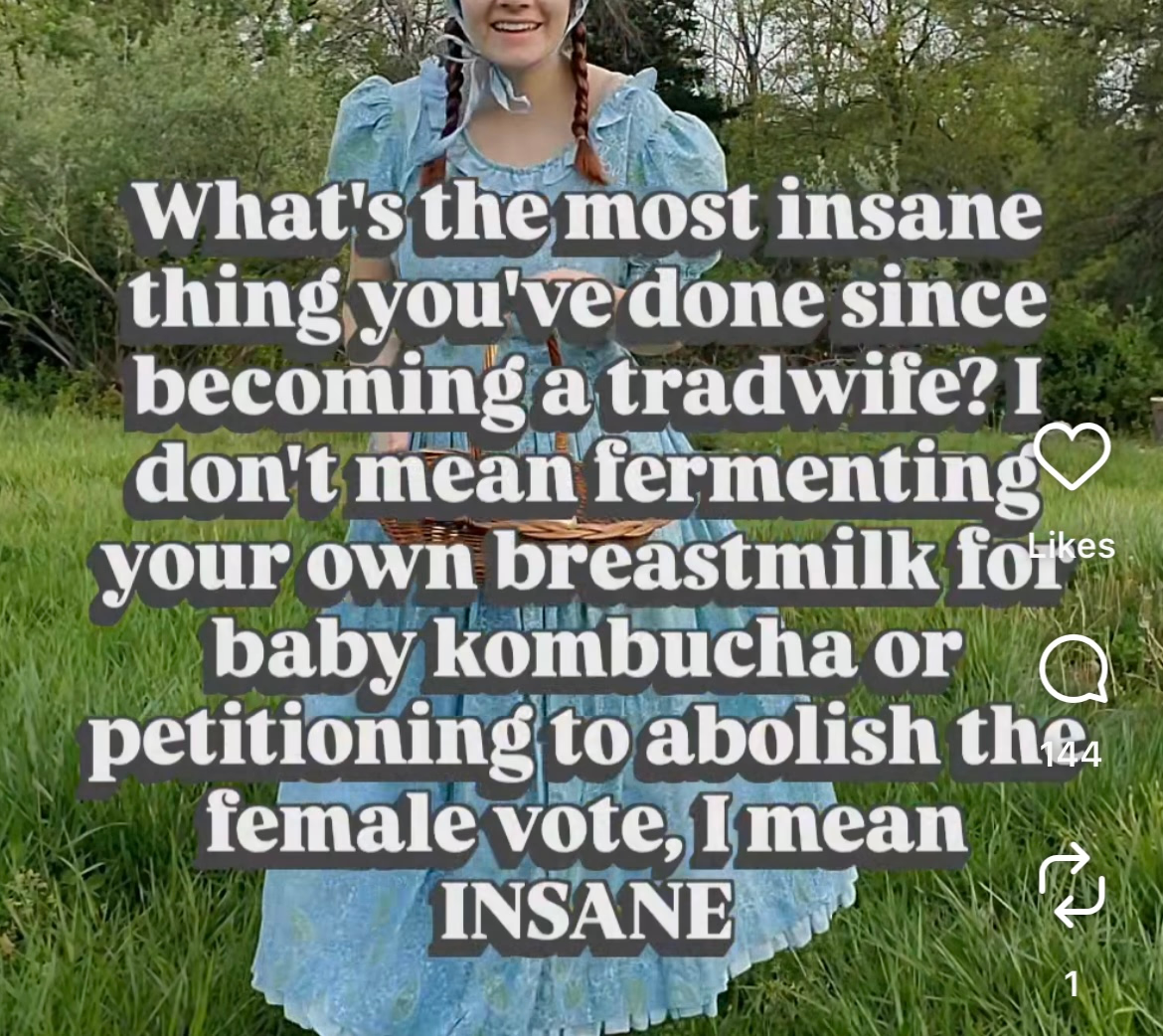
This extreme worldview is being woven into everyday engagement bait, normalised through trends, likes, and comments.
As Dr. Stotzer pointed out, “There's been industry resistance to regulating internet content and free speech concerns, but how does that counterbalance the risks?”
Romanticised Life, Real Consequences
One of the recurring themes in tradwife content is “romanticizing your life” - the idea that even the most ordinary routines can be framed as poetic and dreamy.
That’s no accident: “There is a lot of drudgery in tradwife life. But when you romanticise it, suddenly it's more appealing.”
It may feel aspirational, but romanticizing domestic life online can hide real financial and legal risks: no financial control, social isolation, and few legal protections. And when you have no money, no credit history, and no career options, the ability to leave becomes the first casualty.
Dr. Stotzer’s research found a stark absence of a backup plan. "There wasn't a lot of conversation about what happens if your partner dies, gets sick, or leaves” she said. “Many women dismissed the idea of needing a ‘plan B’."

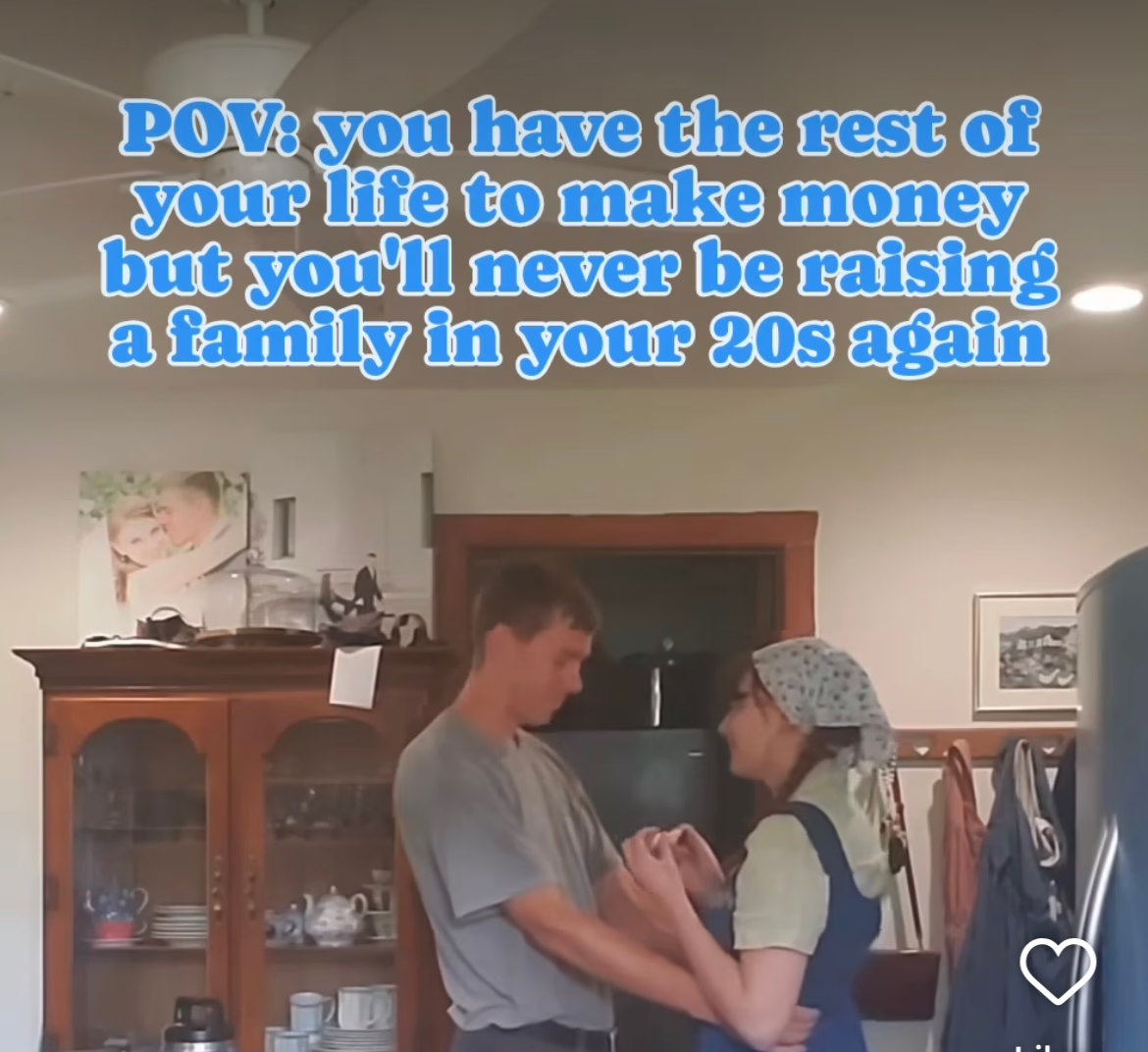
Instead, the burden shifts entirely onto discernment - choosing the “right” man. But as Stotzer points out, “That doesn't recognise the ways that partners can be deceiving, or the ways that the lifestyle itself can create risk.’”
And here’s the irony: many women first turn to tradwife life in search of safety.
“Many women perceived the world as unsafe… ‘if I can make my bubble small enough - just me, my husband, my kids, maybe some extended family or church - I will feel safe.’ And whenever we feel unsafe, we have choices about whether we’ll fight to make the world more safe, or whether we’ll retreat and be very controlling over who we interact with.”

But their safety is exactly what’s at stake.
Financial dependence is one of the strongest risk factors for intimate partner violence or being unable to leave an abusive home.
A 2011 study found that 99% of domestic violence victims also reported economic abuse, defined as a partner controlling the other’s ability to acquire, use, or maintain financial resources.

Still, many tradwives dismissed this as something that “only happens on TV.”
The comment sections of #tradwife posts, however, tell a different story, filled with warnings from women sharing their lived experiences. Dr. Stotzer notes that even within her study, a quarter of the women she followed abandoned the lifestyle within 18 months.

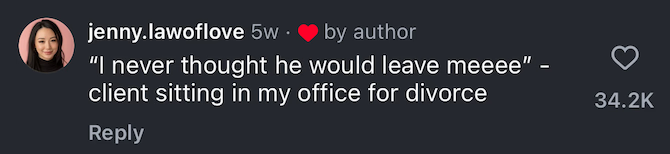
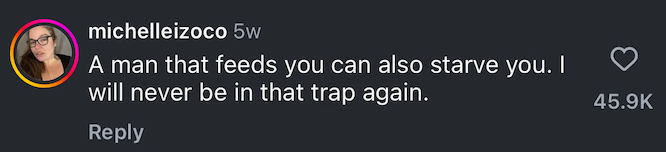
This mass retreat from autonomy reflects deeper systemic failures: a society where women are stretched impossibly thin, and burnout shapes life’s biggest decisions.
The Weight of Doing It All
It’s probably not news to you: women are exhausted.
We are carrying an impossible load - work, care, home, and all the invisible labor that glues families together. This pressure to do it all is exactly what makes the tradwife lifestyle feel appealing to some.
“Some of the tradwives talked about how it's easier to just return to this lifestyle than to try to train their husbands to participate more in the household labor. We empower women to enter the workforce, but we have not been as good at empowering men to be good homemakers themselves. It's emotionally taxing to have to train your male partner how to do their part. Men haven't kept up with the gains that feminism has made.”
The research found that many tradwives chose economic dependency even when their husbands didn’t earn much. “They're choosing economic instability in order for the mom or wife to stay at home. I think it says something about how tired women are, right?”
Burnout rates for women have risen sharply, with 42% of women report feeling burned out, a gap that has nearly doubled compared to men, especially during the pandemic.
High-performing women face a disproportionate personal toll, leading many to feel they are risking their well-being to meet workplace demands.
Dr Stotzer shared, “It’s extremely hard to come to work and feel like you can't always give your best at work, and to come home and feel like you can't always be the best mom, or the best partner - it’s easy to romanticise having just one thing to focus on. Like if I could just focus on being a mom, I could be an awesome mom, right?”
She continues, “this pressure for women to to be full-time moms and full-time workers at the same time is just unsustainable. And so the more that we can make workplaces work for families, the better. There were social supports that we used to have for families raising children that we just don't have anymore.”
One #tradwife post captures the sentiment: videos of women talking about the strain of working life overlaid with the caption, “Women are starting to realise they weren’t liberated - they were drafted into the rat race.”

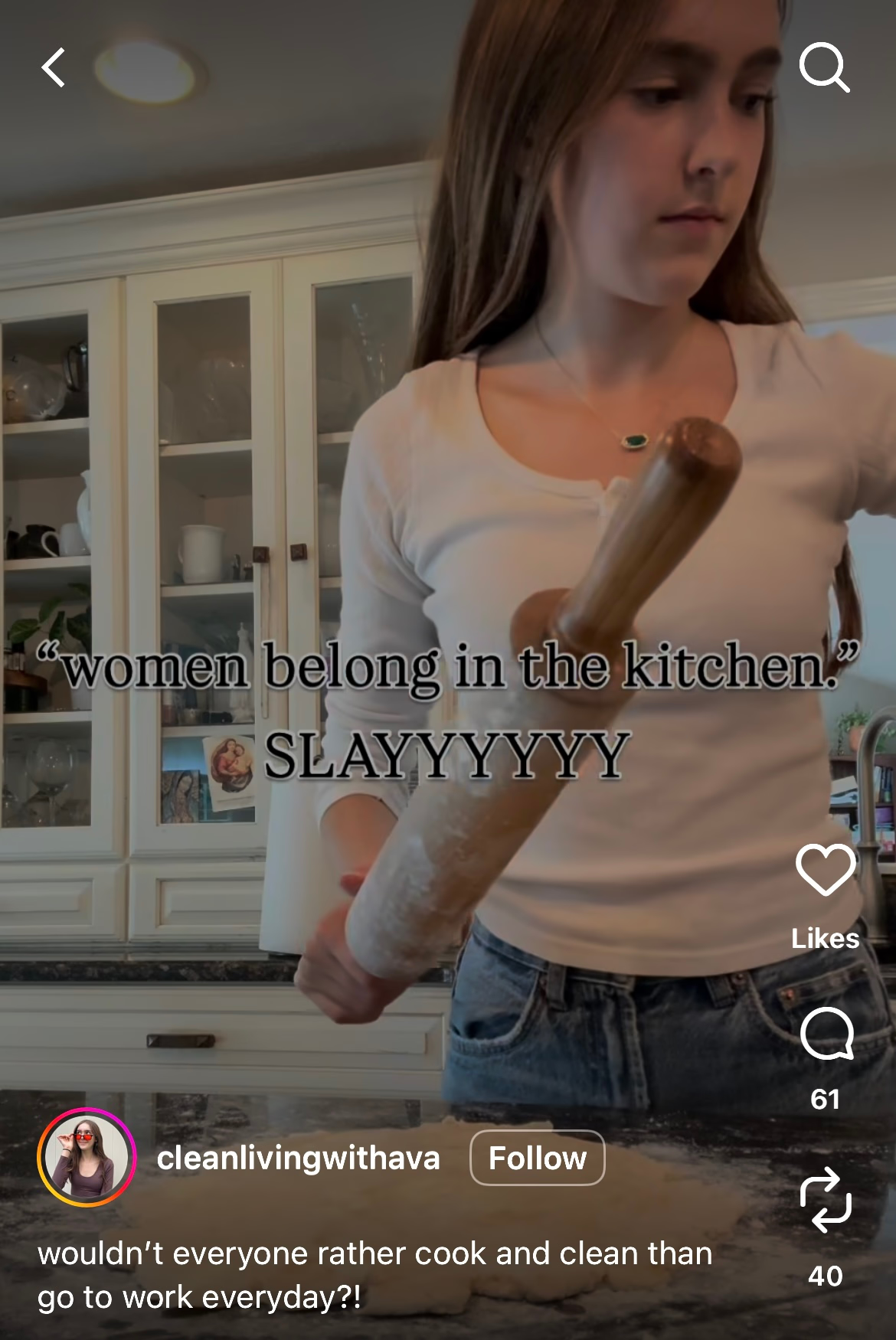
This content reflects a larger, structural problem: burnout, insufficient social support, and uneven domestic expectations.
But while the appeal of retreating into the home may feel like safety, putting yourself at risk or trading away your autonomy is not the solution.
Modern Life Needs Modern Safeguards: How to Protect Your Choice
I get it - I’m tired too, and homemaking can be deeply rewarding for some of us. In fact, I’m probably the most domestic person I know. You can find me in my kitchen cooking elaborate meals or baking most days, and I clean to relax. Caring for the people close to me through domestic tasks is one of the ways I show love.
But here’s the thing: none of that is not at odds with my pursuit of financial independence. They are entirely unrelated.
You can enjoy feminine things and romanticise your life without putting your future at risk.
“We all make feminist and non-feminist choices all the time,” Dr. Stotzer says. “The question isn’t, ‘is this the perfect decision?’ It’s, ‘am I protected if things go sideways?”
”I have a feminist concern about women checking out from careers and wage labor,” Dr. Stotzer says. She urges women to “make sure that there are protections in place… all of those financial safeguards you can implement, even if you're not the main wage earner in your family, are still really important.”
Anyone who is managing a household and acting as caregiver deserves the same level of security and respect as any wage earner.
Putting a few safeguards in place isn’t pessimistic; it’s practical, and it honors the work you do at home as crucial to your family’s well-being.
If you’re thinking about stepping back from paid work and relying on a partner’s income, there are structures you can put in place to protect yourself.
Consider:
- Keeping your name on major assets.
- Maintaining visibility on household income and spending.
- Preserving work experience - even occasional freelance or project work keeps doors open.
- Have your partner provide a salary to recognise household labor and give you independence.
- Ensuring your partner contributes to your pension or retirement plans.
- Building your own credit, even with a small personal account.
- Staying connected to friends and networks outside your household.
Remember that using household resources isn’t something to feel guilty about - your labor subsidises your partner’s career. These measures aren’t indulgent; they’re safeguards to ensure your choices don’t become a trap.
Where Do We Go from Here?
When thousands of women voluntarily give up autonomy, it signals something bigger than personal choice. Dr. Stotzer notes, “We can look at with fascination and critique, but it's actually emblematic of a much larger shift that's occurring in our society.”
It’s a warning sign that the system is failing.
Women are opting out of impossible expectations at the cost of their freedom and safety.
Algorithms amplify these pressures, showing curated lifestyles that feel safe or aspirational, even when they carry real risk. And the industry resistance to regulating online content - balanced against free speech - leaves women especially vulnerable to extreme or misleading narratives.
But Dr. Stotzer sees a way forward.
Understanding these choices - why women feel compelled to retreat, and what burnout, inequitable domestic expectations, and digital pressures are doing - gives us a shared starting point.
“If we all share this common idea of the problem, I think that's an awesome place to begin engaging in dialogue. How do we support women who want to stay home, and support women who want to have careers? And how do we support women who want to do both?”
Addressing these pressures isn’t simple: it requires sustained collective effort, structural change, and cultural transformation. Autonomy must be defended and recognised as a right. Because unfortunately, trading the uncertainty of hustle culture for the curated comfort of homemaking is not a cure for modern stress, and a man is not a plan.
“The fight isn’t done. We have to decide which way we're going to fall. Are we going to go back to these binary roles that promote one kind of functioning society? Or are we going to continue the motion towards equality in society?”
Join the Conversation
What structures and supports do you think would let women make real choices about how to live, without being pushed into survival strategies? Let’s chat in the comments.
Sources:
- https://www.hawaii.edu/news/article.php?aId=13805
- https://www.tandfonline.com/doi/full/10.1080/09546553.2025.2463588
- https://www.unwomen.org/en/articles/faqs/faqs-types-of-violence-against-women-and-girls
- https://www.forbes.com/advisor/personal-finance/signs-of-financial-abuse-domestic-violence-awareness/
- https://www.mckinsey.com/featured-insights/diversity-and-inclusion/the-state-of-burnout-for-women-in-the-workplace