
30/10/25
What I Spent This Week as a Digital Marketer Making $59k
Ever wondered how others really manage their money?

Ever wondered how others really manage their money?
In the A Week in My Wallet series, we share it all, because talking about money shouldn't be off-limits.
Every week, an anonymous member shares a week of their spending: no names, no filters, just honest stories about life's everyday financial choices.
Ready to join the conversation and help make money talk less taboo? Share your own story via our form here.
Monthly take-home pay: €2,720 ($3,163)
Do you share expenses with someone? No
Dependents: None

Fixed monthly costs (your share only):
- Rent: €630 ($733)
- Utilities (electricity and internet): €99 ($115)
- Insurances (dental, disability, car): €190.15 ($221)
- Subscriptions: €63.07 ($73)
- Transport: €60 ($70) - full tank of gas
- Groceries: €200 ($233)
- Entertainment (beauty, massages, dinners with girls): €200 ($233)
- Investment contributions: €300 ($349) → retirement account
- Investment contributions: €469 ($546) → 7 ETFs
Amount left each month after essentials: €509 ($591).
My Relationship With Money
Did your parents or guardians educate you around money?
I was born when the Soviet Union collapsed, growing up in post-Soviet Russia during the chaotic 90s. Money wasn’t something we talked about much.
In 1997, the ruble crashed, and my mom, a doctor, often brought home groceries instead of a salary.
We lived in a flat my grandpa got decades ago as a Soviet researcher from the government. So, I never had to question how or when our flat was paid off, or how bills were managed. It was just “home.”
Through high school and university, my mom always provided for me, even though I had side jobs, too. Maybe because it was just the two of us, money was never a big topic. I had no formal financial education or lessons from my environment.
Things changed when I moved to Germany in 2014 for my Master’s. From then on, I constantly learn about long-term financial planning and various insurances (it’s obviously a work in progress!), which were a natural parts of life here.
What was your first job – and why did you get it?
My first job was when I was about 14. My mom asked if I wanted to help her with a campaign for the local mayor in our hometown.
I needed to spread some flyers around our neighborhood. I don’t think at the time I really thought of it as a job, but she gave me some money afterwards. I used it to buy my first trendy full-body jeans set, and I remember feeling really happy about that!
Did you worry about money growing up?
No.
At what age did you become financially responsible for yourself?
I became financially responsible for myself gradually after moving to Germany in 2014 for my Master’s. I was 23. Until then, my mom helped and provided for most things, but living abroad pushed me to manage my own finances, plan ahead, and handle expenses independently.
Today, I do have a certain financial safety net through investments and insurances, which I learned to prioritize after experiencing more stable systems here compared to my childhood.
Do you worry about money now?
Yes!!!
What is your biggest money regret?
My biggest money regret is not seeing money earlier as a tool that could work for me and grow if handled wisely. I wasn’t curious or focused on it when I was younger, so I missed chances to learn about investing and long-term planning sooner.
What financial goals are you working towards?
- Secure another more high-paid job, remotely, going from 50k a year to 60–65k a year (about 20–22% increase)
- Build a F*CK U savings plan (€8k [$9,308] by March 2026) by setting up my online shop on Etsy as a side gig
- Build €60k ($69,806) in my portfolio by 2030 by investing monthly into 7 accumulating funds/ETFs
- Create 1 additional income stream in 2026 (!) – from this income, invest actively in stocks
- Save for a downpayment (about 20–30% of the property value + taxes, insurance, and maintenance) for my first rental property
- Eventually achieve financial freedom by 50
Who is your financial role model?
Obviously, Female Invest serves as an important financial cornerstone for me, offering educational tips and practical wisdom!
But there are also two people I find really inspiring when it comes to money and growth: Scott Galloway and Jay Shetty. Scott, like me, was raised by one mom and has built a strong career in business and marketing, sharing straightforward advice on financial success. Jay comes from a very different background but has grown into a prominent voice in the UK and English-speaking world, teaching about mindset and purposeful growth.
Reflections on My Spending
Looking back at my week, I see that my spending reflects the balance I try to maintain between enjoying life and being practical.
What I Spent in a Week
Day 1 – Monday: €18 ($21)
• Swimming pool entry + locker: €6 ($7)
• Items at the drug store: €12 ($14)
Day 2 – Tuesday: €29 ($34)
• Lunch at work: €9 ($10)
• Repair/maintenance for bike (tune-up service): €20 ($23)
Day 3 – Wednesday: €25 ($29)
• Dinner out with friends: €25 ($29)
Day 4 – Thursday: €12 ($14)
• Groceries (fresh fruits/snacks): €12 ($14)
Day 5 – Friday: €12 ($14)
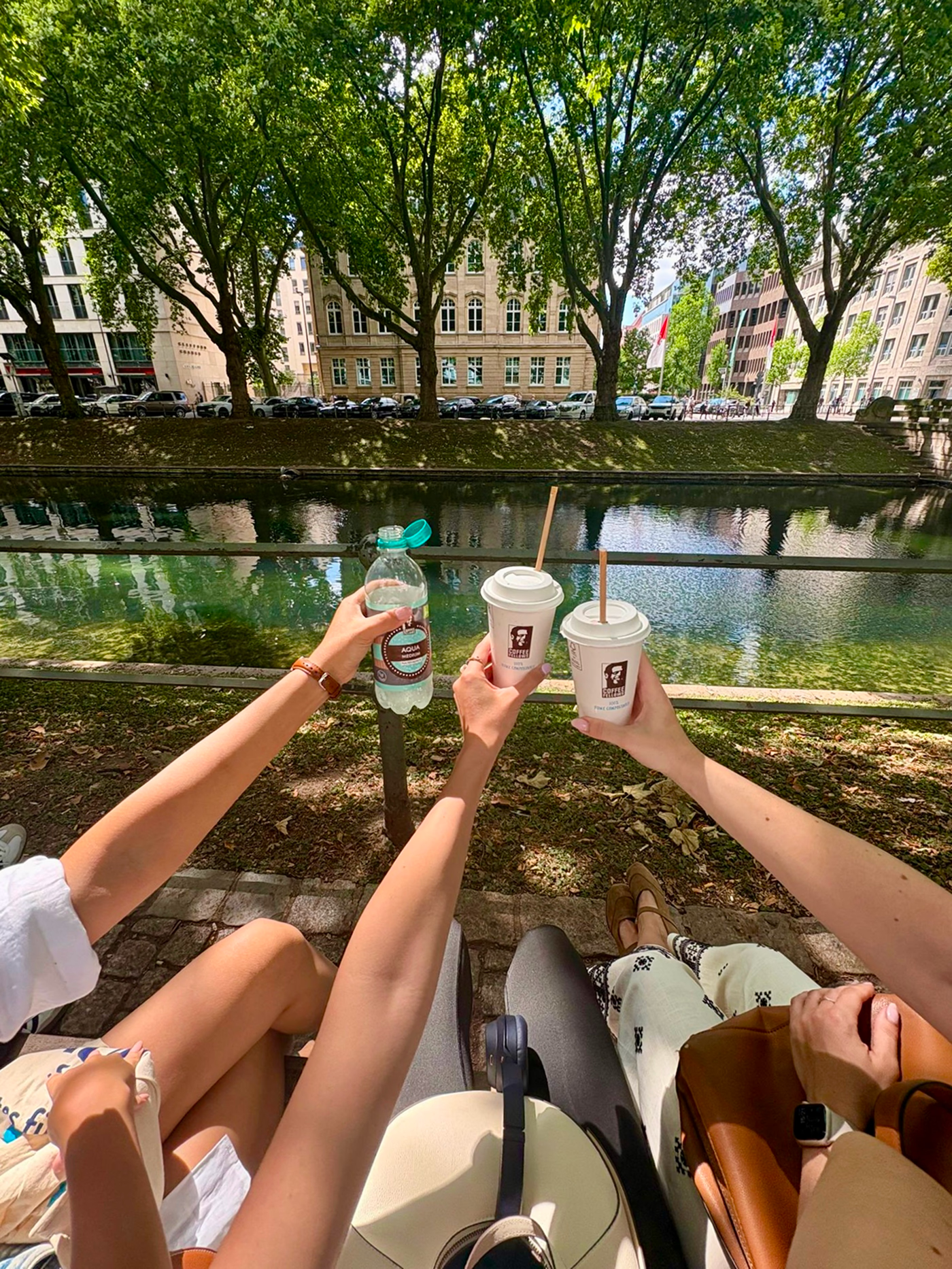
• Drinks with girls: €12 ($14)
Day 6 – Saturday: €24 ($28)
• Fresh flowers: €4 ($5)
• Petrol for car (week’s top-up): €20 ($23)
Day 7 – Sunday: €0
• Everything is closed in Germany 🇩🇪
.avif)