
2/9/25
What We Choose to See: On Diversity, Power, and Holding the Line
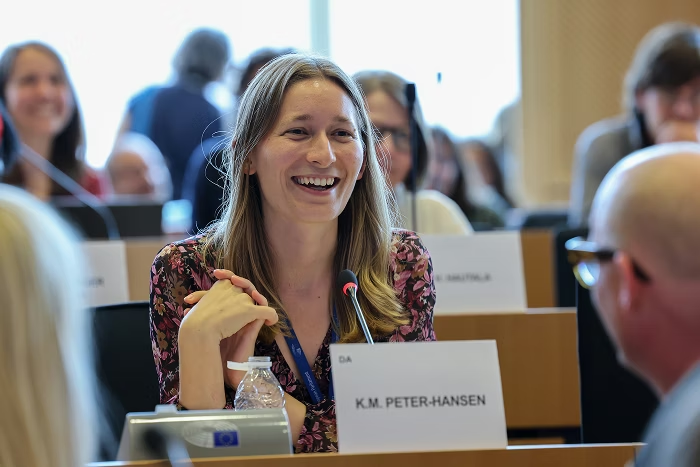
Kira Peter-Hansen shares what it was like to enter the European Parliament at just 21 years old.

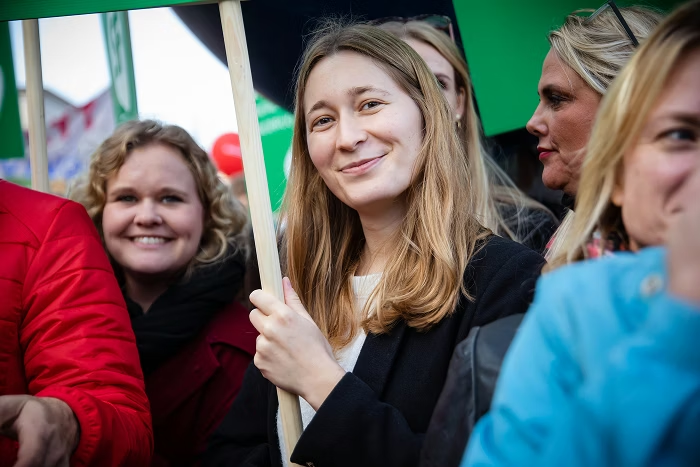
Kira Peter-Hansen shares what it was like to enter the European Parliament at just 21 years old, an institution not built with someone like her in mind. She reflects on how bias often operates in silence, how backlash against equality and inclusion is gaining ground across Europe and beyond, and why we cannot afford to stay quiet in the fight for justice.
Young, Female, and Not What They Expected
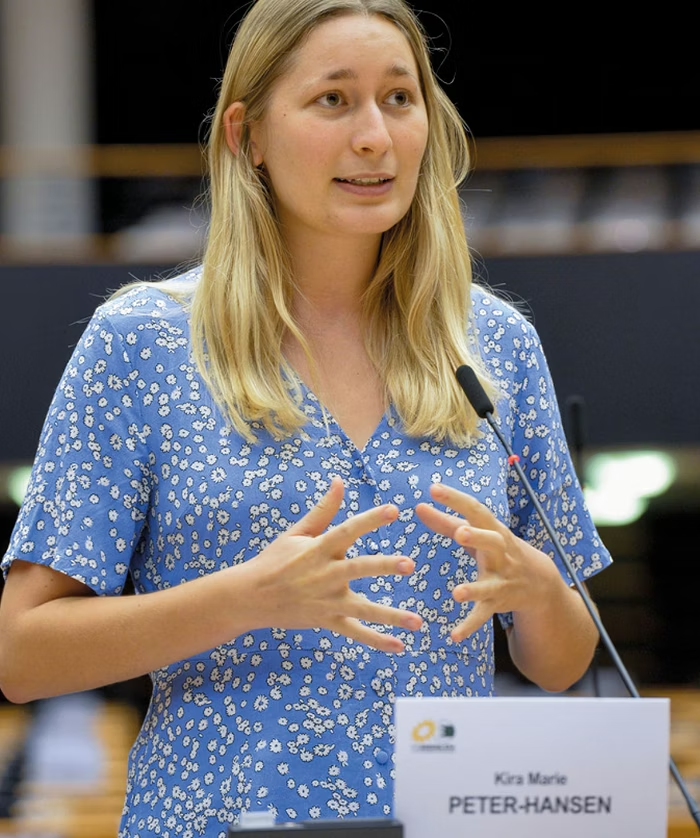
A few years ago, I walked into the European Parliament for my first official day on the job. I was nervous, a bit lost, and very excited.
I was 21 years old. The youngest person ever elected to the European Parliament.
And yet, when I stepped into that building, no one assumed I was there to negotiate legislation. People assumed I was someone’s trainee.
And you can feel that, you know?
Anyone who has worked their way up the corporate ladder knows how the vibe shifts when your title changes. Suddenly, the way people look at you changes. The tone in meetings.
What I felt, entering the European Parliament on that first day of work, wasn’t hostility. It was hierarchy.
It was the way people politely, but confidently, assumed I was there to assist someone else - not to lead.
It was the way expectations tied to my age, my gender, and my role quietly conspired to place me in a box I hadn’t signed up for. Who gets included. Who is taken seriously. Who is second-guessed.
And with this, I sometimes started second-guessing myself. Questioning whether I belonged and had the right to take up political space.
Because that’s the thing about bias. While often being silent, it impacts us all, and the way we perceive ourselves and others.
And often, it hides behind habits so old we’ve forgotten to question them.
And that’s not so different from how inequality in the workplace works. Especially when it comes to pay.
We like to imagine pay gaps are the result of someone making an unfair decision.
But most of the time, they’re the result of no one making a decision at all.
No one noticing. No one asking. No one measuring.
We’re not always paid unfairly because someone chooses it. Sometimes, it’s because no one notices.
That’s why transparency matters. Because you can’t fix what you can’t see.
Since that first day, I’ve spent years working to change these inherent structures.
What I’ve learned is this: the systems we call “neutral” are often designed to reward what we’ve always rewarded, and ignore what we’ve always overlooked.
And in 2025, it’s not enough to quietly know that. We have to act on it.
When Progress Isn’t Linear
Let’s be real: it’s been a strange few years for those of us working for equality.
On the one hand, we’ve had real wins. I’m proud to have led the negotiations on the EU’s new Pay Transparency Directive, which brings long-overdue accountability to how we value work.
It’s legislation rooted in something simple but radical: the idea that fairness doesn’t happen by default. It has to be made visible, measurable, and legally enforceable.
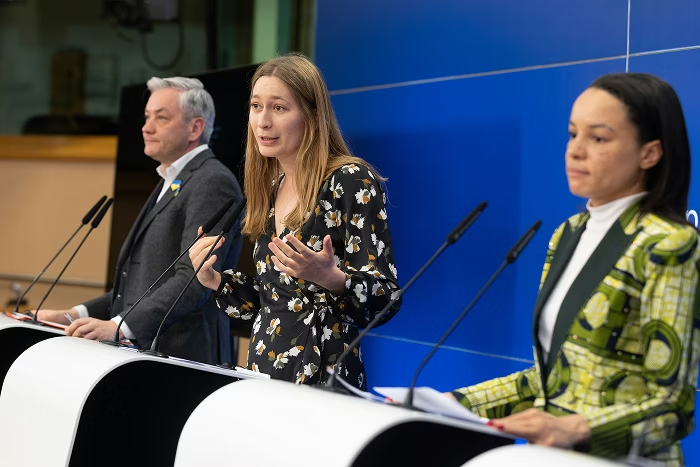
It was also an historic breakthrough when we adopted the EU’s first-ever law on gender-based violence, recognizing gender-based violence as a crime under EU law.
The law includes key protections: access to support services for survivors, stronger rights in legal proceedings, and measures to prevent harassment and abuse both offline and online. And it’s a first step towards a true consent-based legislation in all of the EU.
It’s the result of years of feminist activism, and a powerful signal that gender-based violence is not a private matter. It’s a structural injustice that demands a structural response.
But at the same time, the opposite development is also happening.
Two Steps Forward, One Step Back
In the U.S., the government is actively rolling back DEI efforts - a backlash happening in boardrooms, courtrooms and classrooms alike.
Most recently, U.S. embassies in Europe sent formal warnings to European companies, suggesting that actively promoting diversity could violate U.S. law and jeopardize their ability to do business with the American government.
Let that sink in: a foreign government is pressuring European companies to abandon core European values - equality, non-discrimination, inclusion - by threatening their access to international markets.
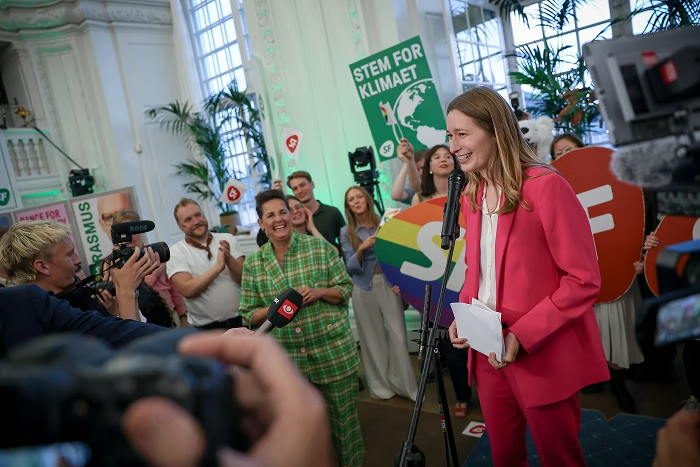
Across Europe, we’re seeing similar trends, where inclusion and equality is increasingly framed as a threat. In Hungary, a kiss between two men is labelled “sexual propaganda.” In Italy, lesbian mothers are removed from their children’s birth certificate. Abortion rights are being threatened or limited across the globe.
Hate crimes are on the rise, and access to public services remains deeply unequal.
Yes, just this year, the European Commission quietly decided to drop its proposed Anti-Discrimination Directive - legislation that would have protected people across the EU from discrimination based on religion, disability, age, gender identity, or sexual orientation in vital areas like housing and healthcare.
After 17 years of negotiations, we were finally close to a breakthrough. Most member states were on board. And then, suddenly, the Commission stepped back.
In the middle of a global anti-inclusion wave, where courage is critically needed, the EU blinked.
That’s not just disappointing. It’s dangerous.
Because what we’re witnessing isn’t just political disagreement. It’s a power struggle, and a push to reverse hard-won rights.
And that’s why we need to stop thinking of progress as a straight line. It bends, it stalls, it gets pushed back. But it also moves, if we continue to push.
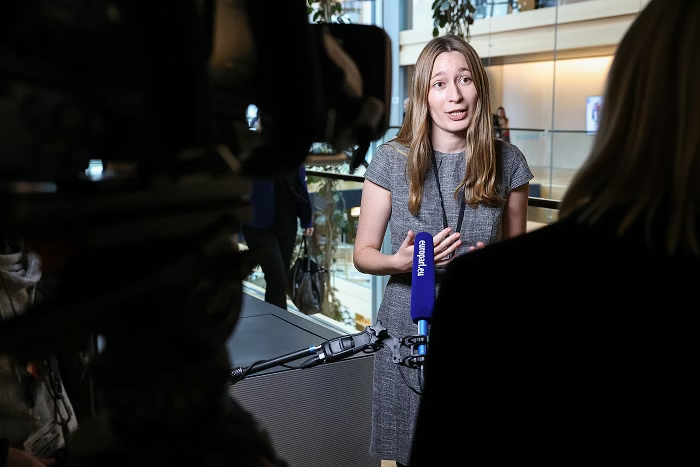
Diversity Is Not a Buzzword. It’s a Battle Over Who Belongs.
I don’t use the word diversity lightly. I know it’s been turned into a buzzword - overused, oversold, and often emptied of meaning. But diversity, equality, and inclusion isn’t a marketing slogan. It’s about how power works and who gets to belong - not just at work, but everywhere.
It’s about who feels safe walking down the street. Who is represented in textbooks, on ballots, on the media. Who gets promoted, who gets paid fairly, whose expertise is taken seriously. It's about whose voice is in the room when decisions are made and whose is left out.
When I joined the Parliament, I didn’t just feel young.
I felt out of place.
Because the political institutions, like many others, weren’t built with someone like me in mind.
That’s why the fight for inclusion is important. It’s about visibility, and challenging the structures that reward sameness and punish change.
And it’s about naming what’s really at stake.
Because the backlash we’re seeing now? It’s not really about “diversity.” It’s about power. About who is allowed to take up space. About whose experience is seen as default.
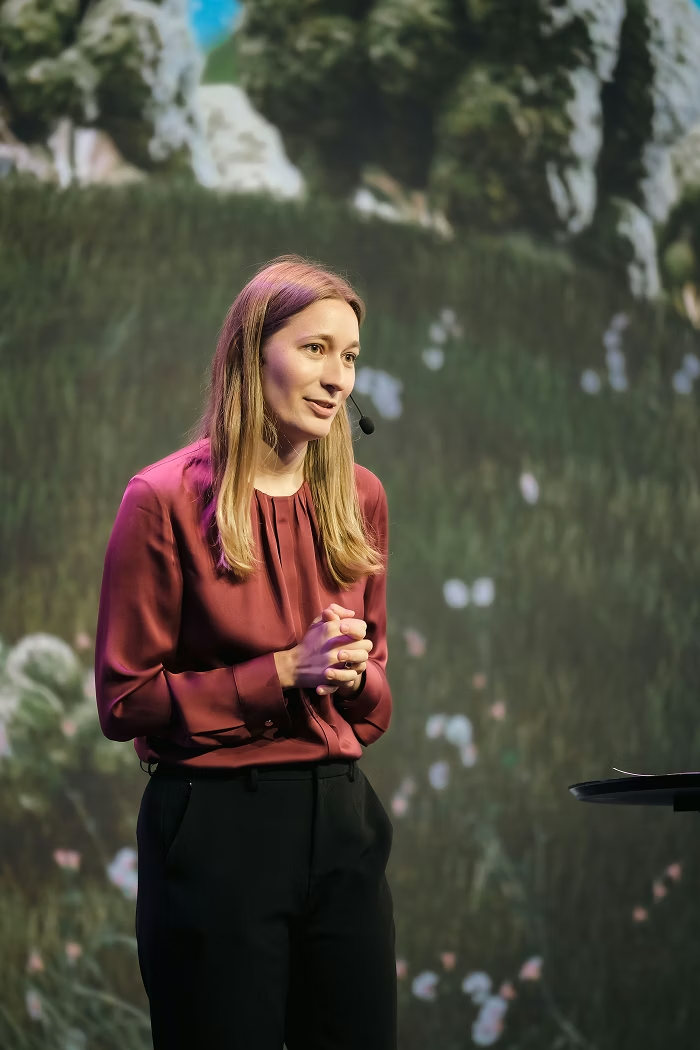
Holding the Line in a Backlash Moment
Here’s what scares me the most about this political moment: that we start to go quiet and shrink to fit the mood. That we pull our punches.
But here’s what I’ve learned from sitting across the table in Brussels negotiations and from being the only young woman in too many rooms:
If you don’t name what matters to you, someone else will decide what’s allowed to matter.
And that’s exactly how backlash works. Not by being louder, but by exhausting us. By making us second-guess ourselves and normalize being alone in a room. By teaching us that keeping the peace is more important than pushing for progress.
So I want to say this, as clearly as I can: If you care about equality, this is not the time to get quiet.
It's time to get stubborn.
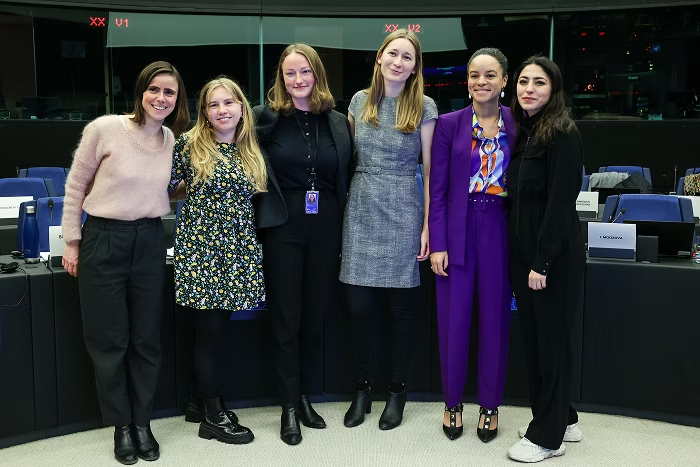
What Comes Next (And Why I’m Still Hopeful)
Despite the backlash and the slow pace of change, I’m still hopeful.
Because I’ve seen what happens when people speak up.
I’ve seen companies move from defensive to proactive. Move beyond statements and start redesigning how they hire, promote, and value people.
I’ve seen employees ask questions they were once afraid to raise. And I’ve seen them demand real answers - not just the same old talking points.
And most of all, I’ve seen a new generation step into the workforce with a different expectation entirely: that diversity isn’t something to be tolerated. It’s something to be centered.
Progress is never automatic. But neither is backlash. It only wins if we let it.
So my message to anyone navigating leadership, policy, or your first job, is this:
You don’t need to be older, louder, or “less idealistic” to lead. You just need to be you and stand your ground.
The systems weren’t built for us. But we’re here anyway. Let’s make them better.
If you take one thing from this: Ask the uncomfortable question. In your workplace. In your boardroom. In your data. And don’t stop until you get a real answer.
What’s one bias you’ve seen go unchallenged for too long? Share it - and let’s talk about how we change it.