26/8/26
Trump Just Declared Economic War on Iran's Trade Partners
Trump Just Declared Economic War on Iran's Trade Partners

Six months into its military campaign against Iran, the US has opened a new front: the global economy.
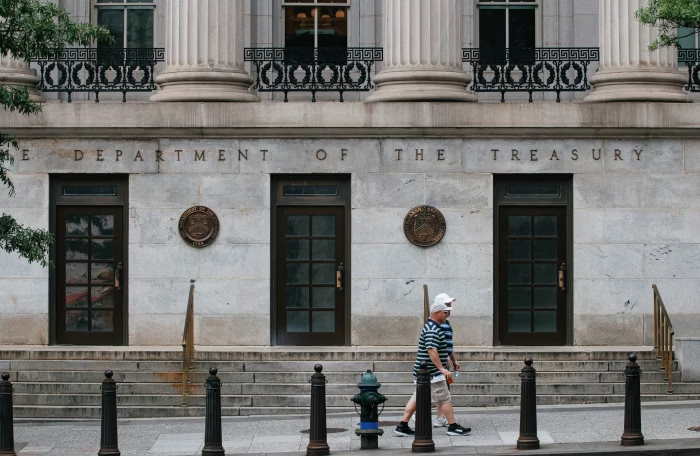
On Monday, the Trump administration unveiled what it's calling "Operation Economic Outcast," a plan to further isolate Iran from the international financial system by threatening penalties against any country, company, or bank that continues doing business with Tehran.
Treasury Secretary Scott Bessent said any bank or company that launders money for Iran “will be removed from the US dollar system. The clock just started ticking.”
The plan hasn't been fully implemented yet. But the threat alone is enough to put Washington on a collision course with some of the world's most important economies.
Here’s what you need to know.
First, What's a "Secondary Sanction"?
Most people are familiar with the idea of sanctions: one country restricts trade or financial dealings with another. But what Bessent announced goes further.
It threatens to punish anyone, anywhere, even a bank or company with no US ties, if they keep doing business with the sanctioned country.
If you buy Iranian oil, process Iranian payments, or help move Iranian goods, you risk being cut off from the US dollar system.
That last part is the real threat. Since so much of global trade and banking runs through US dollars, getting cut off from it can be crippling.
Why This Is So Complicated
Iran has survived under sanctions before, largely because several major economies have continued trading with it regardless of US pressure. The success of this new campaign depends almost entirely on whether the other countries comply.
No sanctions have actually been imposed yet. The US says it will start by sending individual countries timelines to "shut down activities we have identified."
That immediately raised the China question, since China buys more Iranian oil than anyone else.
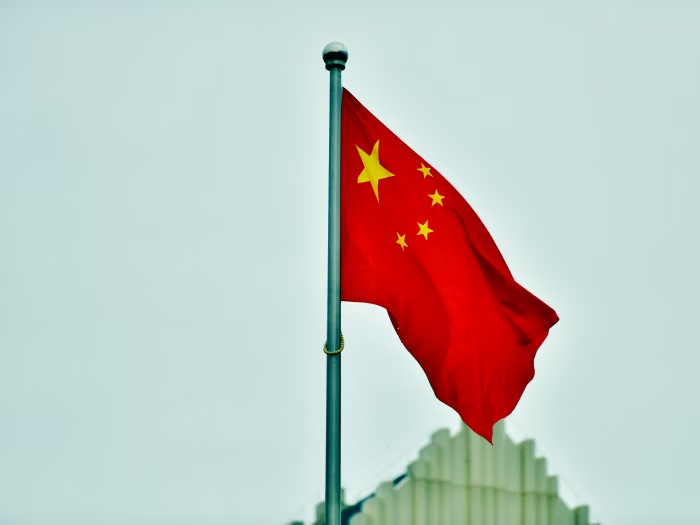
Bessent didn't hold back. "No one is above the reach of U.S. sanctions," he said. That's a notable stance, given the US and China are currently balancing a fragile trade truce, with Trump and Xi Jinping due to meet again in Washington next month.
The Countries Most Exposed
China, as mentioned, is the biggest one to watch. It buys around 90% of Iran's oil exports, much of it through independent refineries that rebrand it as crude from other countries. Analysts expect Beijing to quietly reduce its most visible exposure rather than confront Washington directly.
The UAE (United Arab Emirates) is a different story. Dubai has long been Iran's back door to the global financial system, with billions flowing through Emirati banks and trading companies. Last week the UAE suspended all trade and financial transactions with Iran after Iranian missiles targeted UAE-owned tankers. That suspension, if it holds, would be damaging to Tehran.
Turkey imports Iranian natural gas under a long-term contract and exports manufactured goods south. The gas contract expired at the end of July, but Turkey hasn't signalled it plans to cut Iran off, and hasn't yet lined up enough alternative supply to do so comfortably.
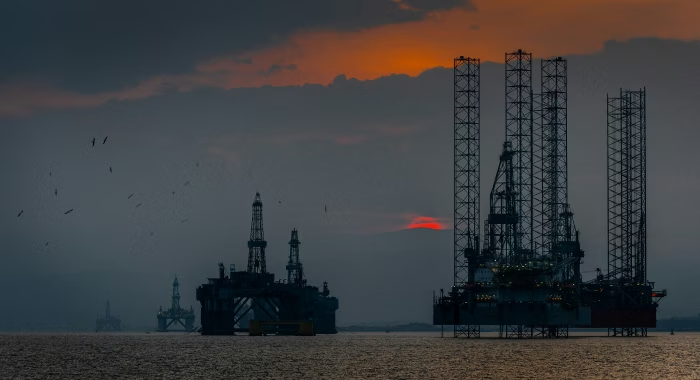
Iraq is perhaps the most difficult case. It depends on Iran for more than 30% of its electricity generation and pays Tehran around $4 to $5 billion a year for natural gas. Cutting those ties isn't a political choice so much as a practical one - Iraq would face serious power shortages if the supply stopped.
India recently resumed buying Iranian crude after a seven-year halt, following a temporary US sanctions waiver earlier this year. That waiver is now in question, and Indian refiners that purchased Iranian oil could find themselves in the crosshairs if Washington follows through on its threats.
What This Means for You
The economic pressure campaign signals something important: six months in, the military approach alone isn't working.
The ceasefire agreed in June has largely collapsed.
The Strait of Hormuz remains restricted.
Reports suggest US weapons stockpiles of some munitions are running low.
Sanctions are the next tool. Whether they work depends on China, and on whether the US is willing to risk its fragile trade relationship with Beijing to enforce them.
That's a tough geopolitical calculation, and the answer will shape not just the Iran war, but the broader relationship between the US and China for years to come.
Sources: