21/2/26
US restaurants downsize meals to counter anti-obesity drugs and affordability crisis
Cash-strapped consumers seek cheaper options as cost of living rises

This article is republished from The Financial Times
The “supersized” servings that have long defined American dining are shrinking as rising costs and the growing use of weight-loss drugs prompt restaurateurs to offer smaller portions.
The trend towards “lighter” and “snack-size” main meals across the US also comes as restaurants seek to entice cash-strapped consumers who want lower-cost options.
Asian fusion chain PF Chang’s, which has 200 locations across the US, introduced a “medium” portion of its main-course dishes last year.
KFC was “adjusting portion sizes and tailoring crispiness” at its 4,000 American outlets, Chris Turner, chief executive of Yum Brands, owner of the fried chicken brand, told analysts this month.
The sector is grappling with five consecutive months of slowing traffic and sales, according to market research firm Black Box Intelligence, reflecting customers’ struggles with the rising cost of living.
The sector is grappling with five consecutive months of slowing traffic and sales
Restaurants have been facing increasing food, energy and labour costs, including record-high beef prices.
They now also face a threat from the growing use of GLP-1 weight-loss medications that suppress appetite. Analysts said establishments could respond by offering smaller plates.
Think-tank Rand estimates that nearly 12 per cent of Americans use the drugs, while research by Morning Consult has shown that users are more likely to eat at home, and order less when they dine out.
Italian chain Olive Garden, known for its “never-ending” soup or salad and breadsticks offering that gives customers unlimited refills, last month introduced seven existing menu items in reduced sizes at its 900 US restaurants.
“The obvious answer is to reduce portions,” said JP Frossard, consumer foods analyst at Rabobank.
“Reducing portions can make menus more affordable and bring customers back — and that happens to also be a good fit with the GLP-1 issue.”
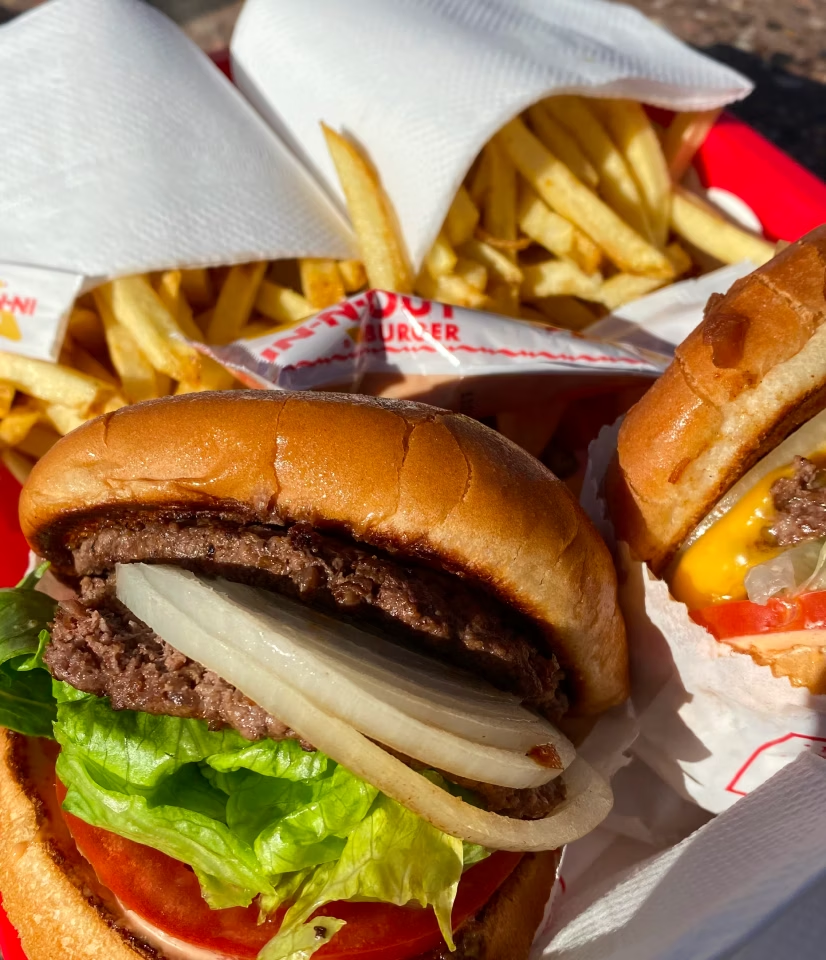
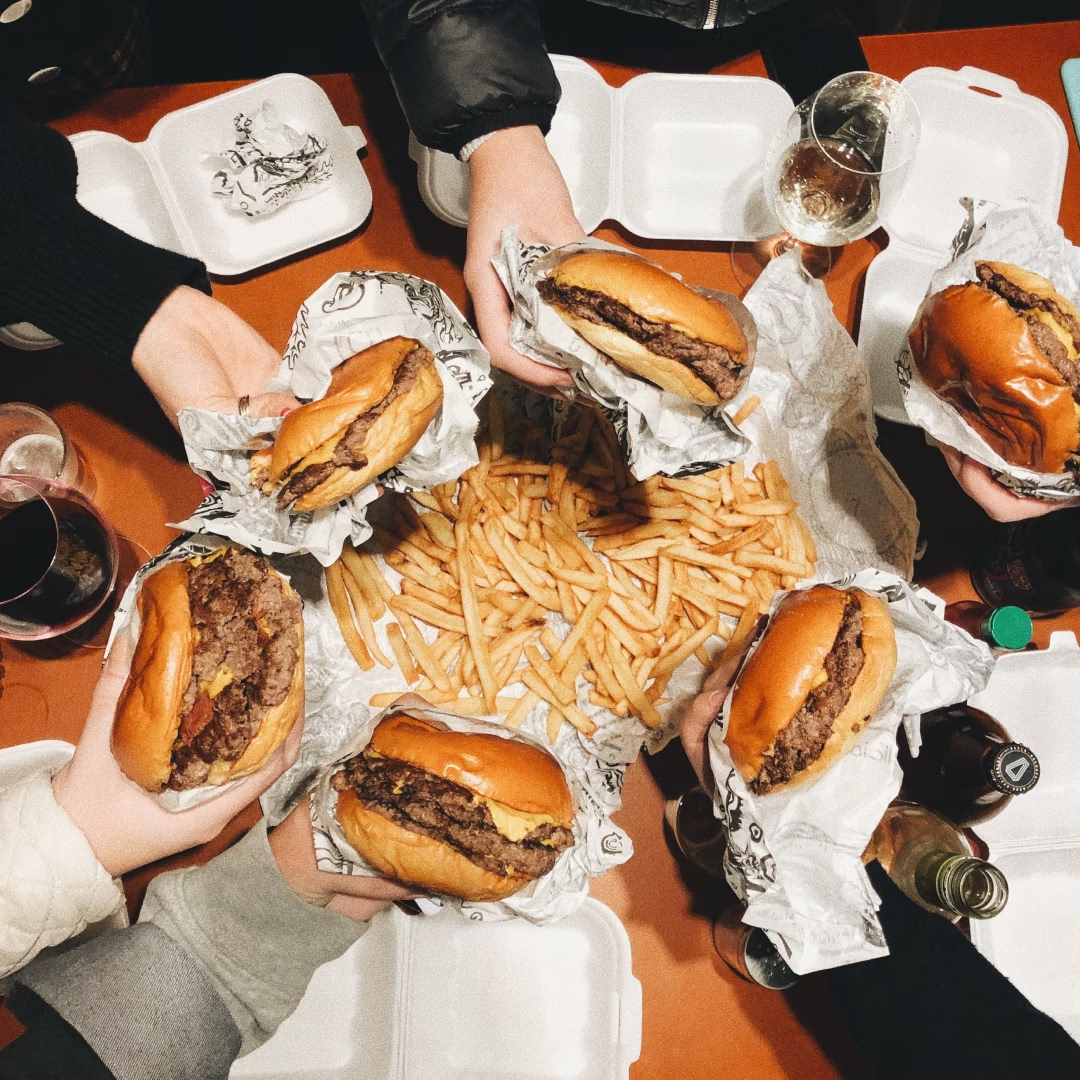
Portions in the US ballooned in the 20th century as postwar industrialisation and cheaper corn, wheat, sugar, meat and oil led restaurants to pile plates high.
Food portions consumed by Americans were typically 13 per cent larger than those in France, according to a 2024 study published in the academic journal Foods.
Public health experts have long argued that the “portion distortion” has caused food waste and fuelled the US’s obesity crisis.
US health secretary Robert F Kennedy Jr last month recommended that Americans doubled their protein intake, cut back on added sugar and processed foods, and “pay attention to portion sizes” as part of his “Make America Healthy Again” agenda.
Food portions consumed by Americans were typically 13 per cent larger than those in France, according to a 2024 study published in the academic journal Foods.
Consumers have also signalled that they are ready for change.
A survey by the National Restaurant Association trade group in 2024 showed that 75 per cent of diners wanted smaller portions for less money.
That prompted seafood boil chain Angry Crab Shack to create a lunch menu last year offering smaller baskets of beer-battered cod, cheeseburgers and fried lobster rolls paired with fries.
“It was done for value pricing,” said Andy Diamond, the chain’s president.
Upscale New York Italian restaurant Tucci last year introduced an “Ozempic menu”, available on request, as establishments seek to appeal directly to users of anti-obesity drugs.
Its menu includes serving one meatball or arancini ball — rather than the typical portion of three — for slightly more than a third of the price.“
It’s not that I’m advocating for GLP-1s. What I’m advocating for is for the customer to decide what’s right for them,” said Max Tucci, the restaurant’s founder.
“Their appetite is suppressed and we don’t want them to leave feeling overwhelmed and like they’ve wasted food.”
But Tucci said there were still plenty of customers seeking the large portions that American-Italian restaurants are known for.
Copyright The Financial Times Limited 2026
© 2026 The Financial Times Ltd. All rights reserved.