
10/11/25
How to Research an Investment (and Actually Feel Confident About It)
If there’s one question that comes up again and again in the Female Invest community, it’s this: “How do I know which ETF or stock to buy?"

If there’s one question that comes up again and again in the Female Invest community, it’s this:
“How do I know which ETF or stock to buy?”
It’s a great question, and a really common one. Because while investing can feel empowering, it can also feel overwhelming at first. There are thousands of options out there, and it’s easy to feel like you’re missing something or not “qualified” enough to make the right choice.
The good news is that you absolutely can learn how to research an investment, and it doesn’t require a finance degree.
Once you understand a few key things to look for, you’ll be able to open your investing app and actually know what you’re buying, not just hope for the best.
As Warren Buffett once said, “Risk comes from not knowing what you’re doing.”
Let’s fix that.
Risk comes from not knowing what you're doing
Step 1: Know Your Goal Before You Start
Before you start researching specific ETFs or companies, take a moment to zoom out and ask yourself what you’re actually trying to achieve.
- Are you investing for long-term growth, such as retirement or financial independence?
- Are you looking for income through dividends?
- Or are you mainly trying to diversify your money beyond your savings account?
Your goal determines your approach.
If you’re saving for the long term (think 5–10 years or more), you’ll probably want broad, low-cost ETFs that track large global markets.
If you want regular income, dividend-paying investments might make sense.
And if you’re curious about new trends such as clean energy or women-led companies, thematic ETFs can be interesting, though they come with higher risk.

In other words, before you research what to buy, get clear on why you’re buying at all.
That clarity makes every later decision easier.
Step 2: Understanding ETFs, Your Investing Starting Point
If you’re new to investing, ETFs (Exchange-Traded Funds) are often the easiest and safest place to begin.
Think of an ETF as a basket of companies. When you buy one, you automatically invest in all the businesses inside it.
For example, an ETF tracking the S&P 500 gives you a small piece of the 500 biggest U.S. companies, including names like Apple, Microsoft, and Coca-Cola.
Here’s what to check before you buy.
You don’t need every single box ticked, but the more you can, the stronger your research foundation will be.
✅ ETF Research Checklist
What it is
- I understand which index it tracks (for example, MSCI World or S&P 500).
- I know roughly which companies are included (check the top 10 holdings).
- I understand what part of the market it covers (global, regional, or thematic).
How it performs
- The ETF has a low TER (Total Expense Ratio), ideally under 0.3% for broad markets.
- It has a solid track record (at least a few years of performance history).
- It is large enough (a good sign is assets under management above 100 million).
How it’s managed
- It’s issued by a reputable provider such as Vanguard, iShares, or Amundi.
- I know whether it’s accumulating (reinvests dividends) or distributing (pays them out).
- I know what currency the ETF holds assets in, and that if it’s different from mine (for example, U.S. dollars), exchange-rate changes can affect my returns.
This isn’t about perfection.
A higher fee or smaller fund doesn’t automatically make an ETF bad.
It just means you should understand why and whether it still fits your goals.

Step 3: Researching Individual Companies
Buying a single company’s stock can feel thrilling, but it also takes more homework.
When you buy a share, you’re literally becoming a part-owner of that business.
The checklist below is designed to guide your thinking, not to be followed mechanically.
Some factors will matter more than others depending on the company, the industry, and your own priorities.
✅ Company Research Checklist
Business basics
- I can explain in one or two sentences what the company does and how it makes money.
- I understand the main products or services and who the customers are.
Financial health
- Revenue (sales) has been growing over time.
- Profit is positive or improving.
- Debt levels look manageable compared to profits.
- Cash flow (money coming in vs. going out) is stable or growing.
Growth and potential
- The industry the company operates in is stable or expanding.
- The company is innovating or has opportunities for future growth.
Quality and leadership
- The company has a clear competitive advantage (brand, technology, loyal customers, or cost efficiency).
- The management team has a strong track record and clear strategy.
- The leadership team owns shares themselves, showing alignment with shareholders.
Dividends and returns
- I know whether the company pays dividends, and if so, how consistent they are.
- I understand whether the company is focused on growth (reinvesting profits) or income (paying them out).
Risks
- I understand the main risks, such as competition, regulation, or economic cycles.
- I’m comfortable with the level of risk given my time horizon and goals.
You don’t have to tick every box.
What matters is that you can clearly explain why you’re choosing this company and what could make you change your mind.
Step 4: Spot the Red Flags
Just like dating, there are warning signs to watch for.
For ETFs
- The fund is extremely small or rarely traded.
- The fees are unusually high compared to similar ETFs.
- The strategy is vague or difficult to understand.
For Companies
- The company has a pattern of losses with no clear path to profitability.
- Leadership keeps changing frequently.
- The business makes big promises but shows little progress.
- The company often “adjusts” its profits to look better than they are.
If something feels unclear or too complicated, that’s usually your cue to step back and look elsewhere.
Step 5: Turn Research Into an Investment Strategy
Once you’ve done your research and you’re ready to invest, pause before you press “buy.”
This is where you turn everything you’ve learned into a short written statement, your investment strategy.
It doesn’t need to be fancy or long. It just needs to capture your logic in plain language:
“I’m investing in [name] because [reason]. I believe [expected outcome] over [time period]. I’ll review it if [specific risk] happens.”
This step transforms research into conviction.
When markets fluctuate, you can revisit your note and remind yourself what you believed and why.
That helps you respond calmly instead of reacting emotionally.
As Warren Buffett also said, “The stock market is designed to transfer money from the active to the patient.”
You don’t need to be the fastest, just the most consistent.
Step 6: Avoid Analysis Paralysis and Think Long Term
Here’s something important that doesn’t get said enough: it’s impossible to know every single detail about an investment.
There will always be unknowns, risks, and moving parts.
The goal isn’t to predict the future, it’s to understand what you’re buying, avoid red flags, and think long term.
Once you’ve done solid research, at some point, you have to make a decision and get started.
Many people fall into what’s known as analysis paralysis, spending so much time researching that they never actually invest.
But waiting for perfect certainty means missing out on the most powerful force in investing: time.
Waiting for perfect certainty means missing out on the most powerful force in investing: time
If it feels overwhelming, keep it simple.
Start with broad, low-cost ETFs that cover the world market.
That way, you’re automatically diversified, invested for the long term, and not dependent on any single company or country to succeed.
Check in with your investments a few times a year.
If they’re still aligned with your goals, stay the course. If something material changes, adjust thoughtfully, but avoid making decisions based on short-term market noise.
✅ Your Final Confidence Checklist
Before you buy, pause and ask yourself:
- Do I understand what I’m investing in and why?
- Do I know how this fits into my long-term plan?
- Have I checked the key facts, including fees, risks, and diversification?
- Am I comfortable holding this investment for several years?
You don’t have to tick every single box. Investing isn’t about perfection, it’s about clarity, patience, and progress over time.
Final Thoughts
Doing your own research is one of the most empowering things you can do with your money.
It doesn’t mean knowing everything, it means knowing enough to make confident, informed choices.
Start small.
Pick one ETF or one company that interests you.
Learn as you go.
With every new decision, you’ll gain more confidence, and that confidence will compound over time, just like your investments.
With every new decision, you'll gain more confidence, and that confidence will compound over time, just like your investments
And if you want to understand any of these topics in more depth, we recommend taking the Investment Course in the Female Invest app.
It walks you through every concept step by step with clear examples and practical tools.
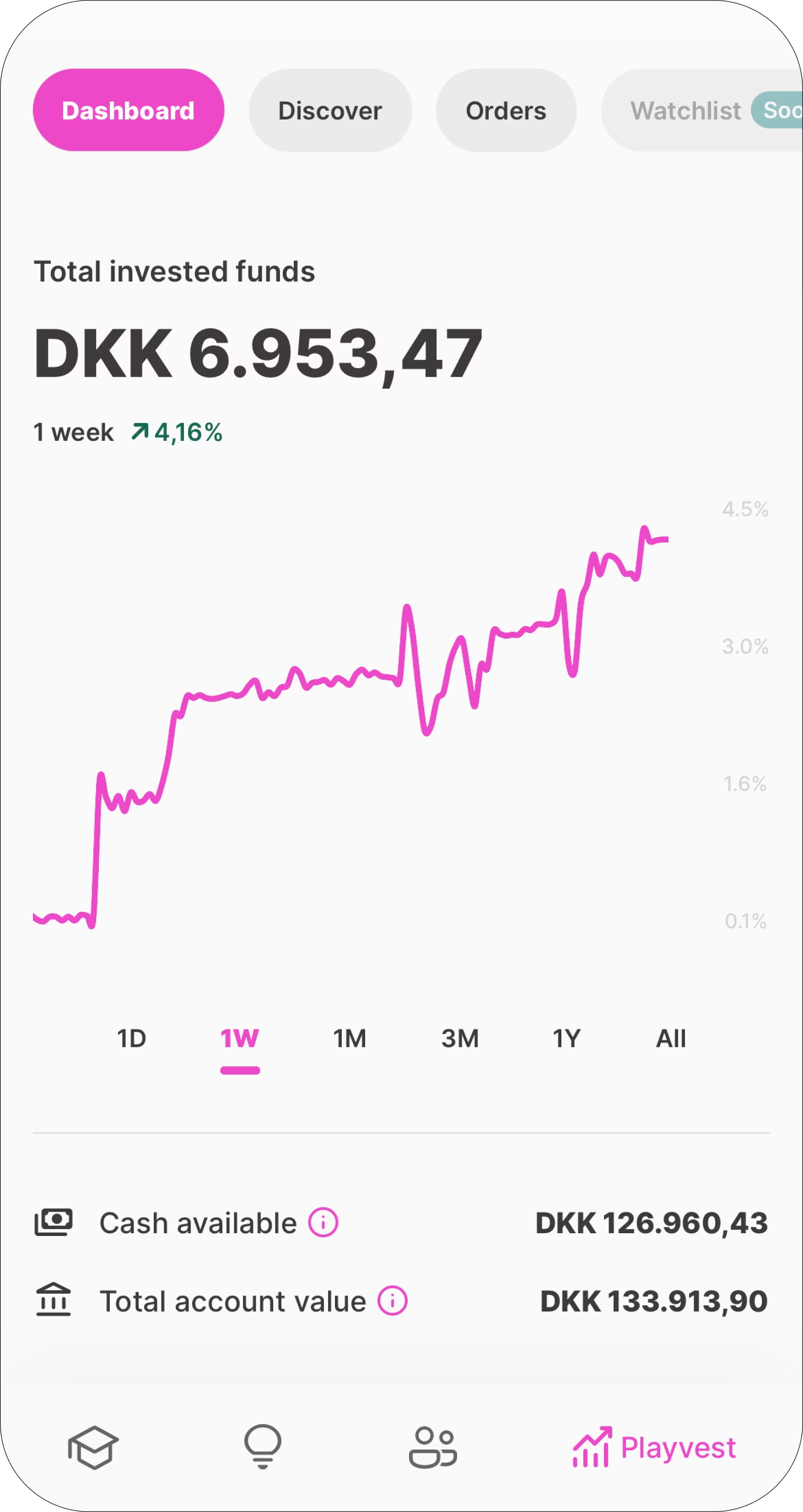
If it still feels overwhelming, you can practise in Playvest, our trading simulator, where you can build a portfolio using virtual money. It’s a safe space to test and learn without any risk or fear of mistakes.
And of course, you’re never alone in this.
You can always ask questions, share experiences, and learn from others in the Female Invest community.
Because the real goal isn’t to get every decision perfect.
It’s to get started, stay consistent, and understand what you own and why you own it.