30/10/25
Japan Makes History: Sanae Takaichi Becomes the Country’s First Woman Prime Minister
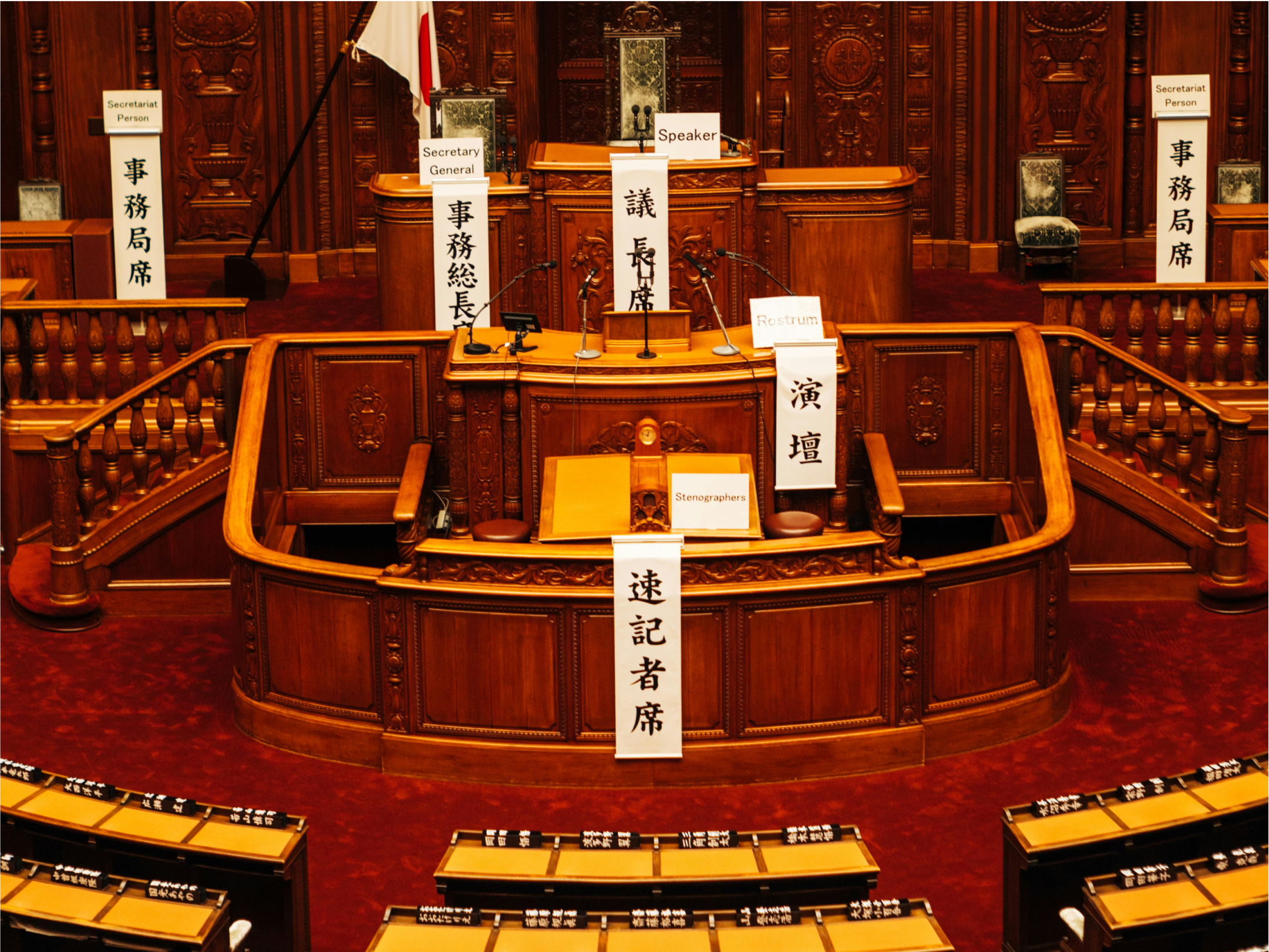
For the first time in its history, Japan has elected a woman to the nation’s highest political office.

On Tuesday, Sanae Takaichi won the parliamentary vote with a commanding 237 out of 465 votes, eliminating the need for a runoff and marking a seismic moment in Japanese politics.
The 64-year-old conservative - nicknamed Japan’s “Iron Lady” for her admiration of Margaret Thatcher - now steps into leadership amid economic uncertainty, demographic decline, and simmering geopolitical tensions.
Who is Sanae Takaichi?
Takaichi is a long-time LDP heavyweight and protégé of the late Shinzo Abe, the architect of “Abenomics.”
Her political career has spanned decades of persistence and ambition. She ran in 2021 and 2024, so it took her three attempts to reach the top job.
Known for her hard-line stance on defense and calls to revise Japan’s pacifist constitution, Takaichi is viewed as a continuity figure for the party’s conservative wing.
She’s pledged to ease Japan’s cost-of-living crisis through increased government spending, while critics warn that her fiscal policies could deepen the country’s already massive debt (Japan’s debt exceeds 250% of GDP).
Still, Takaichi’s rise is nothing short of historic in a country where the political glass ceiling has proven almost unbreakable.
Markets React with Mixed Signals
As a reaction to the news, the Nikkei 225 hit a record high, driven by investor optimism that she will continue pro-growth policies, including fiscal stimulus and loose monetary support, however it erased its gains Tuesday.
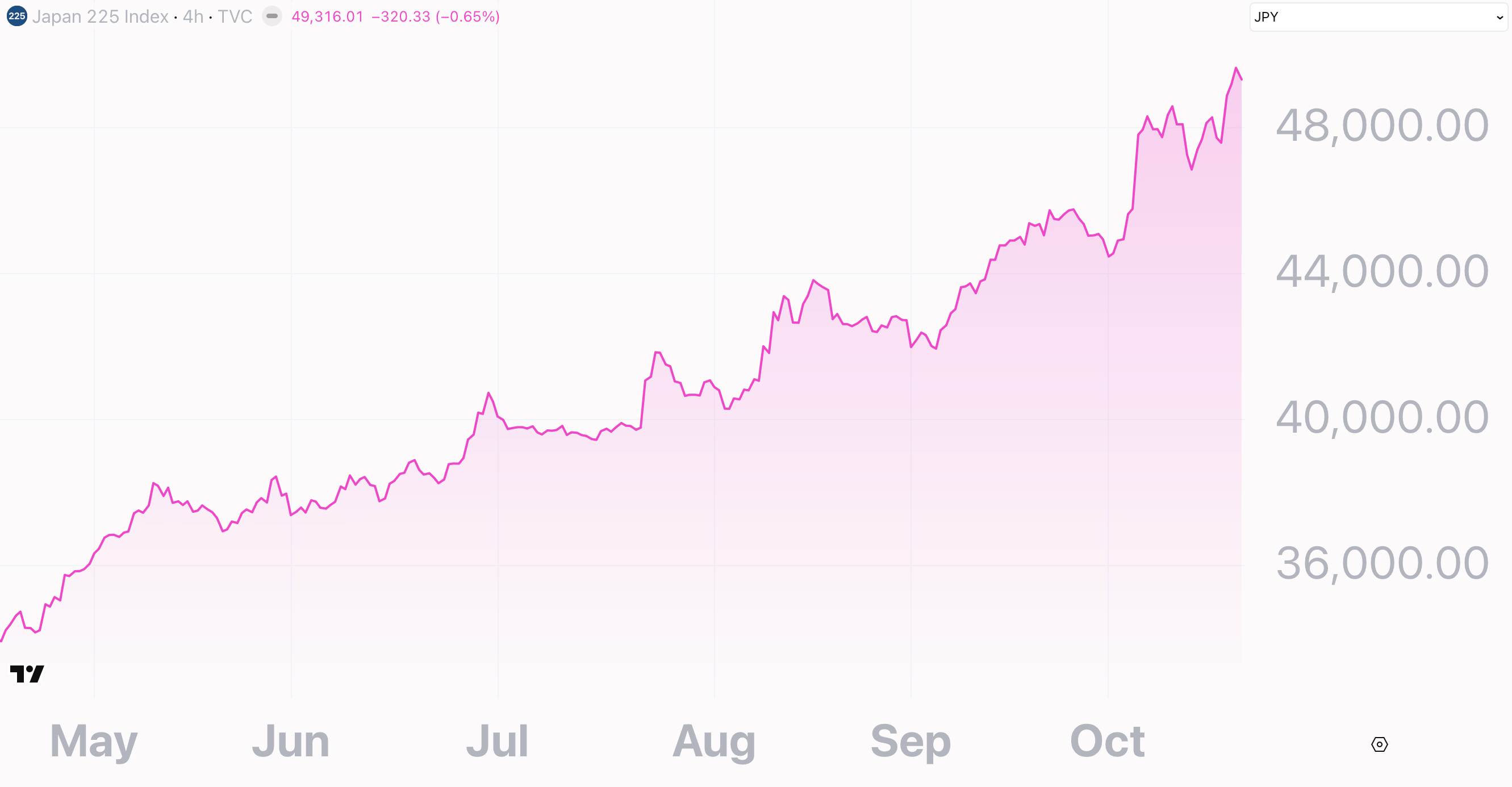
The yen weakened, benefiting exporters, while bond yields rose slightly amid expectations of higher government spending.
Japan’s Equality Problem
Japan ranks 118th out of 148 countries in the World Economic Forum’s Global Gender Gap Index.
Despite being one of the world’s most advanced economies, the country continues to lag behind on women’s representation in politics and business leadership.
The government’s much-publicized goal to have 30% female leaders by 2020 has quietly slipped - now more than five years later, that target still hasn’t been met.
Cultural expectations also play a role: even as women outpace men in education, there remains heavy social pressure for women to step back from careers after marriage or childbirth.
Though Takaichi has now become Japan’s first-ever female leader, some of the country’s young women say they are not convinced that she will advance their rights.
In an interview with the BBC, 21-year-old Ayda Ogura said it was “interesting” to see how people abroad reacted to Takaichi’s rise.
“Everyone’s like, ‘wow, she’s the first female prime minister in Japanese history and that would be a great opportunity for woman empowerment and gender equality.’ But I think that would be a very naive interpretation of this whole situation. If you look into her political beliefs and what she stands for, you would realize that some of the things are very traditional, and instead of creating structural change, she rather perpetuates the patriarchal system.”
According to the report from The International Monetary Fund's (IMF), “Why So Few Women in Leadership Positions in Japan?”, female labor-force participation has risen dramatically over the past decade - from 63% in 2012 to 74% in 2022 - helping offset Japan’s shrinking population.
Yet most of that growth has come in non-regular, lower-paid jobs with limited advancement prospects.
As of 2021, 54% of employed women worked in such roles, compared to 22% of men, and women were 4.9 times more likely to be part-time than men (OECD average: 3.6).
Japan’s gender wage gap of 22% remains the widest in the G7 and 86% higher than the OECD average.
Japan's gender wage gap of 22% remains the widest in the G7 and 86% higher than the OECD average
The IMF report also highlights persistent gender gaps in unpaid labor.
Japanese women perform five times more housework and caregiving than men, while men do about twice as much paid work.
And despite Japan offering one of the most generous paternity leave systems in the OECD, only 17% of new fathers take it - most for less than a month - largely due to workplace pressure and company culture.
These patterns, the IMF concludes, make it difficult for women to build continuous careers or rise into senior leadership roles.
Representation Still Matters
When a nation that has never before entrusted a woman with the premiership finally does, it sends a powerful message to girls and young women who’ve grown up believing politics is a man’s world.
People close to the LDP said Takaichi was close to naming Satsuki Katayama as the country’s first female finance minister. Takaichi is also likely to assemble a cabinet with a record number of women.
Seeing a woman lead - even one whose politics differ from your own - can expand the realm of possibility.
In that sense, Takaichi’s win is both political and cultural.
It forces Japan to confront its long-standing gender hierarchies and sparks a necessary question: what does progress look like when the first woman to break the ceiling stands on the side that built it?
Sources:
- The IMF report Why So Few Women in Leadership Positions in Japan