
10/3/26
Peter’s Plan to Cut the Mental Load
My colleague Peter built a mental load app for himself to solve a very concrete problem in his relationship

I invited my colleague Peter for a chat.
Because a month ago, over lunch at work, he told me something pretty wild: he’d built a mental load app for himself to solve a very concrete problem in his relationship.
So we planned coffee on Thursday.
And then, Thursday morning, I wake up to a message from Peter.
He has to move our meeting to later in the day because he missed a note about a meeting at his daughter’s nursery, buried in the nursery’s communication platform.
When we finally sit down with our coffees, I can’t resist starting there.
“What happened this morning?” I ask.
Peter laughs. The timing is almost too perfect.
“I think it hit me last night on the train home,” he says. “It was around 11 pm. I was checking the nursery platform and I saw there was a message… but when I checked the calendar, there was nothing added. So it was one of those things you just had to remember.”
“And Line [his girlfriend] didn’t remind you?” I ask.
“No,” he says, completely calm.
Later that day, Peter and I talk for a full hour. About the mental load problem, but also what it actually takes to solve it.
So let’s rewind to where it started.
Peter and Line’s situation
Peter is a software developer here at Female Invest. He lives with his girlfriend Line and their daughter, Lea.
Before Lea, there were fewer routines, fewer deadlines, fewer things to remember.
But when Lea was born and Line’s maternity leave ended, something shifted.
Peter explains it simply:
“It just takes one thing to change, like going back to work after maternity leave, and then the routine dies.”
Suddenly it’s not only about doing things.
It’s about keeping track of everything. Anticipating everything. Being the person two steps ahead so chaos doesn’t happen.
And that’s where Line’s responsibility starts to get heavier.
What is mental load?
Mental load is the invisible part of running a home.
Not just doing tasks, but noticing them, planning them, coordinating them, remembering them, and taking initiative before they become a problem.
Peter puts it like this:
“There are a lot of things that run through her head several times throughout the day… and for me there might just be one thing on the list at any given time.”
I nod in recognition. This is exactly it: being the project lead of the household.
The turning point
Their turning point didn’t arrive with a bang.
It crept in.
Line starts texting Peter about dinner, often around lunchtime or early afternoon.
When I ask him what those texts sound like, he says: “She’ll write… ‘What are we having for dinner tonight?’”
Peter says he often replied that he hadn’t really thought about it.
And then came the real point of the message.
“Then Line will reply: Okay, who’s doing the grocery shopping? Or we haven’t shopped,” he says, reenacting the situation.
And then, the frustration behind it becomes clear.
“Why is it on me? Why haven’t you asked about it or planned your way out of this?”
She goes one step further back in time too, he says: “Why didn’t you take initiative last night?”
This isn’t a discussion about pasta versus tacos.
It’s a discussion about who carries the responsibility of noticing, planning, and getting something done before it turns into a problem.

“How did you react when Line started bringing it up?” I ask.
Peter thinks for a second, then says:
“Confused. Maybe kind of dismissive.”
And then comes the feeling many people will recognise:
“But I do loads of other things.”
He explains that at times he’d thought: it probably balances out.
Then he catches himself, almost mid-realisation.
“Without thinking about the fact that of course those are two different things.”
Because that’s the core of mental load.
On the surface it can look like a list of chores. In reality, it’s the bigger responsibility of making sure things get done at all.

Line often ends up in that role, Peter says.
The person with the overview.
The one who sees what’s coming.
The one who makes it happen.
I ask what that looks like in practice, and suddenly it becomes very concrete.
“It’s not me who takes initiative and says: ‘Hey, it’s three months until Lea needs a vaccination. Should we put it in the calendar? Let’s call the doctor.’”
It’s not necessarily the big things. It’s everything running in parallel.
Calendar. Dinner. Groceries. Playdates. Childcare. Holiday planning. Logistics.
And not least the constant scanning: noticing when there’s something new you need to respond to.
Why an app?
When Peter realised what was going on, he did what many of us do: he looked for a solution.
And yes, there are a thousand apps for lists, to-dos, reminders, and satisfying little checkmarks.
But Peter’s point is sharp: most of them don’t touch the mental load part.
Because someone still has to define the list.
Someone still has to notice what should be on it.
Someone still has to be the one who remembers.
I ask him why he didn’t just set up a shared calendar with reminders.
“Because then I’m not training this mental load muscle,” he says.
Instead, he wanted something that trained him to think ahead.
Something that strengthened his ability to anticipate needs in the household, take initiative, and carry responsibility without being asked.
“I’d actually like to genuinely get better at this,” he says.
I ask him to explain the app in 30 seconds.
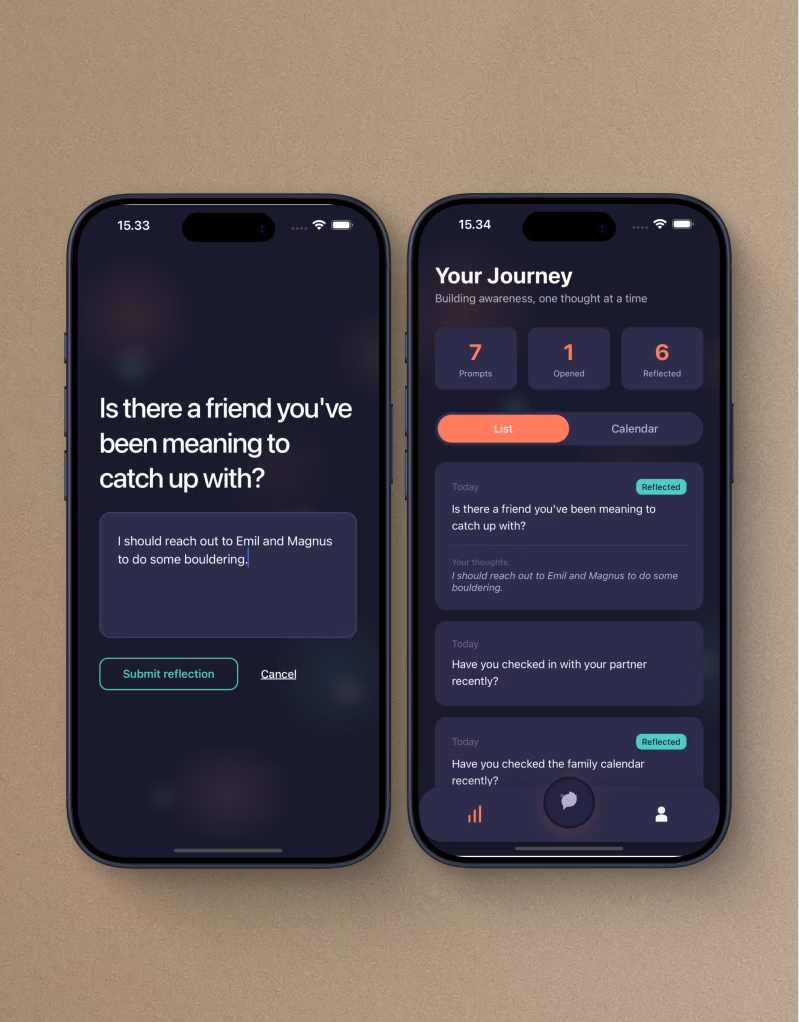
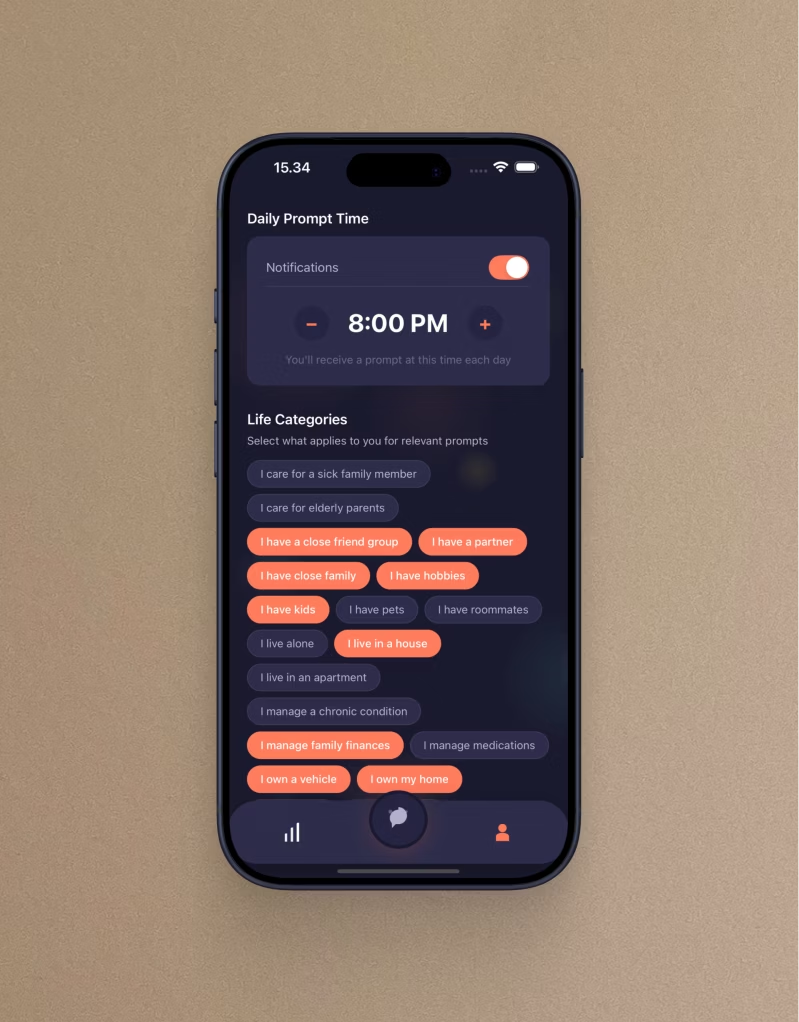
“The app is meant to train this mental load muscle,” he says. “It sends a daily notification with a question that makes you reflect…”
It asks about planning: appointments, holidays, playdates, what’s happening in the week ahead.
And then I ask for a concrete example of a notification.
“What things does Lea need to bring to daycare during the week?” he says.
It’s not a reminder that tells him to buy something.
It’s a question that forces him to think: what’s the thing you only realise when it’s too late?
And then there’s another feature that makes it kind of brilliant.
It follows up.
Peter describes it as a simple “did you do it?” logic:
“Then, 24 hours later, it asks: ‘Now you’ve thought about what you need, but have you actually done anything about it?’”
He gives an everyday example:
If it asks on Sunday night: do you have the meal plan sorted?
Then on Monday it asks: did you buy groceries for the meal plan you made?
In a way, it’s annoying.
But again: that’s the point.
Mental load is carrying the process from thought to action, without anyone having to remind you it exists.
Before and after
Peter has been using the app for about a month and a half.
And no, this isn’t the story of a fast transformation into a mental load expert in six weeks.
It’s small steps forward.
But that’s also what makes it interesting. There’s an honest desire to get better at this, and it comes through clearly in our conversation.
He describes a moment where he mentions something to Line that he’s been thinking about and wants to handle.
And Line replies with something like:
“I’ve been thinking about that for a week.”
Ouch.
But also: bingo.
Because that’s exactly where you see the difference between “I’ll help when you tell me” and “I’m trying to be part of the invisible work.”
It matters that he asks.
That he shows he’s thought ahead.
That he’s trying to catch things before they turn into yet another item on her mental list.
He’s not “fixed”.
But he’s no longer waiting to be told.
And that’s the shift.