10/2/26
One Year of Trump: What His Second Term Means for Your Portfolio
n/a n/a n/a n/a n/a n/a n/a n/a n/a

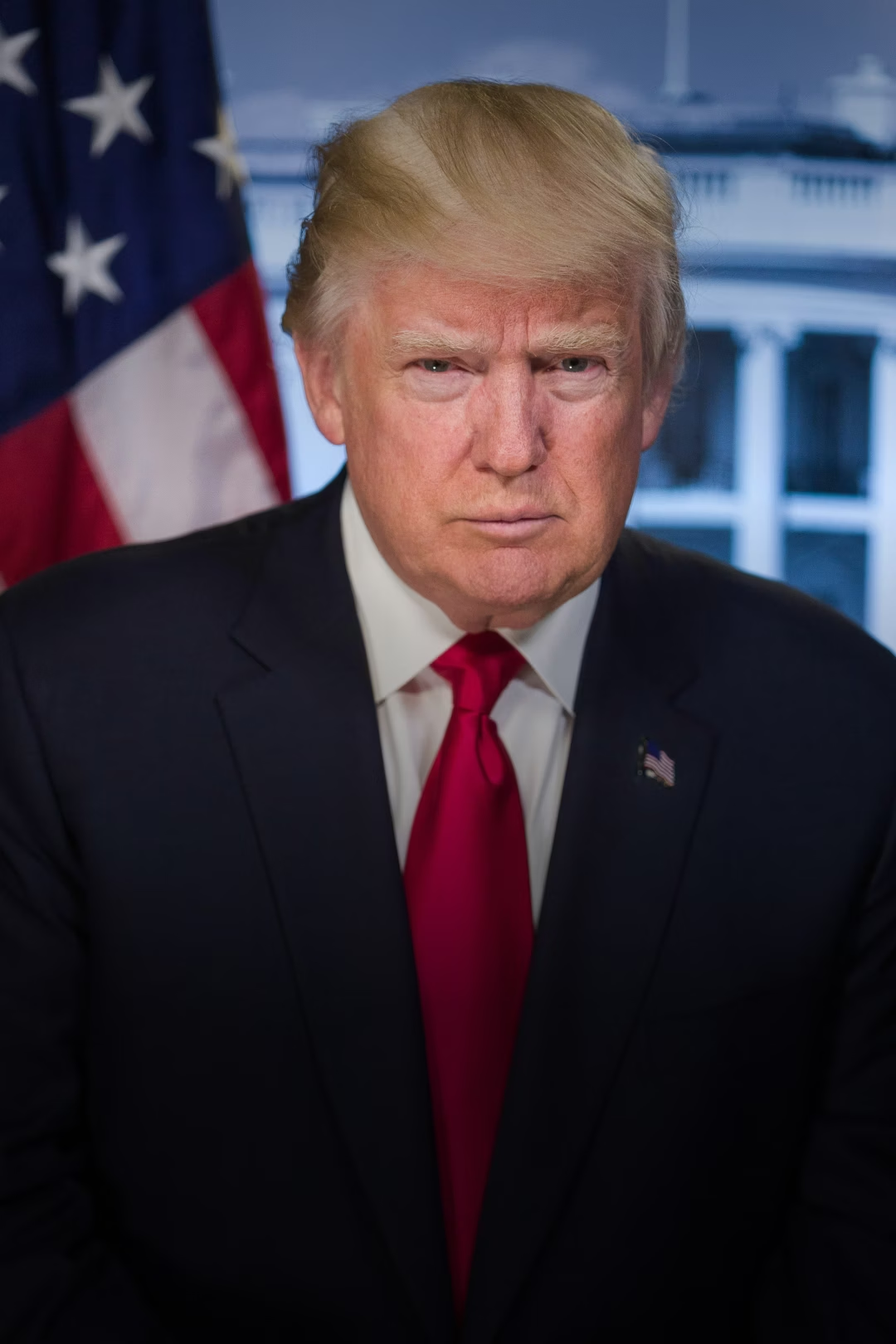
A year back in office, and Trump hasn’t just dominated the headlines. He has shaped the rhythm of the global economy, and in ways that are not always easy for investors to predict.
Trade policy has swung faster.
Institutions have been tested harder.
Foreign policy has been more unpredictable.
And markets have had to price that in - sometimes calmly, sometimes abruptly.
The last 12 months have felt like a roller coaster, that’s because policy has been moving like one too. One week it’s tariffs, the next it’s a new spending push, then it’s a foreign-policy shock that sends investors scrambling for “safe” assets.
You don’t need to follow every twist to feel the impact. If you invest through global funds, you’re already along for the ride.
So let’s zoom out and see what this whirlwind first year of Trump’s term 2.0 has actually meant for the economy and markets.

What Happened in Year One
Step back, and the pattern is more “America First” economics, more governing by executive action, and more uncertainty that businesses had to price into real decisions.
Tariffs Returned as a Core Tool
Trump rolled out broad tariffs on imports and repeatedly used those threats as leverage. Tariffs aren’t just “politics” anymore - they can raise costs for companies, disrupt supply chains, and cool global trade when businesses stop trusting the rules will stay put.
Trade Tensions Spread Beyond Rivals to Partners
It wasn’t just a U.S.-China story. Allies were pulled into negotiations, deals, warnings, and new threats, sometimes within the same season. That matters because companies plan supply chains and investment years ahead.
When policy is unpredictable, investment can slow even if demand is still there.
More Power Concentrated in the Presidency
The administration pushed major change through executive action and agency restructuring, including cuts to parts of the federal workforce.
Markets usually prefer boring institutions and stable decision-making. Not because investors are sentimental, but because surprises are expensive: the more sudden the policy shift, the harder it is for companies to plan, invest, and hire with confidence.

Immigration Enforcement Escalated, Visibly
ICE operations expanded with aggressive raids and deportations, and National Guard deployments in some U.S. cities became a recurring feature of domestic politics.
Beyond the human stakes, it created economic uncertainty: tighter labour supply in certain sectors can push up wage pressure, while the broader unrest can make businesses more cautious about expanding or hiring.
Geopolitics Stayed Close to the Surface
From renewed tension with allies on security issues to military action abroad, foreign policy kept crossing into economic territory.
Even when events are far away, markets can reprice energy, defence expectations, and global risk appetite very quickly.
AI and Industrial Investment Stayed a Bright Spot
Alongside the turbulence, the administration pushed large-scale ambitions around AI and infrastructure. That helped keep the “big tech growth” narrative alive, even as other sectors wrestled with trade and cost uncertainty.

The Economic Scorecard
For all the chaos, the U.S. economy did not dramatically change direction in year one. It stayed broadly resilient, with solid growth but clear weak spots in jobs and affordability.
Growth: Steady, Not Explosive
The economy kept growing and AI-linked sectors took off, but it was more of an AI-led upswing than a broad breakout boom.
Inflation: Easing, but Still a Real Factor
Prices did not spiral, but inflation stayed high enough to matter for households and for markets. That matters because inflation influences interest rates, and interest rates influence everything from mortgage costs to how investors value future company profits.
Jobs: Hiring Cooled Noticeably
The labour market slowed, and job creation fell to one of its weakest paces outside a recession, even though unemployment did not spike.
A big part of that story is immigration: net migration to the U.S. turned negative for the first time in around 50 years, meaning fewer new workers, less overall demand, and fewer new jobs needed to keep the unemployment rate steady.
On top of that, many companies are experimenting with automation and AI to do more with fewer people, which can further dampen hiring even when the economy is still growing.

Markets: Stocks Rose Anyway
U.S. shares finished the year up strongly, helped by a powerful rally in AI and large‑cap tech, even though the broader economy felt mixed.
Gold and silver also delivered standout returns, reflecting both geopolitical jitters and growing demand for metals used in industry and clean tech.
By contrast, it was a disappointing year for crypto, an awkward backdrop for a self‑styled “crypto president”.
And even though U.S. stocks did well, investors who looked beyond America often did even better, with several Asian, European, and South American markets outperforming the U.S. benchmarks.
Finally, the dollar weakened noticeably over the year – broadly in line with what the administration wanted – which is great news for U.S. exporters but a drag for foreign investors holding dollar‑denominated assets in their home currencies.
Trump’s Narrative vs the Numbers
The White House story:
A stronger economy, lower prices, and policies that make other countries “pay”.
What the numbers tend to suggest:
Growth looks steady rather than dramatically stronger. Inflation has improved versus earlier peaks, but it has not vanished. And tariffs usually show up as higher costs somewhere in the chain, either in company margins or on consumer receipts, even if it is not immediate or evenly spread.
Here’s the investing takeaway: when the rules feel uncertain, companies tend to get cautious. They delay hiring. They pause big projects. And investors often ask for a little extra return to compensate for the added risk.

Why Global Investors Should Care
Even if you never buy a U.S. stock directly, U.S. policy can still land in your portfolio. Here is how it tends to travel.
- Trade decisions ripple through global companies. Tariffs rarely “hit a country” in a neat way. They show up inside company costs, product prices, and profit margins. Businesses with cross-border supply chains and international customers feel it first.
- Geopolitics can reshape spending priorities. Tensions can redirect budgets toward defence and infrastructure and away from other priorities.
- Currencies can quietly change your returns. A stronger or weaker dollar can amplify or dilute returns in your home currency.
- Global risk sentiment moves together. When uncertainty rises, investors often rotate between higher-risk growth assets and more defensive ones.

Investor Guidelines for Surviving the News Cycle
If you’re feeling a bit exhausted by the headlines, that’s normal. But the goal isn’t to out-react the market - it’s to have a few simple rules you can stick to when politics gets loud.
Use Headlines as Context, Not a Trading Plan
A loud news cycle is not the same as a lasting change in company earnings. The questions that matter are boring: will this affect costs, demand, or long-term growth?
Diversify so One Country Cannot Dominate Your Outcome
And as 2025 showed, some of the strongest equity returns were actually outside the U.S., which is a good reminder not to pin your entire future on a single market, no matter how dominant it seems today.
Global funds help, but concentration can still creep in, especially through U.S.-heavy indexes and tech-heavy exposure. Diversification is the closest thing investing has to a seatbelt.
Prefer Businesses That Can Absorb Shocks
Companies with pricing power, diversified revenue streams, and strong balance sheets tend to cope better when tariffs, regulation, or costs change quickly.
Watch the Big Three: Inflation, Rates, Jobs
You do not need to forecast perfectly, but it’s useful to check the direction of travel. Are prices cooling or heating up again? Are rates moving down or staying stubbornly high? Is hiring picking up or slowing? Those three signals shape the investing weather more than any single headline.
If Trump’s first year back taught investors anything, it is this: the rules can change quickly. The antidote is not panic. It is diversification, patience, and owning assets that do not rely on a single politician behaving predictably.