
30/10/25
The Female Invest’s Culture Guide - Fall Edition Part 1
We’re back with a fresh round of recommendations on what to read, watch, and listen to this fall.

The days are getting shorter, the air a little crisper - it’s no secret: autumn is officially here.
And that means one thing: cozy nights under a blanket, a warm cup of tea in hand, and of course… the best books, shows, and podcasts to make those chilly evenings even better.
So naturally, we’re back with a fresh round of recommendations on what to read, watch, and listen to this fall.
Welcome to Female Invest’s Culture Guide: Fall Edition, where Camilla and Maiken share their top picks of the season.
Think of it as the message you’d get from your best friend when you text,
“I want something good - what should I read, watch, or listen to right now?”
We hope you enjoy these little gems as much as we do.
Let’s dive in…
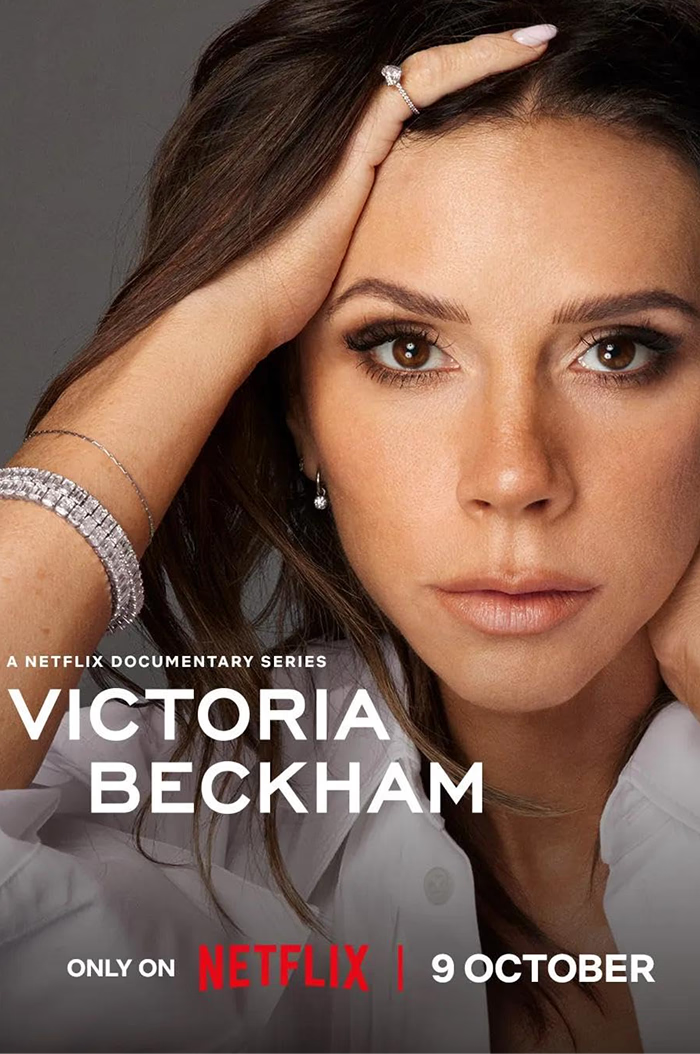
Camilla recommends: Victoria Beckham – Netflix
A polished peek at a life that still feels only half glimpsed.
After the smashing success of Beckham, the Netflix documentary about David Beckham, there was one clear breakout star: Victoria. With her deadpan humour, chic defiance, and calm command of every room she entered, she stole the show completely.
Like everyone else, I fell a little bit in love with her. So when Netflix announced she’d be getting her own series, I could hardly contain my excitement.
What we get is three hours of immaculate branding, strategic pacing, and carefully managed emotion. It’s more curated than confessional, more polished than raw.
And yet, I’ll recommend it.
What works
Victoria is magnetic in motion. The show teases us with moments when she steps away from performance, fussing over a sketch, testing fabric, or brainstorming with her team, and you catch a glimpse of who she is when the spotlight fades. The documentary follows the lead-up to her biggest fashion show to date, and we see the machinery behind it: fittings, mood boards, pressure points, and the kind of tension that makes you root for the person behind the label.
There are revealing moments too. Early financial missteps, including £70,000 spent on office plants, and the mounting debt that created tension between her and David, give the show its sharpest edges. That vulnerability, when she breaks composure just enough to reflect, is the subtext the series should have leaned into more. As a founder, and someone who loves seeing the messy behind-the-scenes of how companies are built, this part of the show was the most interesting to me.
And yes, my husband wandered in halfway through and ended up staying. There’s something undeniably compelling about Victoria’s presence, whether you love or loathe her. She holds attention with quiet control.
Where it falters
The show is too neat. Too polished. Too committed to the mythology of Victoria Beckham rather than the messy reality behind it. I wanted more. More mundanity. More of her everyday life. Following her through one major fashion show offers drama, but following her over a longer stretch, through more milestones, more failures, and the daily grind of building a brand, would have made it even more interesting.
Some critics have called it “as intimate as a Pret sandwich.” While I appreciate the humour in that comparison, I wouldn’t be quite so harsh. The documentary does, albeit briefly, touch on deeper themes like eating disorders, tabloid cruelty, and creative self-doubt.
Still, for all its limitations, it’s compelling. It offers a case study in how public women survive and recalibrate under impossible expectations. It may not go as deep as I hoped, but it’s undeniably worth watching.
📺 You can watch Victoria Becham on Netflix
Camilla recommends: The Psychology of Money – Morgan Housel
A timeless reflection on why we think, fear, and behave the way we do with money.
Morgan Housel writes about money in a way that makes you forget you’re reading about money. His bestseller The Psychology of Money isn’t a manual on budgeting or investing, but a collection of reflections on how human behaviour drives financial success far more than spreadsheets or IQ ever could. It’s the kind of book that feels simple at first and then quietly rewires how you think.
I first read it when it came out a few years ago, and I’ve since returned to it in the lead-up to his new book “The Art of Spending”, which was released just last week. I haven’t read it yet, but given how deeply The Psychology of Money reshaped my thinking, I’ll definitely be diving in and reporting back soon.

What works
The Psychology of Money succeeds because it tells stories. Housel distills the psychology of wealth into short, elegant lessons about risk, luck, patience, and perspective. He argues that money is emotional long before it’s mathematical, and that understanding our own biases and fears is the first step toward financial clarity.
Even on a second read, I found myself underlining passages about the role of luck and risk (“Nothing is as good or as bad as it seems”) or the simple but transformative truth that “wealth is what you don’t see.” He writes with rare compassion for both success and failure, reminding readers that doing well with money has little to do with intelligence and everything to do with behaviour.
If reading a full book feels like too much of a commitment, I also highly recommend his recent episode on The Diary of a CEO podcast. It’s the perfect introduction to his philosophy, gentle, self-aware, and quietly radical in its insistence that financial success starts with emotional intelligence.
Where it falters
There’s very little to fault here. Some readers might crave more tactical advice or practical steps, but that would miss the point. This isn’t a guidebook, it’s a mindset reset. Housel’s strength lies in his restraint, in the space he leaves for you to examine your own assumptions about risk, success, and enoughness.
It’s one of those rare finance books that manages to feel almost philosophical without losing its relevance. I came away not with a plan, but with perspective, and in the world of money, that’s infinitely more valuable.
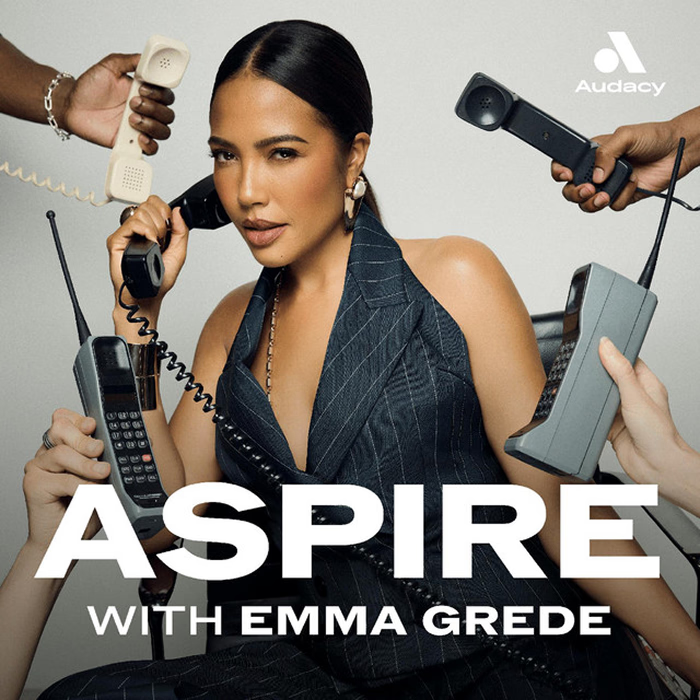
Camilla recommends: Aspire with Emma Grede – Podcast
A rare peek into love, business, and ambition without the filter.
There are plenty of podcasts about entrepreneurship. Far fewer manage to feel like real conversations between people who know exactly what’s at stake. Aspire, hosted by fashion mogul and SKIMS co-founder Emma Grede, is that rare mix of polish and intimacy. It’s sharp but never showy.
Since the podcast launched a few months ago, I’ve listened religiously to every single episode.
Emma is a pitch-perfect host. She’s smart, prepared, and has that rare ability to ask a big question and then actually wait for the answer. It often feels like eavesdropping on a conversation between friends who just happen to be exceptionally successful.
Getting such an intimate glimpse into a woman who runs multiple billion-dollar companies while maintaining a seemingly healthy relationship and being a present mother to four kids is fascinating.
To me, Emma feels like the kind of woman I aspire to be.
What works
Of all the episodes, I’d recommend starting with the one featuring her husband, Jens Grede, co-founder of SKIMS. Yes, he runs a billion-dollar brand, but more importantly, he speaks like a real human being. In this episode, the two talk candidly about the realities of working together, the growing pains of co-founding a company with your partner, and the quiet stress that even success can bring.
As someone who has struggled with anxiety for many years, the most interesting part for me was hearing him open up about his own struggles with it. I think it’s the first time I’ve heard a man, let alone one so successful, speak so vulnerably about anxiety. What he shares doesn’t feel performative, but real, something that genuinely shapes how he works, leads, and shows up at home.
The result is something rare: a business conversation that also feels like a relationship check-in. It’s insightful, generous, and quietly romantic in its groundedness.
There are other excellent episodes too. Her conversation with Jessica Alba is brilliant, but the one with Jens is the one that stays with you.
Where it falters
If anything, the podcast leaves you wanting more, not because it’s incomplete, but because hearing two people talk honestly about ambition, parenting, pressure, and partnership still feels so rare.
This episode is the kind of thing you immediately send to your group chat.
At least, that’s what I did.
That’s a wrap for this edition, but don’t worry we’ll be back with more!
Please share any recent recommendations in the comments.
We’d love to hear what you’ve been loving lately.