30/10/25
The Price of Power: What Kamala Harris’s New Book 107 Days Reveals About Every Woman Who’s Ever Tried to Hold It
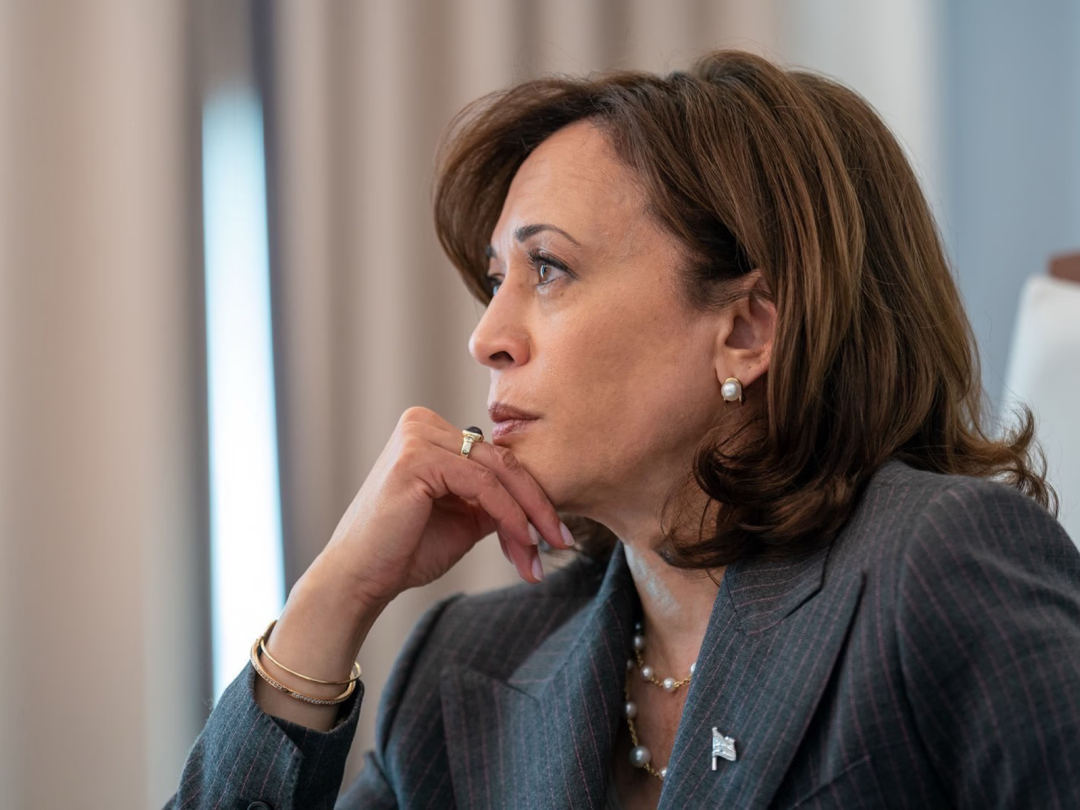
Kamala Harris’s new memoir 107 Days isn’t the victory lap many expected. It’s a raw look at what happens when power slips through your hands

On her sixtieth birthday, Kamala Harris stepped off her campaign plane to find it covered in streamers. Her staff had bought a German chocolate cake, her favourite, and a single gold balloon with the number 60 printed across it. Harris smiled, then crushed the balloon under her heel.
It’s the kind of moment you can picture perfectly: the forced celebration, the quiet irritation, the woman expected to smile her way through it.
107 Days, her new memoir about the breakneck sprint of her 2024 presidential campaign, is full of scenes like that. The balloon, the bad lighting, the arguments with her husband, the aides who forget to brief her before a live interview. It’s sharp, emotional, and sometimes uncomfortable to read, which is exactly what makes it feel real.
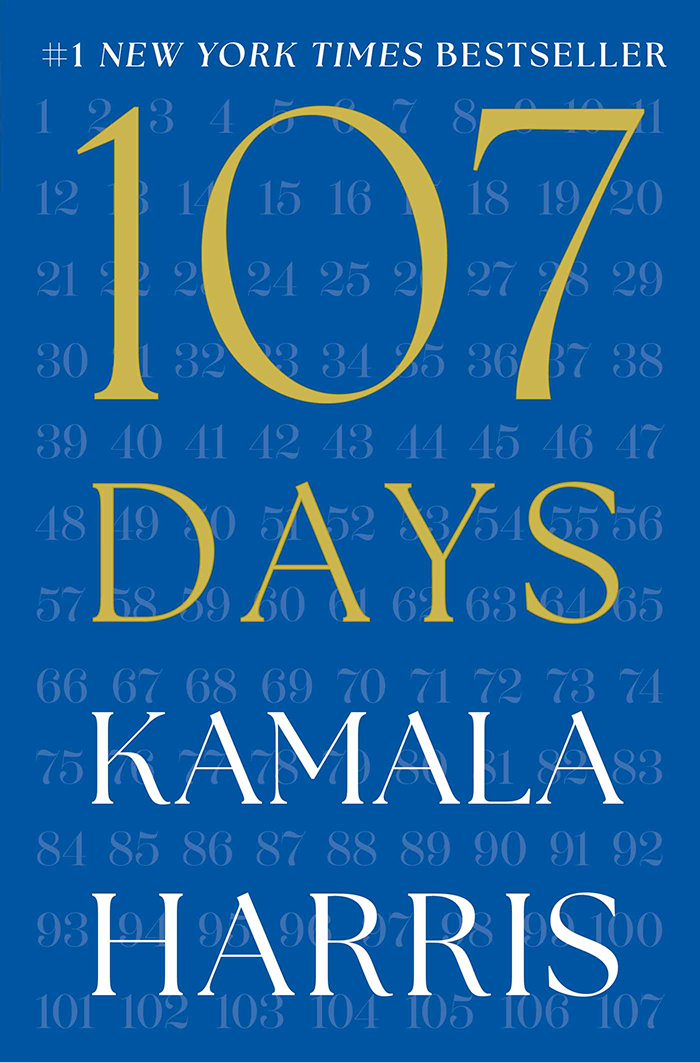
The book opens like a political thriller. Joe Biden has just dropped out of the race. Harris suddenly becomes the nominee with barely three months to save the party. Cupcakes with “Madam President” frosting are ready. Champagne is on ice. Her team is already drafting a victory speech.
For one glittering hour, it looks like she might actually pull it off. Then, everything starts to fall apart.
The book’s best moments are the small, painful ones that pierce through the political polish. In Philadelphia, she checks into a hotel that “looked like it hadn’t been redone since the 70s,” the carpets faded, the air heavy with disappointment.
Her husband, Doug, arrives too tired to celebrate her birthday, handing over a gold-and-pearl necklace she immediately recognises as a recycled anniversary gift. Later, she slips into a hotel bathtub and calls out for a towel he doesn’t hear, the baseball game on too loud in the next room. “It was a bridge too far,” she writes.
There are flashes of dark comedy too. During one media stop, her team forgets to tell her that a podcast host known as “Doctor Mike” plans to ask about health-care policy. Harris sits down expecting a friendly chat and instead gets a grilling. When the interview ends, she turns to her aides, furious. “What the fuck was that?” she recalls saying, her voice rising.
From a distance, Harris’s campaign looked triumphant; up close, it was chaos. She was running on fumes, trying to hold together a marriage, a message, and a country that still couldn’t decide if it wanted her.
There’s an unforgettable moment when she calls her pastor for reassurance, and he tells her the story of Queen Esther, a woman chosen “for a time such as this.” The blessing steadies her, but it also lands with a kind of irony. 107 Days makes clear that this time, and this stage, were never fully hers.

Throughout the book, Harris circles the same frustration: she had the title but not the control. She was the candidate, yet surrounded by advisers, donors, and former Biden aides still pulling the strings.
She had power, but never real ownership of it.
That dynamic feels painfully familiar. Women are often handed responsibility without true authority. We get the expectations, the scrutiny, the pressure to perform, but not the freedom to decide.
I kept thinking about that; the gap between how power looks and how it feels. From a distance, Harris’s campaign looked triumphant; up close, it was chaos. She did almost everything right, and it still wasn’t enough.
For all its unevenness, 107 Days is a fascinating read. It’s not the polished, ghostwritten campaign memoir we’ve come to expect. It’s prickly, sometimes defensive, often weary, but occasionally so raw you can almost hear her voice in the room. It offers a rare glimpse behind the curtain of a historic campaign: the fights, the missteps, the endless calculation that defines modern politics.
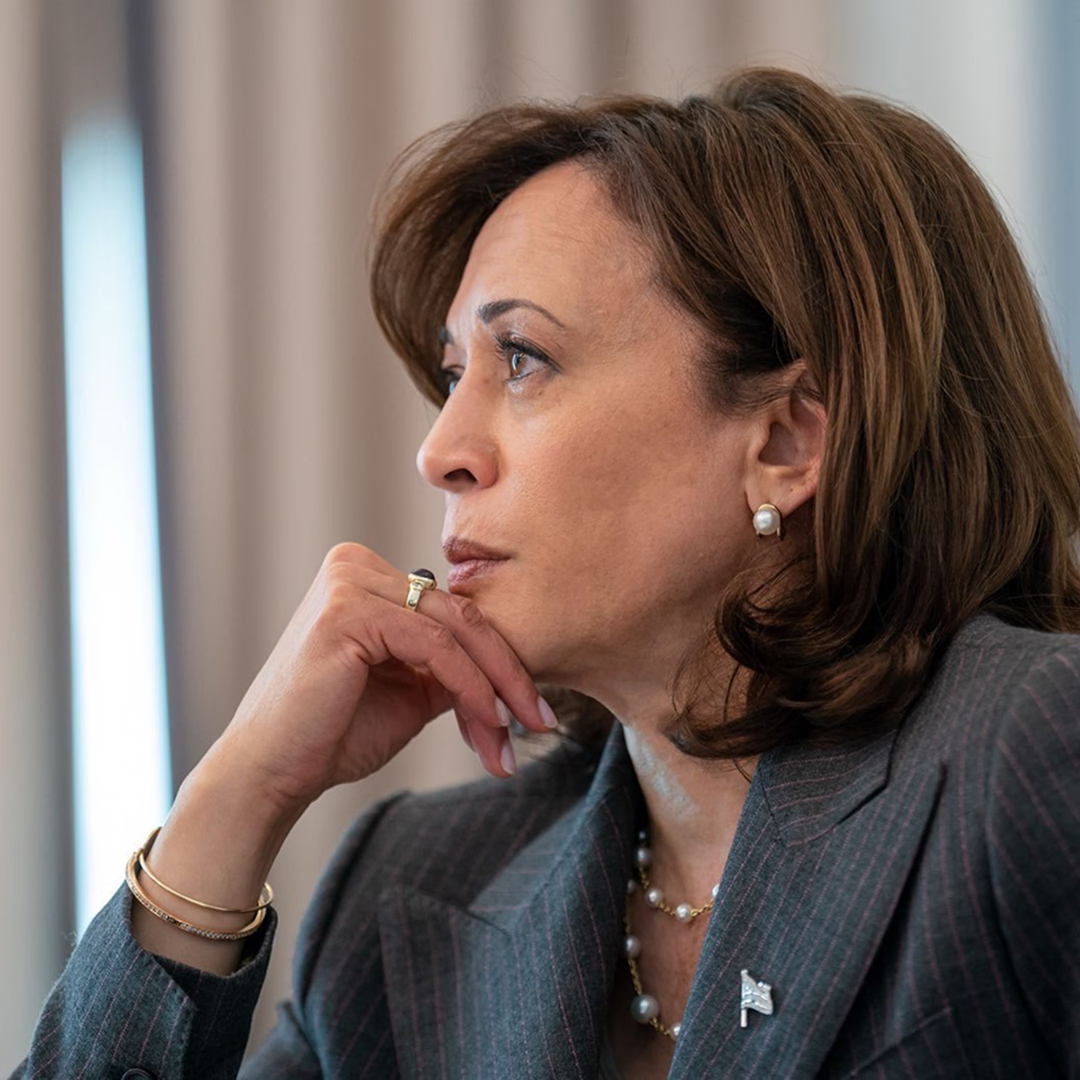
It’s not a perfect book. Harris often holds back when you want her to open up, and argues when you wish she’d just stop and think. But that mix of confidence and caution feels familiar. Most women know what it’s like to be told to be strong, but not too strong. To be open, but never vulnerable.
If you read 107 Days, don’t see it as a political postmortem. See it as a portrait of what ambition does to a person, and how hard it is to stay composed when everything around you starts to fall apart. The book doesn’t offer neat lessons or redemption. What it offers instead is something more human, the sound of someone trying to hold on when the moment has already passed.
Somewhere between the streamers, the chocolate cake, and that crushed gold balloon is a truth many ambitious women already know. The hardest part isn’t getting power. It’s keeping it, and staying yourself when it begins to slip away.