.avif)
5/11/25
What I Spent This Week as a Communications Manager Making £47k
Ever wondered how others really manage their money?

Ever wondered how others really manage their money?
In the A Week in My Wallet series, we share it all, because talking about money shouldn't be off-limits.
Every week, an anonymous member shares a week of their spending: no names, no filters, just honest stories about life's everyday financial choices.
Ready to join the conversation and help make money talk less taboo? Share your own story via our form here.
Monthly Take-Home Pay (after tax): €2,800 (£2,467)
Household Income: €2,700 (£2,379)
Dependents: None
Fixed monthly costs (your share only):
- Rent & utilities: €600 (£529)
- Bills: €200 (£176)
- Groceries: €400 (£353)
- Investment contributions: €900 (£793)
- Transport: €0–€20 (£0–£18) - I mostly bike, which I recently bought for €350 (£308)
Amount left each month after essentials: €700 (£617) – usually most of this goes on travel
My Relationship with Money
Did your parents or guardians educate you around money?
Yes, a bit. I grew up in India where historically families have had poorer backgrounds and financial insecurity, so saving money for my parents and grandparents was a way to be secure, accumulate wealth, provide better opportunities for your children and for themselves when they are retired.
My mom left her job when my brother and I were very young and she's been a stay-at-home mom since. My father quit his job and started a business that didn't do very well, so we were always told to be cautious about our spending, and savings was the name of the game for our family so that we didn't have to struggle financially and my parents could invest in a good education and life, especially for my brother and I.
Money was never a taboo topic in our household, it was talked about a lot, especially the importance of saving it. In fact, the threat of being financially insecure was constantly conveyed to us so we never overspent. As we grew older, in our twenties, my dad taught us a bit about investing. But because I moved to Europe when I was 21, it’s been more difficult for me to invest there as it would have been in India as they are two completely different markets.

What was your first job – and why did you get it?
My very first job was during my master’s in France when I moved abroad. I wanted to supplement my living expenses, so I started babysitting two young boys, who only spoke French, while I only spoke in English – it didn’t last very long. The job I had after was an internship at an international organization as part of my studies that paid me enough at the time to pay my rent.
Did you worry about money growing up?
Yes, and no. Yes, because my parents always made us feel like we never had a lot of money so we must be in constant savings mode. So every purchase was carefully thought out. But there were short periods where my father was doing well, so we didn’t worry as much. At the same time, we didn’t have to worry so much that we felt we had to financially contribute.
We were told to just do well at studies, and secure well-paying jobs in life. (Spoiler: I have what I would say an okayish-paying job now given my education and experience, but I left a ‘well-paying’ job since it was severely hurting my mental health, and my parents didn’t really understand that decision, of course).
At what age did you become financially responsible for yourself?
22 or 23, around the time I got my master’s degree. Luckily, my parents financed my master’s degree (a privilege) out of their savings. But after graduation, I got a part-time job at a café to pay for myself while job-hunting as I didn’t want to continue asking my parents for money.
Do you worry about money now?
Yes, always. I am always scared that if I suddenly lose a job, or maybe just generally at some point in the future, I won’t have enough money to sustain myself.
What is your biggest money regret?
That I didn’t learn about and start investing earlier. I only started a couple of years ago, and still figuring it out.
What financial goals are you working towards?
I want to have a solid investment portfolio, and also grow my income at the same time so I don’t have to worry about money as my parents constantly did or that I can eventually be picky about the jobs I do (or not be forced to work in a job at the expense of my mental health). The long-term goal ultimately is to be able to buy an apartment, and have €500,000–€1,000,000 (£441,000–£882,000) invested, that keeps compounding over time.
Who is your financial role model?
My father definitely, because despite him not getting any financial knowledge from his own family, and living in difficult family circumstances (strict parents, his wife (my mom) has serious mental health issues), he was the sole provider and learnt to invest all on his own which meant that even though he didn’t have an income for years on end, he built up a good amount of investments through which he could financially support his family, and afford to send me to Europe for my two-year master’s degree which was not cheap by any means.
.avif)
Reflections on my Spending
Hmm, I think I definitely spend quite a chunk of money on coffees every day. It’s definitely my guilty pleasure but I realize that I don’t spend too much or at least as much as I think I do on things apart from food. I think I’m quite happy with my spending habits overall, and I do tend to be cautious, but that’s also because I love travelling and visiting my family back in India. This year so far, I have visited Italy, France, Denmark, Brazil, Uruguay, Argentina, and India. So I do spend quite a lot of my money in one go on flight tickets, accommodation, etc.
What I Spent in a Week
Day 1 – Monday: €175.80 (£155.02)
• Coffee: €5.80 (£5.11)
• Co-working space monthly subscription: €140 (£123.37)
• Groceries: €30 (£26.44)
Day 2 – Tuesday: €38.50 (£33.94)
• Eating out: €30 (£26.44)
• Coffee: €8.50 (£7.49)
Day 3 – Wednesday: €22 (£19.39)
• Coffees + cake: €12 (£10.57)
• Groceries: €10 (£8.81)
Day 4 – Thursday: €78 (£68.73)
• Coffee: €8 (£7.05)
• Housing items (cleaning cloth, nail file, deodorant): €20 (£17.62)
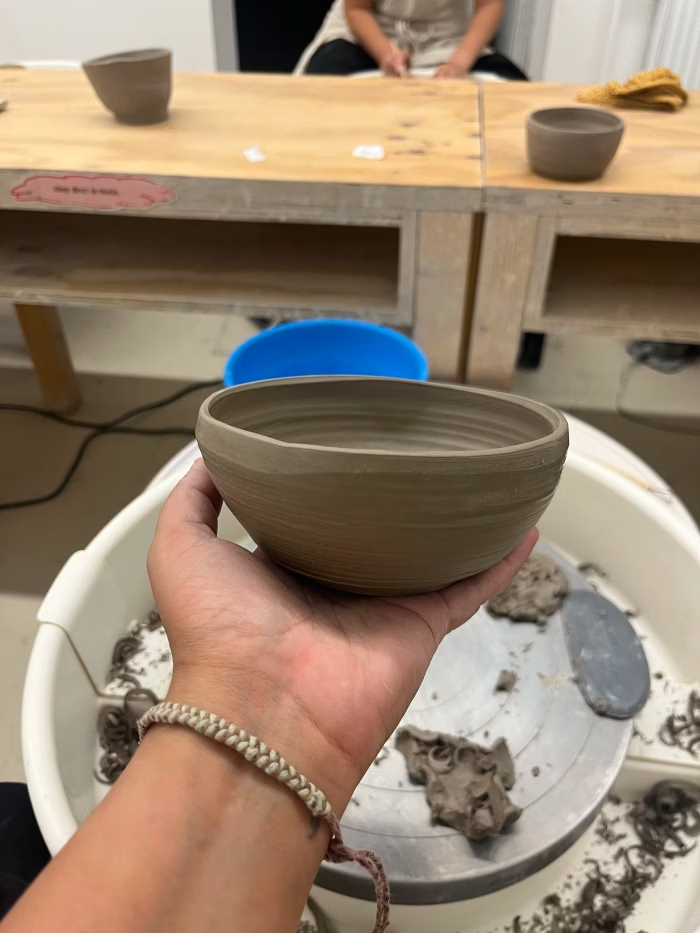
• Weekly pottery class: €50 (£44.05)
Day 5 – Friday: €51 (£44.94)
• Coffees: €11 (£9.69)
• Big grocery shop (including snack and dessert): €40 (£35.25)
Day 6 – Saturday: €35 (£30.84)
• Coffee + pain au chocolat: €10 (£8.81)
• Lunch (salad): €5 (£4.40)
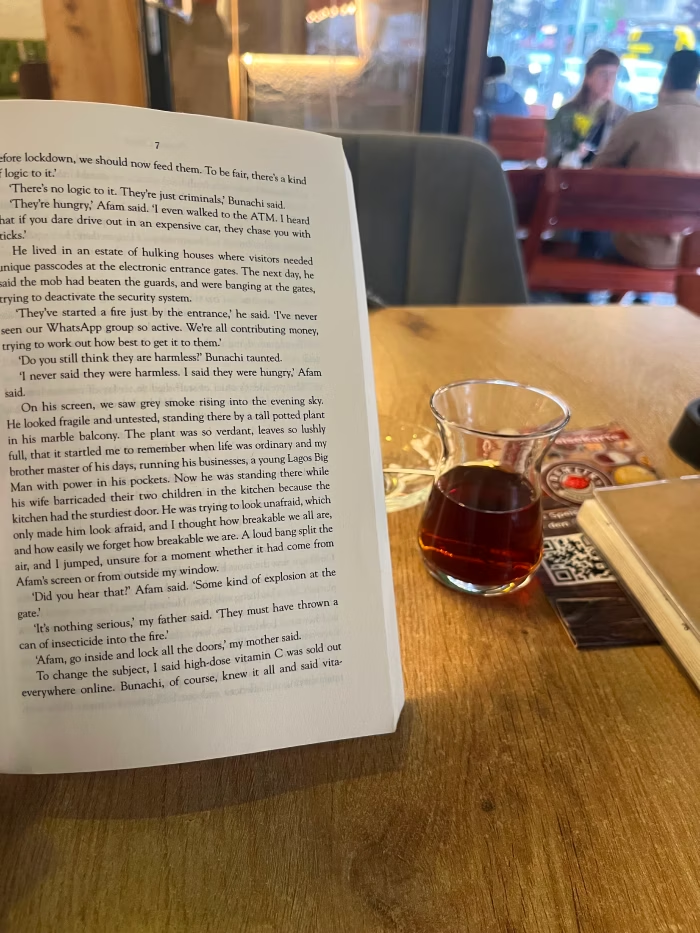
• Book (“Dream Count” by Chimamanda): €20 (£17.62)
Day 7 – Sunday: €23 (£20.27)
• Coffee + croissant: €8 (£7.05)
• Dinner: €15 (£13.23)
.avif)