.avif)
26/11/25
What I Spent This Week as a Nurse Making $75k
Ever wondered how others really manage their money?

Ever wondered how others really manage their money?
In the A Week in My Wallet series, we share it all, because talking about money shouldn't be off-limits.
Every week, an anonymous member shares a week of their spending: no names, no filters, just honest stories about life's everyday financial choices.
Ready to join the conversation and help make money talk less taboo? Share your own story via our form here.
Monthly Take-Home Pay (after tax): £3,120 ($4,080)
Do you share expenses with someone: No
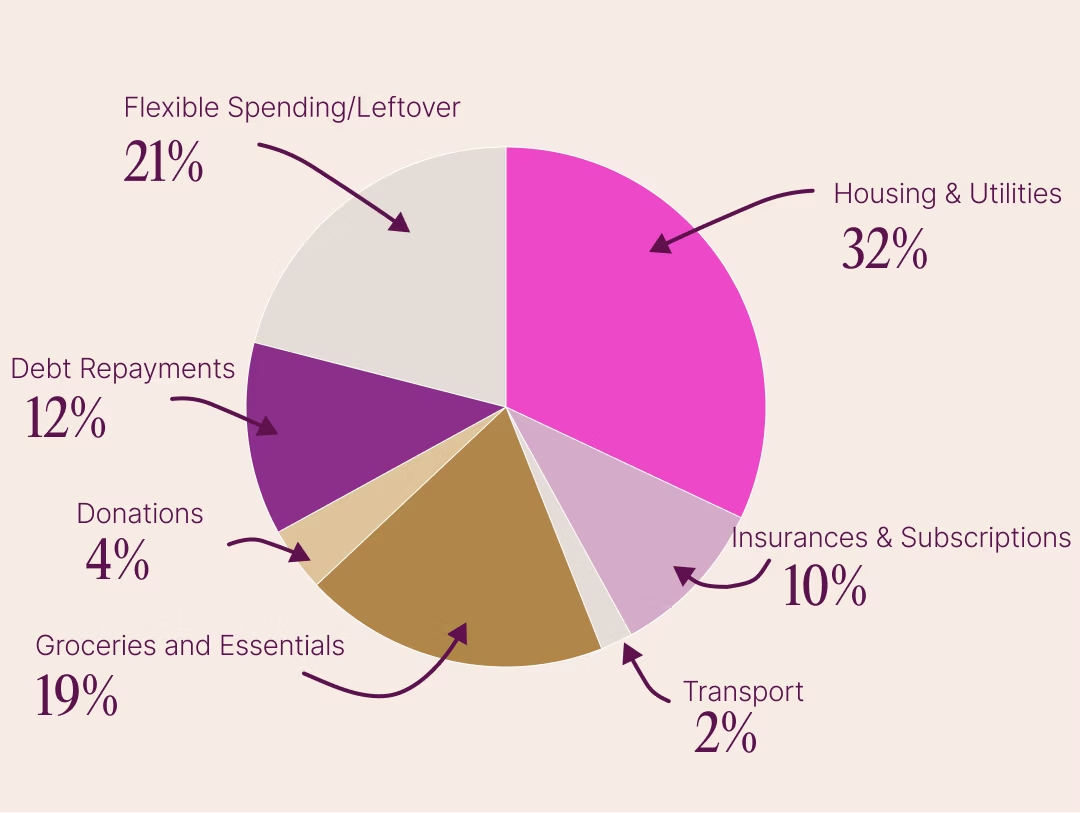
Fixed monthly costs:
- Rent: £1,000 ($1,300)
- Insurances, bills and subscriptions: £280 ($366)
- Transport: £60 ($78)
- Fitness: £30 ($39)
- Groceries & Essentials: £590 ($770)
- Donations: £120 ($157)
- Debt: £385 ($503)
Amount left after fixed expenses: £655 ($867)

My Relationship with Money
Did your parents or guardians educate you around money?
No, unfortunately.
What was your first job – and why did you get it?
My first job was at age 13, delivering newspapers.
I don’t fully remember why it happened, but I think it was because a friend from my class had also started.
I remember very clearly how great it felt to receive my first paycheck. It gave me a sense of independence and freedom — for the first time, I could buy something for myself that I had genuinely wished for.

Did you worry about money growing up?
Yes, a lot. My parents are divorced, meaning my mother was alone with four children.
Neither of my parents had an education, and even though they did their best, it was clear that we didn’t have the same means as many of my classmates.
I don’t remember my parents directly talking about money as a problem, but I knew there were challenges.
I could see it in the clothes me and my siblings wore, the lack of summer trips abroad, the small terraced house without enough bedrooms, the car we drove, etc.
The worries filled so much in me that I consciously avoided wishing for things. For example, I chose not to go on the big 9th-grade trip abroad, and I opted out of going to boarding school- all because I knew it was a big expense for my parents.
My parents never wanted us to miss out on things, but I did anyway because I knew it would be financially difficulty for them. I convinced them it was entirely my decision.
At what age did you become financially responsible for yourself?
At the age 18.
Do you worry about money now?
Both yes and no. I don’t worry about money in my daily life.
I can provide for myself and buy the things I want, largely because I have a good job.
But long term, I do worry. I have no assets, and my pension scheme is not enough for me to maintain a reasonable standard of living when I’m older.
The prospect of buying a home in Denmark as a single woman with a nurse’s salary is almost non-existent — at least if you want a reasonably sized apartment you can live in for several years.
What is your biggest money regret?
I regret not getting better control of my finances earlier in life. Most of my twenties involved overspending and sometimes overdrafts. I still partly regret that I haven’t pulled myself together to build proper savings, because I do have the means for it.
I constantly fall into the trap of buying new things. I think this habit is tied to my childhood and teenage years, where we lived on very little. I’ve always wanted to live a life where I wouldn’t have to miss out the way I did back then.
When I have managed to save money, I often get hit by thoughts like: “Why save £10k when you won’t be able to buy an apartment in Denmark anyway?” That often made me spend the money again — and that cycle has repeated for the past 6–8 years. I really regret that behaviour.
What financial goals are you working towards?
I’m new to the Female Invest community. Not because I hadn’t heard of it before, but because it’s only now that I’ve truly “dared” to look at my future and finances.
I’ve made a plan to start investing. I’m currently waiting to get set up with Nordnet.
I will invest £350 ($450) every month — first through the aktiesparekonto, then through a regular investment account. My plan is long term: 20–30 years.
I also want to set aside £600–800 ($750-1000) each month for a home savings fund.
I also plan to pay off my Viabill debt faster, because it is an extremely expensive loan for me.
My goals are realistic because I recently got an hourly consultant job alongside my main job, which means I can earn a bit more.
Who is your financial role model, and why?
All you wonderful women in this community!
Reflections on my Spending
I order way too much take-away — but I already knew that.
What I Spent in a Week
Day 1 – Monday: £46.50 ($60.00)
• Donation: £11.00 ($14.00)
• Danskespil: £11.00 ($14.00)
• Take-away: £24.50 ($32.00)
Day 2 – Tuesday: £52.45 ($68.35)
• Groceries: £8.20 ($10.70)
• Take-away: £18.50 ($24.00)
• Take-away: £25.75 ($33.65)
Day 3 – Wednesday: £49.80 ($65.05)
• Female Invest membership: £15.00 ($19.60)
• Groceries: £34.80 ($45.45)
Day 4 – Thursday: £84.90 ($111)
• Groceries: £84.90 ($111)
Day 5 – Friday: £78.30 ($102.30)
• Take-away: £17.10 ($22.30)
• TEESHOPPEN: £61.20 ($80.00)
Day 6 – Saturday: £0 ($0)
• Spent no money over the weekend
Day 7 – Sunday: £0 ($0)
• Spent no money over the weekend
Total Weekly Spend: £311.95 ($406.70)