27/8/26
What I Spent This Week as an Innovation Manager Making $72K
Ever wondered how others really manage their money?

Ever wondered how others really manage their money?
In the A Week in My Wallet series, we share it all, because talking about money shouldn't be off-limits.
Every week, an anonymous member shares a week of their spending: no names, no filters, just honest stories about life's everyday financial choices.
Ready to join the conversation and help make money talk less taboo? Share your own story via our form here.
Savings: €50,000 ($58,000) total savings as of July 2026, out of which:
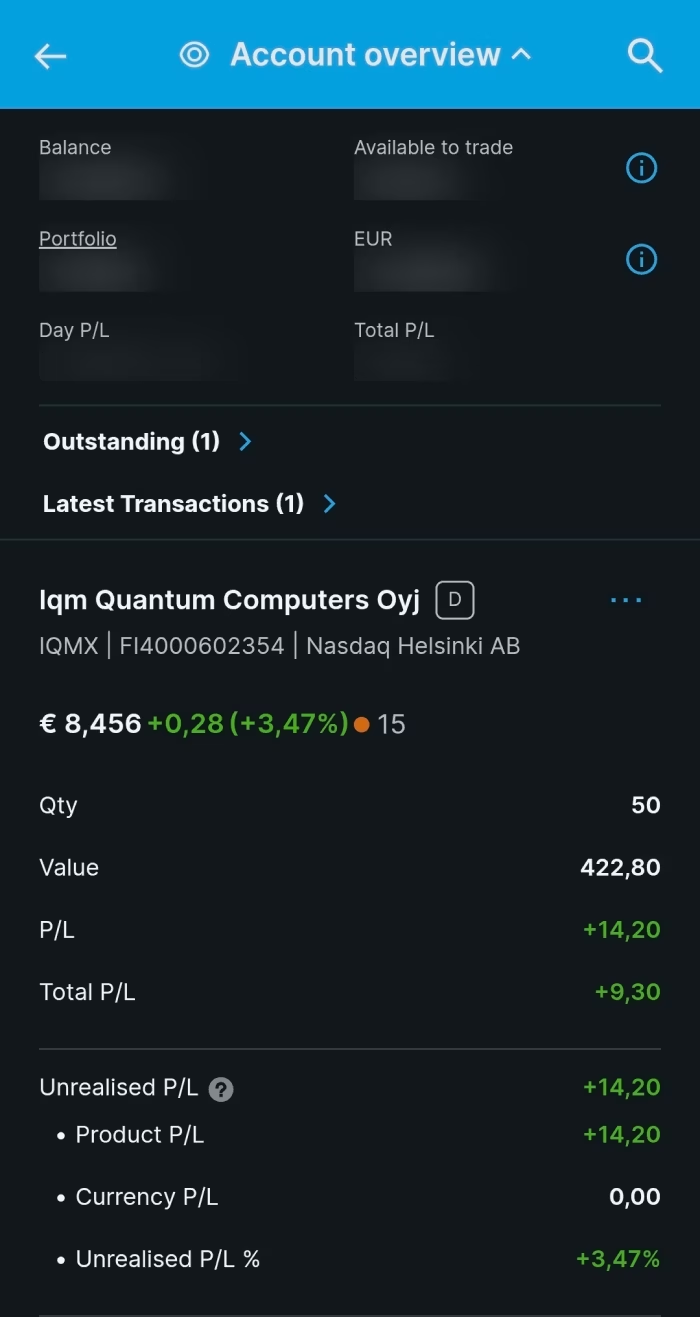
€5,000 ($5,800) went as an initial deposit into my newly opened investment account, which is distributed across a core of globally diversified ETFs (60%); the remaining funds are spread across satellite sector-specific investments (tech, commodities), a little bit of gold, and some leftover cash for a "stock sandbox", as I want to learn how to sell and buy stocks.
I transfer monthly €1,000 ($1,160) of my net income (after recurrent expenses are covered) into my investment portfolio, buying in line with my investment strategy.
€45,000 ($52,200) is in a consolidated savings account, which I would like to split into a term-deposit savings account with higher returns (approx. €10,000 [$11,600]), while the rest remains in the regular savings account.
I would like to keep this money easily accessible as my boyfriend and I are considering buying a house in the next 1–2 years, and this would contribute towards the property down payment.
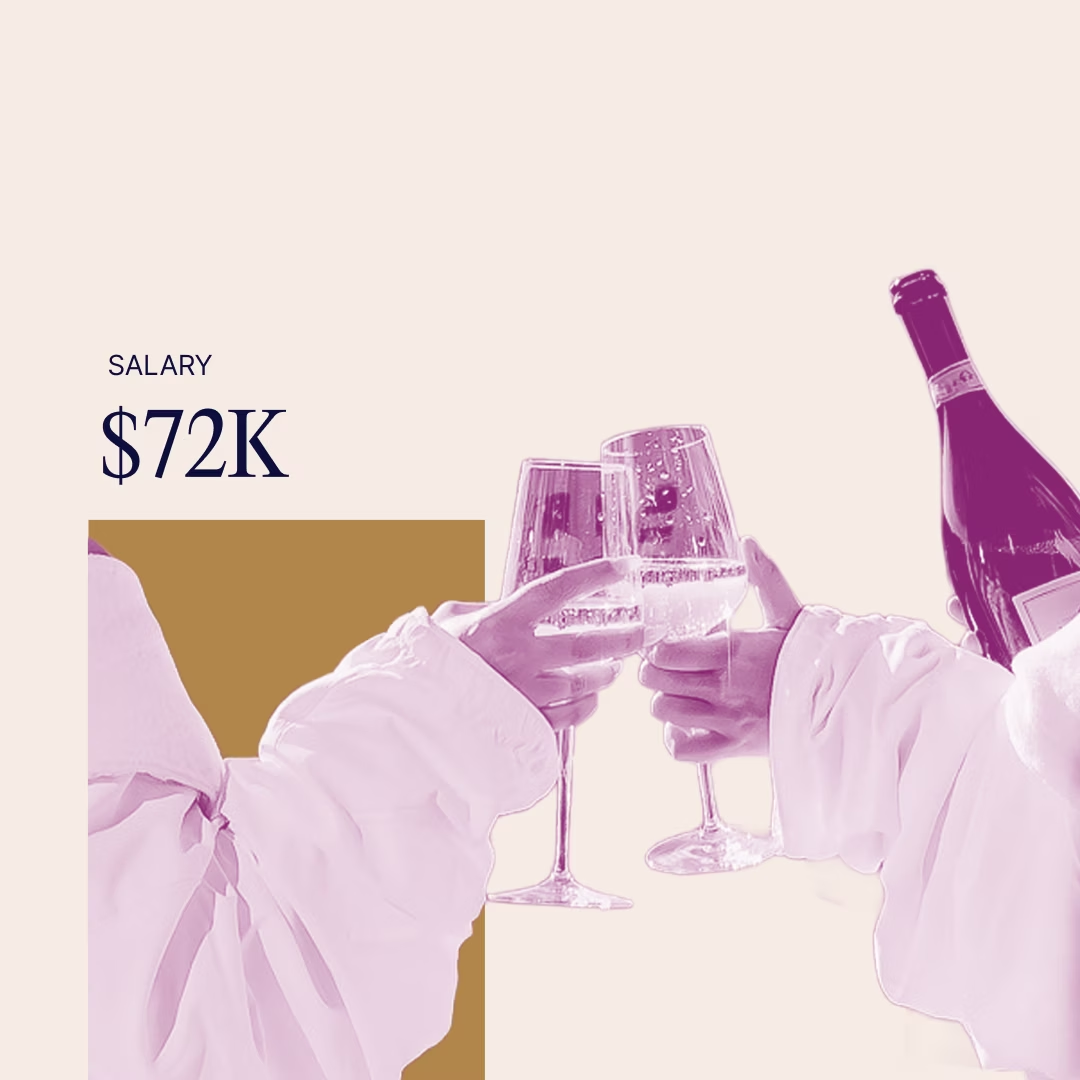
Monthly Take-Home Pay (after tax): €4,350 ($5,046)
Do you share expenses with someone? Yes, my boyfriend.
Household Income (if shared): €11,272 ($13,076), before tax
What is your overall monthly budget?
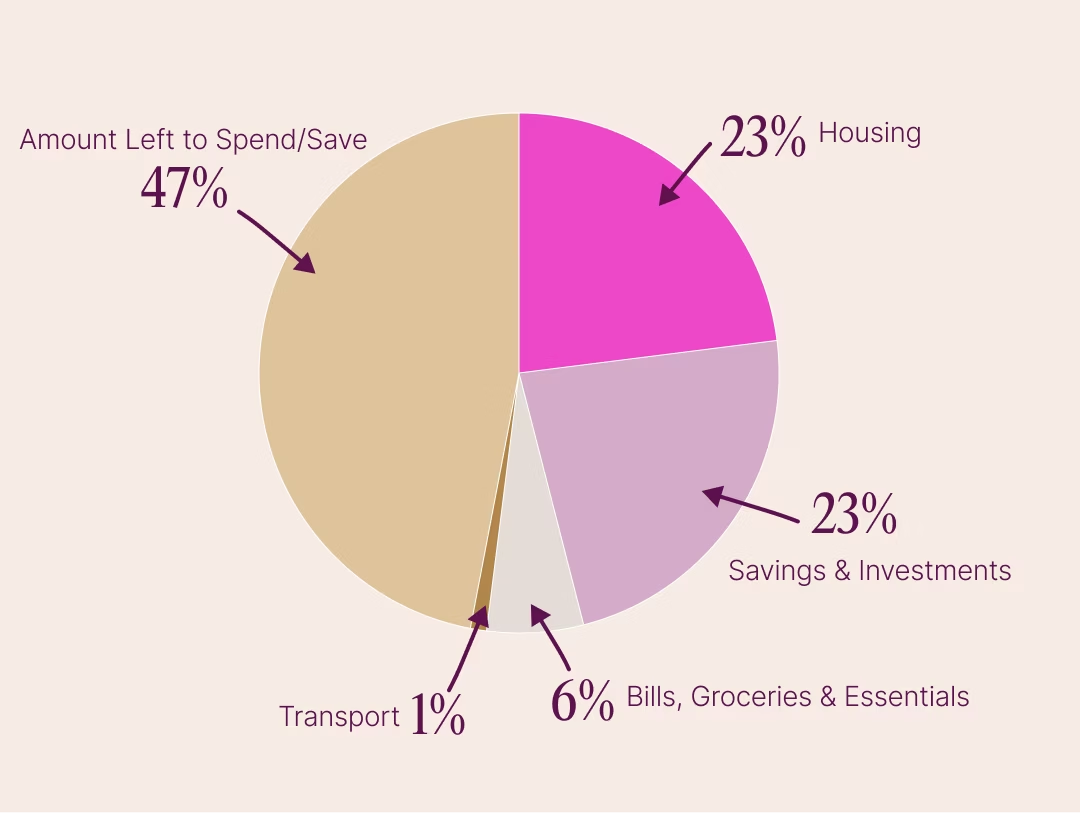
- Rent / Mortgage: Rent, €1,000 ($1,160), my part
- Bills, Subscriptions & Utilities: €250 ($290), my part, includes the budget for groceries
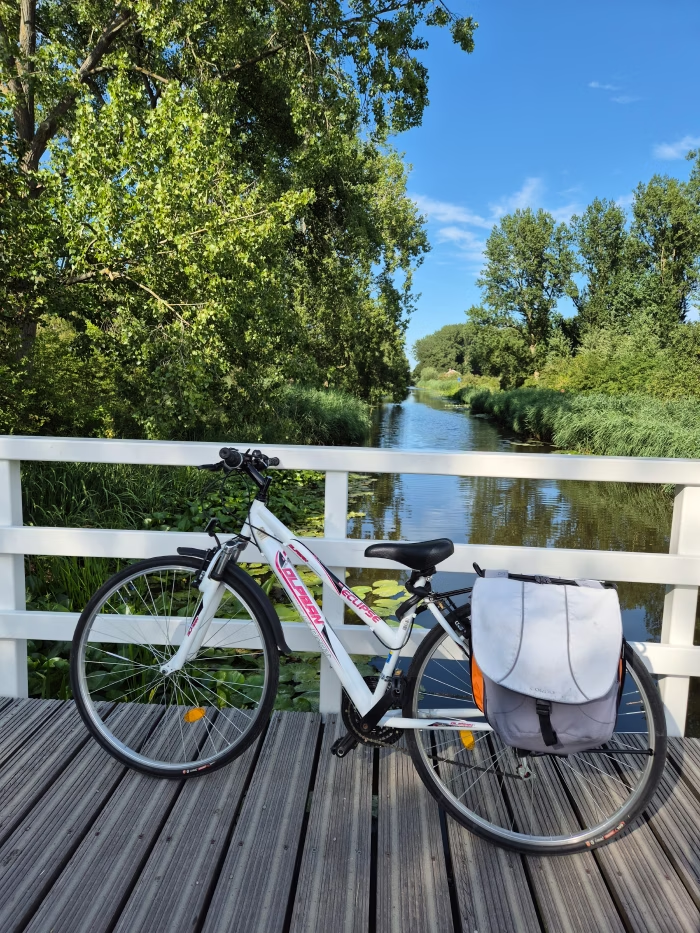
- Transport: €0 ($0). I cycle to work and everywhere for errands/personal time off within the town I live + €7 ($8)/month subscription for discounted train rides for the occasional intercity trips, which can add up to €30–€50 ($35–$58)/month.
- Groceries & Essentials: See above.
- Investment Contributions: Started as of July 2026 to direct €1,000 ($1,160)/month into my newly established investment portfolio, after an initial top-up of €5,000 ($5,800). I have an occupational pension contribution through my employer. I am also researching the opening of a private pension product to add another pillar to my investment strategy.
Amount left each month after essentials (to spend, save or invest): €2,800 ($3,248)
Dependents (if any): None.
My Relationship with Money
Growing up, did your parents or guardians educate you around money?
No, there was no educational discussion about money. My parents, especially my father (who was the money manager of the family), lived with very fear-driven beliefs concerning money (one should have no debt, meaning no money lending for e.g. house improvement, holidays; he did not open a bank account until he was 60; he never pays by card; he holds all savings in cash, albeit exchanged in EUR, not local currency). There was no discussion about money management, opening my own bank account, or administering my own money before or after I came of age.
What was your first job and why did you get it?
My first job was a junior project manager and grant writer for EU funds, in a small consultancy of 7 people. The CEO used to be my MA professor. I supported some company assignments while I was his student. He offered me the job the day I submitted my MA thesis. I never formally applied for the job; I signed the offer over a pint of beer. Yet, before stepping into the company office, I nurtured the interpersonal relation and proved my desire to learn and work for 1.5 years during university courses and extracurricular summer schools.
Did you worry about money growing up?
Yes, a lot. I grew up in a family where money was tight and often a source of stress and conflict. I learned very early to be careful about what I asked for and to associate money with scarcity, fear and social judgement. I became financially independent through scholarships and work and eventually became a good earner, but the psychological feeling of scarcity stayed with me. I knew how to earn and save money, but investing felt frightening because nobody had taught me how to make money work for me. I'm now deliberately learning to replace that fear with financial knowledge, confidence and long-term planning.
At what age did you become financially responsible for yourself and do you have a financial safety net?
I became financially independent at 19, when I left my hometown to go to university in the capital city. Ever since, I haven't asked my parents for financial support. To keep the financial burden low for my parents, during my BA in my home country, I lived in a shared dorm room and travelled abroad through youth projects via scholarships. As I dreamed of studying abroad in my MA, I secured one of three available scholarships in the EU for a European Joint Master Degree. The scholarship allowed me to pay tuition at all host universities and cover all my living expenses. Cautious spending through my study years allowed me to set aside €4,000 ($4,640) before landing my first job. This was my financial safety net until my first salary was paid and permitted me to secure a long-term rental. Every 2.5 years, I strategically changed jobs to increase my pay. After 6 years of working, my current salary is x5 my first salary.
I have built a satisfactory amount of savings, but it is only this summer I started putting my money to work so that the financial safety net becomes a springboard into a better future.
Do you worry about money now?
I still worry about money, but today the worry is less about not having enough and more about losing the security I've worked very hard to build. I have a stable, relatively well-paid job, savings, and much more financial independence than I had growing up. I am in a much safer financial position than I was raised in. Yet scarcity is still something I carry psychologically. I can find it difficult to spend money on myself, and I sometimes feel that I should be saving more, investing more, or making the "right" financial decision. There is also a fear of becoming financially vulnerable again.
The interesting thing is that my biggest financial challenge now isn't earning or saving money. It is learning to trust that I am capable of managing it. I spent years learning how to become financially independent, but I am only now learning how to make my money work for me. Investing has therefore been as much an emotional journey as a financial one. I don't want to become wealthy for the sake of being wealthy. I want enough financial security that money stops being a source of fear and becomes a source of freedom: the freedom to make choices, take risks, change direction, and enjoy my life without constantly worrying about money.
What is your biggest money regret?
My biggest money regret is probably that I waited so long to invest. Not because I could have made a fortune by starting earlier, but because I let the fear of not knowing enough keep me from taking a relatively small, sensible step. I learned very early how to be financially independent: I worked, saved, found scholarships, negotiated my salary and built a substantial financial cushion. But I treated investing as something that belonged to people who had grown up around money, people whose parents had taught them about markets, opened accounts for them, or given them a financial head start. I did not have that education or inheritance, so I convinced myself I needed to become completely knowledgeable before I could begin.
Looking back, I wish I had understood that financial literacy is something you can build while participating, not something you have to achieve before you start. I could have invested €100 (£85) or €200 (£170) a month years ago and learned along the way. I don't regret being cautious. That caution helped me become financially independent. I regret letting caution become paralysis.
What financial goals are you working towards?
My main financial goal is not to become wealthy for the sake of wealth. It is to build enough financial security and independence that money no longer feels like a source of fear.
In the short term, I'm building a solid financial system: maintaining a healthy cash buffer, investing consistently, and learning how to manage my money deliberately rather than reactively. I've recently started investing and want to turn it into a sustainable monthly habit rather than something I approach with fear or perfectionism.
In the medium term, I want to build substantial long-term wealth through diversified investments, while still having enough liquid savings for flexibility: travel, career changes, a future home, or simply unexpected life events. I want my money to give me options, not just sit untouched because I'm afraid of losing it.
In the long term, I'm working towards financial independence: having enough invested assets and pension provision that I can choose how and where I work, rather than being dependent on a salary indefinitely. I also want to build a strong retirement foundation through my occupational pension and potentially additional tax-efficient pension investing.
And perhaps most importantly, I'm trying to change my relationship with money. I want to move from scarcity and fear towards confidence, competence and freedom. I don't need to be filthy rich. I want to know that I will be okay and that I have created enough financial resilience that the next generation of my life isn't governed by the financial fear I grew up with.
Who is your financial role model (if any), and why?
I do not have any, but I want to model my actions into those of a role model I never had growing up :)
Reflections on My Spending Habits:
It was an exceptional week due to the one-time purchase of lots of gifts.
What I Spent in a Week
Day 1: Monday - €0 ($0)
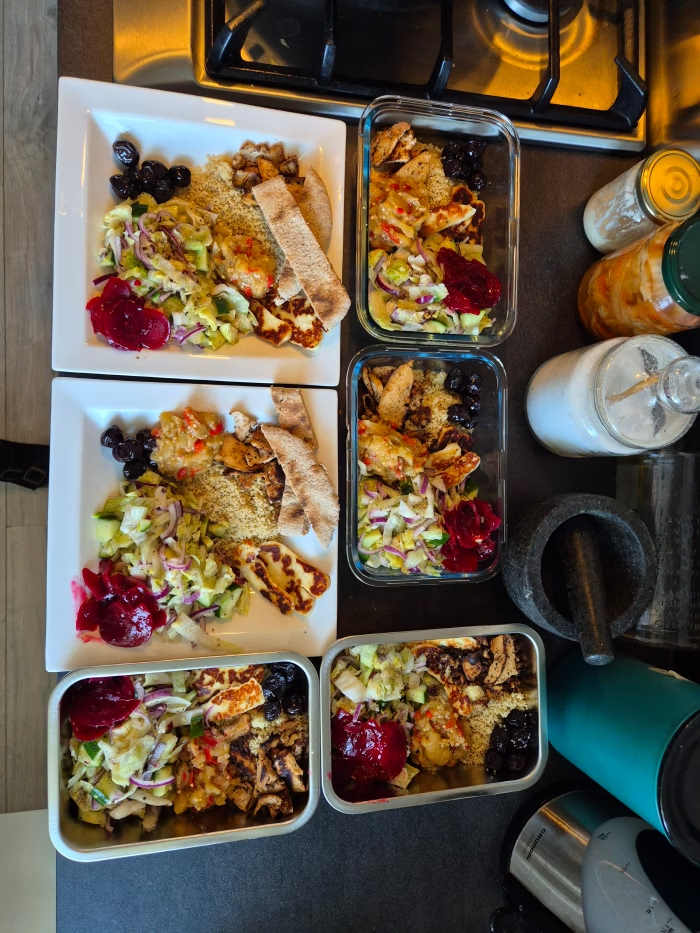
• €0 ($0) — It was a work day in the office, and I meal prepped for the entirety of the week.
Day 2: Tuesday - €500 ($580)
• €500 ($580) — I went gift shopping for my family, as I will be visiting them abroad soon. For multiple family members and friends, I spent €500 ($580) worth of gifts.
Day 3: Wednesday - €0 ($0)
• €0 ($0) — Regular office day.
Day 4: Thursday - €20 ($23)
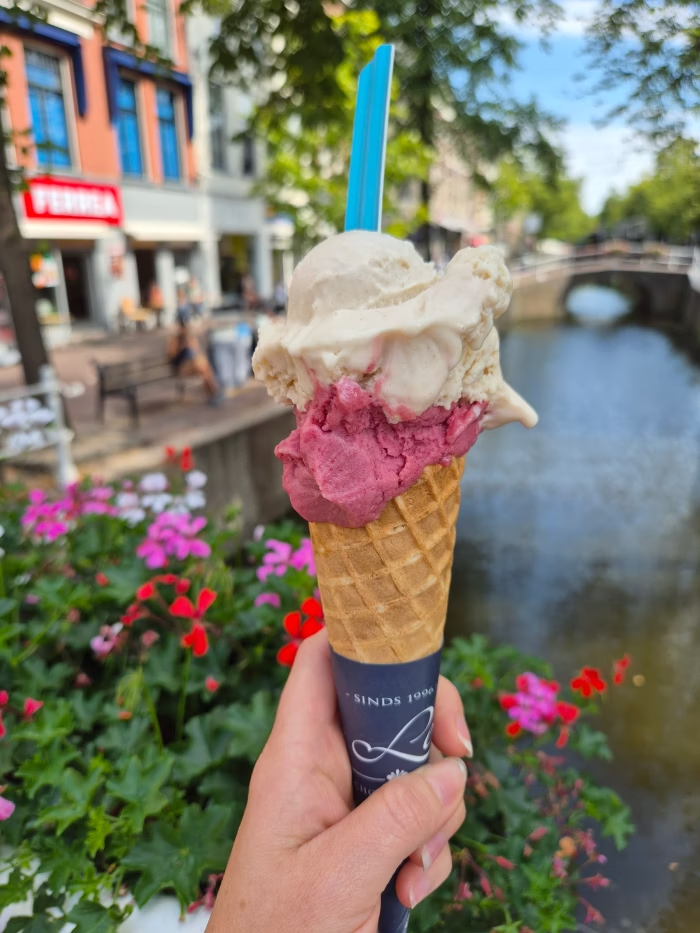
• €20 ($23) — I bought a vintage wool sweater and treated myself to a gelato during the heatwave.
Day 5: Friday - €25 ($29)
• €25 ($29) — Early bird ticket for the Night of Museums this October. This is part of my personal joy fund.
Day 6: Saturday - €0 ($0)
• €0 ($0) — I invited a friend over for a rich homemade brunch at my place.
Day 7: Sunday - €25 ($29)
• €25 ($29) — Comedy show ticket.
Total Weekly Spend: €570 ($661)