
22/4/26
What I Spent This Week as an Investment Manager Making $99K
Ever wondered how others really manage their money?

Ever wondered how others really manage their money?
In the A Week in My Wallet series, we share it all, because talking about money shouldn't be off-limits.
Every week, an anonymous member shares a week of their spending: no names, no filters, just honest stories about life's everyday financial choices.
Ready to join the conversation and help make money talk less taboo? Share your own story via our form here.
Monthly Take-Home Pay (after tax): €4,850 ($5,675)
Do you share expenses with someone? No
What is your overall monthly budget?
Needs: 50%, Wants: 20%, and Future me: 30%. More specifically:
Needs:
- Mortgage (including city tax, electricity, water): €1,350 ($1,580)
- Phone & internet: €70 ($82)
- Health insurance: €200 ($234)
- Subscriptions (gym/cinema/museum/streaming): €160 ($187)
- Public transport: €30 ($35)
- Groceries: €300 ($351)
Wants:
- Eating out: €250 ($293)
- Concerts/events/festivals: €200 ($234)
- Travel expenses: €350 ($410)
- Clothing/beauty: €250 ($293)
Future me:
- Paying off student loan: €150 ($176)
- Investment ETF: €400 ($468)
- Investment stocks: €150 ($176)
- Pension contribution: €400 ($468)
- Savings account: €600 ($702)
Amount left each month after essentials (to spend, save or invest): If I follow my budget tool, zero (usually the case)
Dependents (if any): None

My Relationship with Money
Growing up, did your parents or guardians educate you around money?
Yes, from the age of 6 I received a weekly allowance (around €10 [$12]), which I typically spent on candy and books or magazines. Once I went into high school at age 12, I got a monthly clothing allowance (which went up annually and started at €50 ([$59] and went up to €80 [$94]). I also used this movie if I wanted to go to the cinema, birthday presents, or hang out with friends.
My parents used to have a weekly groceries budget, which they would sometimes explain if my sister or I joined to the supermarket.
What was your first job and why did you get it?
My first job was babysitting (at age 14), which I started doing mostly because I enjoyed being with kids and it sounded pretty good to have a sofa and television for myself - and usually some provided snacks as well - while the kids were asleep. The salary was a bonus!
Did you worry about money growing up?
No, growing up we were able to travel often, join a lot of extracurricular activities, enjoy cultural offerings in cities, and eat healthy meals. I was completely oblivious to money worries.
At what age did you become financially responsible for yourself and do you have a financial safety net?
Fully financially responsible around 23, when I enrolled in my Master's program abroad. Before that, my parents still contributed to my health insurance, university tuition, and student housing fees.
I currently have a financial safety net in the sense that I could take money out of my ETF fund, or sell my apartment. However, before it would get that far, I could probably fall back on my parents quite easily.
Do you worry about money now?
Yes, which seems crazy when I compare my financial situation with the average household income in the Netherlands.
However, cost of living in Amsterdam has increased and with my recent savings going into medical expenses and building maintenance, I have to be a bit more cautious with my spending (e.g. not going out for dinner on a weekly basis, skipping skiing vacation this year, no personal development courses or trainings this year).
Moreover, I believe the ‘singles tax’ is very real, meaning I spend significantly more on solo travel as I have to fly or take the train rather than going on a roadtrip solo, pay for hotel rooms or studio apartments myself (whereas I would rather go camping or in a camper van, which feels too dangerous to do as a woman alone), solo contributions to friend’s bachelorette parties, weddings, and baby showers, as well as the regular costs related to my apartment, city taxes etc.
What is your biggest money regret?
Treatments that are pushed on you by the beauty industry (such as BIAB mani/pedi, baby botox, powder brow treatments, micro needling, red light masks, balayage hair treatments). Obviously they make you feel prettier and it is a nice treat, however I feel it wears off quickly and real beauty comes from within and spending time on activities you actually enjoy doing - being active, getting some sun, genuine laughter, connection with loved ones.
What financial goals are you working towards?
I want to level up my savings account back to the buffer zone of €10-15k ($11-18k) by the end of the year, and level up my ETF fund to €15k ($18k) as well.
Who is your financial role model (if any), and why?
Fellow ambitious women who try to contribute to female financial literacy and breaking the taboos. Some Dutch examples include: Melanie Bosboom and Leonie Kennepohl (Female x Finance), Tessel Majtlis and Eva van Hilten (You Got This), and Noa Leijdesdorff (Dutchess Capital).
Besides that, women who use their wealth/capital to invest responsibly, such as Jacqueline van den Ende, Machtelt Groothuis.

Reflections on My Spending Habits:
I would say, this is a pretty average week. Seeing it summed up, it does look like a lot of money - even though my groceries were less than normal. Also, I wouldn’t really want to sacrifice any of these expenditures or activities, so it is what it is!
What I Spent in a Week
Day 1: Monday - €81 ($95)
Groceries: €47 ($55)
Matcha: €7 ($8)
Hot yoga class: €27 ($32)
Day 2: Tuesday - €14 ($16)
Disney+ subscription: €14 ($16)
Day 3: Wednesday - €24 ($28)
Post-run smoothie: €11 ($13)
Cinema ticket: €13 ($15)
Day 4: Thursday - €65 ($76)
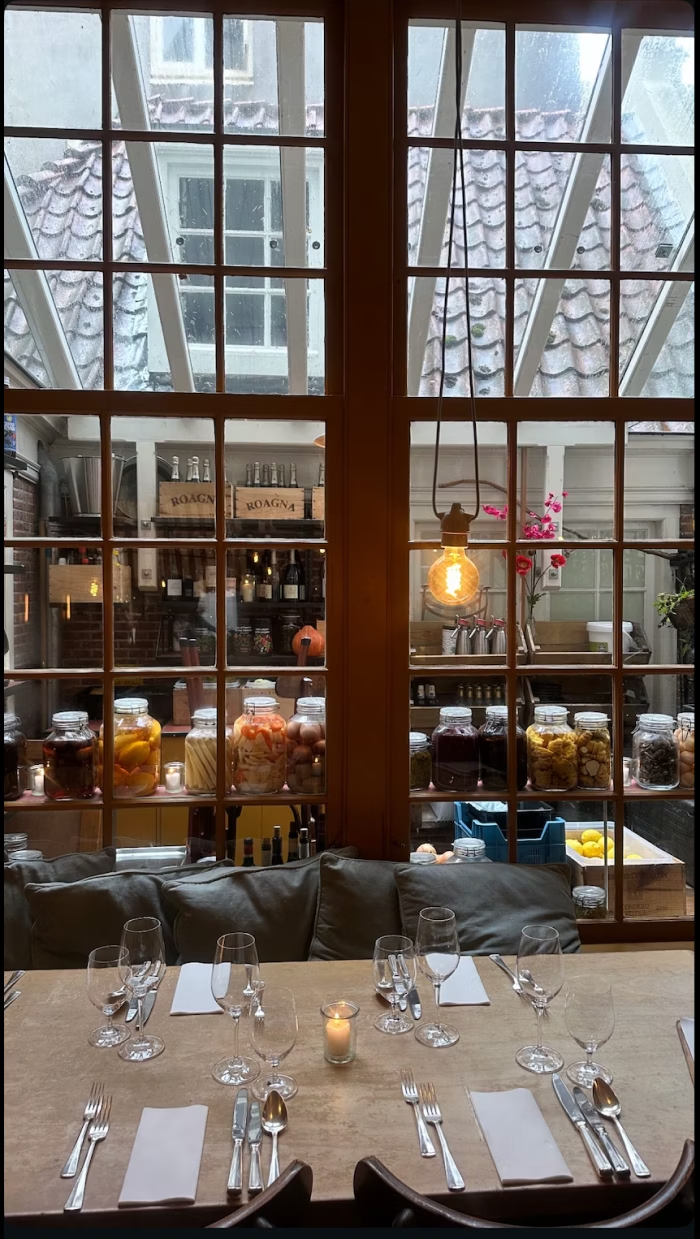
Dinner with a friend: €65 ($76)
Day 5: Friday - €103 ($121)
Lunch on the road: €17 ($20)
Public transport: €28 ($33)
Birthday gift: €18 ($21)
Drinks and going out: €40 ($47)
Day 6: Saturday - €97 ($113)
Hot yoga class: €27 ($32)
Brunch: €26 ($30)
Flowers from the market: €15 ($18)
Matcha: €7 ($8)
Visit museum: €22 ($26)
Day 7: Sunday - €43 ($50)
Sauna access at the beach: €80 ($94) (but split through 4)
Tea and pastry at the beach: €8 ($9)
Public transport: €15 ($18)
Total Weekly Spend: €427 ($500)
